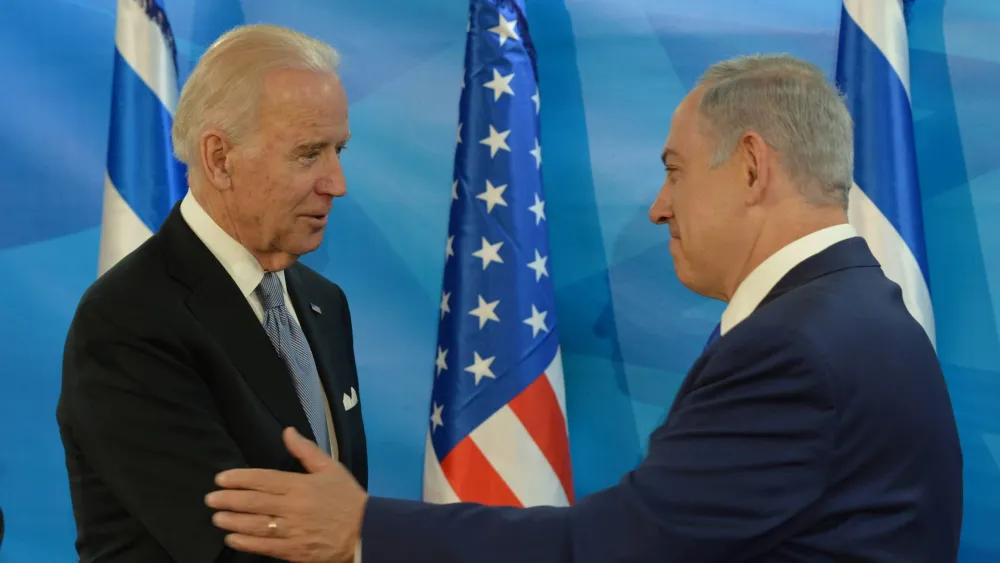

Israeli Prime Minister Benjamin Netanyahu had a muted reaction to the emerging understandings between the Biden administration and Iran over Iran’s nuclear program last weekend.
Netanyahu issued a statement---not attributed to him personally but to his office---that implicitly came out against the cash-for-hostages deal that was announced, but did so using laconic and limited language. The statement said only that “Israel’s position is well known,” without taking a clear-cut position against the deal.
An Israeli official told me that Israel’s opposition to a deal with Iran only pertains to the full agreement from 2015, against which Netanyahu went on a global campaign---including an address to the U.S. Congress.
This time around, the official said, there is no reason to create friction with the administration. The emerging understandings stop short of a full-fledged deal, they said, adding that the $6 billion that Iran will get is not going to hurt Israel.
Under the emerging understandings, as reported by The Wall Street Journal, Iran has slowed its pace of producing highly enriched uranium and has even diluted its stockpiles of such material. In a likely related development, a prisoner swap and unfreezing of funds was announced.
“These are frozen Iranian funds,” the official explained.
They added that the prevailing assessment is that the close talks between Washington and Tehran on limiting the latter’s nuclear program and the prisoner exchange do not hurt the chances of normalization with Saudi Arabia.
Saudi Crown Prince Mohammed bin Salman, the official said, “also signed a deal with Iran [renewing diplomatic ties]; so there is no reason why he should come out against the U.S. for striking its own set of understandings with the Islamic republic.”
Originally published by Israel Hayom.