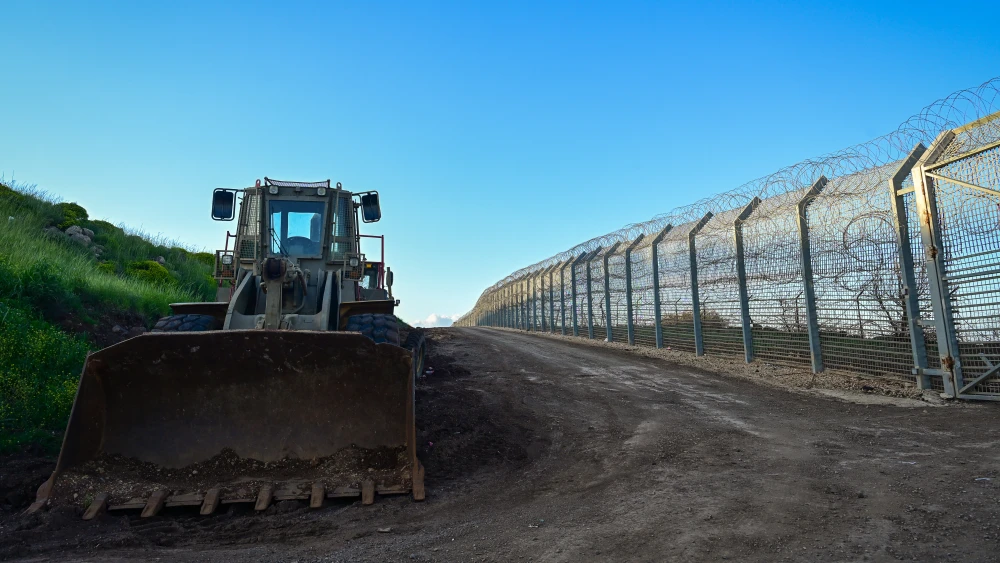

Two Israeli settlement activists from the organization Bashan Pioneers, which advocates the establishment of Israeli settlements in southern Syria, illegally crossed the Syrian-Israeli border recently near Mount Hermon. The Israel Defense Forces located the pair, returned them to Israeli territory and handed them over to police.
The IDF’s language was familiar: It called the incident “another serious disruption of operational activity” that “poses a danger to the safety of IDF troops operating in the area.”
This was not the first time such an incident occurred, though the group was smaller this time. Since the group’s founding in April 2025, activists from the Bashan Pioneers have illegally crossed into Syria multiple times, including in August and November 2025, April 2026 and several attempts in July 2026. The IDF has said the attempts have increased in frequency in recent weeks. The Israeli government’s consistent response has been zero tolerance.
Who are the Bashan Pioneers, and what is their goal?
Founded in April 2025, after the fall of former Syrian President Bashar Assad’s regime, the Bashan Pioneers take their name from the biblical Bashan, a fertile plateau spanning what is now southern Syria and parts of Jordan. In Deuteronomy, Bashan is allotted to the tribes of Reuben, Gad and half of Manasseh after the land is taken from King Og.
This is not obscure territory in Jewish texts or history: The “oaks of Bashan” appear in Isaiah as shorthand for strength, and a Golan community today still carries the name Alonei Habashan. Under King Solomon, Israel’s kingdom included the entire region.
It would be a mistake to label the Bashan Pioneers’ efforts as a “Greater Israel” project, a label commonly used for every settler movement. Instead, the movement’s self-description and motivation are narrower and more specific than open-ended expansionism. Theirs is not a maximalist project without boundaries but a restoration claim. It asserts that Bashan was once governed by named Israelite and Judean kings, and therefore, the fact that it is not part of present-day Israel is the historical anomaly, not their intention to settle it.
None of this would make their settlement ambitions good policy. However, understanding how the Bashan Pioneers view their own mission sheds light on why they keep going back.
Israel’s zero-tolerance policy is both sensible and difficult because it seeks to maintain a defensive military presence while thwarting a settlement plan that would derail it.
After Assad fell in December 2024, Israel moved fast: It established forward positions on the Syrian side of Mount Hermon and in Quneitra and Daraa provinces in the demilitarized zone. In some areas, Israel moved slightly further to create a buffer zone against terrorist group Hayat Tahrir al-Sham (HTS) and allied jihadist factions associated with current Syrian President Ahmad al-Sharaa, a former Al-Qaeda-linked commander.
Later in 2025, Israel’s buffer zone received another justification: protecting Syria’s Druze minority. This group has faced massacres, kidnappings and continued partial occupation of Druze villages, atrocities that a transitional Syrian government hostile to the Druze has been either unwilling or unable to stop.
The deployment of such large numbers of troops would be an unacceptable security burden.
Israel’s military-only presence in the region, justified by self-defense against a jihadi threat and an R2P (responsibility to protect) case for safeguarding a severely persecuted minority under active attack from the authority responsible for its safety, provides a robust legal foundation for Israel’s presence in Syria, though it is not universally accepted. This legal basis explains the comparatively modest international reaction. There has been no referral to the International Court of Justice and no widespread Western condemnation.
Jewish settlement in southern Syria would collapse that foundation overnight. A security presence can invoke self-defense and R2P precisely because it is temporary and does not involve transfer of population or claims of sovereignty. The moment settlers move in, the legal frame shifts to the Fourth Geneva Convention’s Article 49, which prohibits population transfer into occupied territory. This is a different legal category entirely, as Syria is an internationally recognized sovereign state. This is not comparable to the Israeli presence in Judea and Samaria, which is seen as legally defensible by a sizable minority of international law scholars like Eugene Kontorovich.
The Bashan Pioneers argue that settlement would enhance security by providing a Jewish civilian presence. They believe that such a presence acts as a force multiplier that the IDF alone cannot replicate. This argument is justifiable regarding Judea and Samaria, where the density of Israeli civilians—many of them IDF reservists—spread across hundreds of communities is substantial.
However, the argument cannot be justified regarding Syria. The Daraa province alone holds close to a million people. The Quneitra province adds more. One or a few isolated outposts will not deter a population that large.
Instead, settlements would become the most appealing targets in the region for the numerous jihadist groups in Syria that Israel’s buffer zone keeps at bay. Such a situation would require dedicated IDF protection of both the settlements and their stationary civilian populations that, unlike mobile IDF patrols, do not move. Israel made a similar calculation before the Gaza withdrawal, when it understood that protecting a relatively small number of settlements in the area required the deployment of thousands of troops.
Each time they cross the border, Israel must understand that it has a legal and strategic position worth protecting.
Moreover, the deployment of such large numbers of troops would be an unacceptable security burden. IDF Chief of Staff Lt. Gen. Eyal Zamir told the security cabinet in late March that the military risks, in his words, collapsing in on itself. According to reporting in The Times of Israel and The Jerusalem Post, he cited a shortfall of roughly 12,000 to 17,000 troops. An IDF already stretched thin across Gaza, Lebanon, and Judea and Samaria—in the backdrop of an active Iran conflict—does not have the troops to spare for defending static settler homes against southern Syria’s most hostile actors.
The Bashan Pioneers have no meaningful domestic political backing for their project. While some media reports have alluded to unnamed lawmakers expressing sympathy, no Knesset member or government minister has gone on record endorsing their project. The only notable political figure to attend one of their events was former Knesset member Moshe Feiglin, who doesn’t hold office now.
Not one Bashan Pioneers attempt—from the August 2025 cornerstone-laying for “Neve Habashan” through the latest incursion—has resulted in an actual settlement or outpost taking hold. Every attempt has been foiled. According to that basic metric, the IDF’s zero-tolerance policy has a perfect record.
Nonetheless, the scale of the attempts has grown from 13 activists crossing in November 2025 to roughly 40 in April to an estimated 70 to 100 by the end of July.
This is precisely why Israel must stay the course. The underlying dispute isn’t settled, and the Bashan Pioneers will not cease their efforts. Each time they cross the border, Israel must understand that it has a legal and strategic position worth protecting, and it has protected it. Abandoning this unambiguous stance in favor of a fringe movement’s biblical ambitions would trade a defensible policy for an indefensible one at precisely the moment the IDF can least afford it.