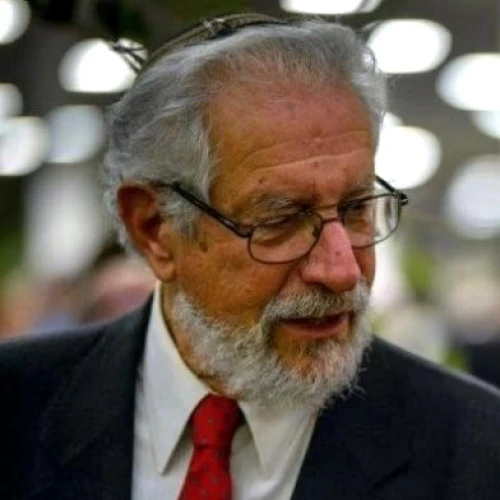
As director of the Israeli Ministry of Defense’s mission to the United States and Canada, Col. (Res.) Aviram Hasson knows about white hair as an occupational hazard.
In former roles, he was operations and engineering vice president in the Israeli prime minister’s office and was head of the research and development department at the Jewish state’s Defense Ministry.
“To handle an Arrow weapon system test which fails causes your hair to be white in a minute,” he told JNS, of his former jobs. “You need tough guts for that, and unfortunately I did have some of those in my background—failure tests.”
In his current role, which he began two years ago, in July 2024, he has different challenges procuring weaponry for the Jewish state, like ensuring that an entire system works precisely and smoothly.

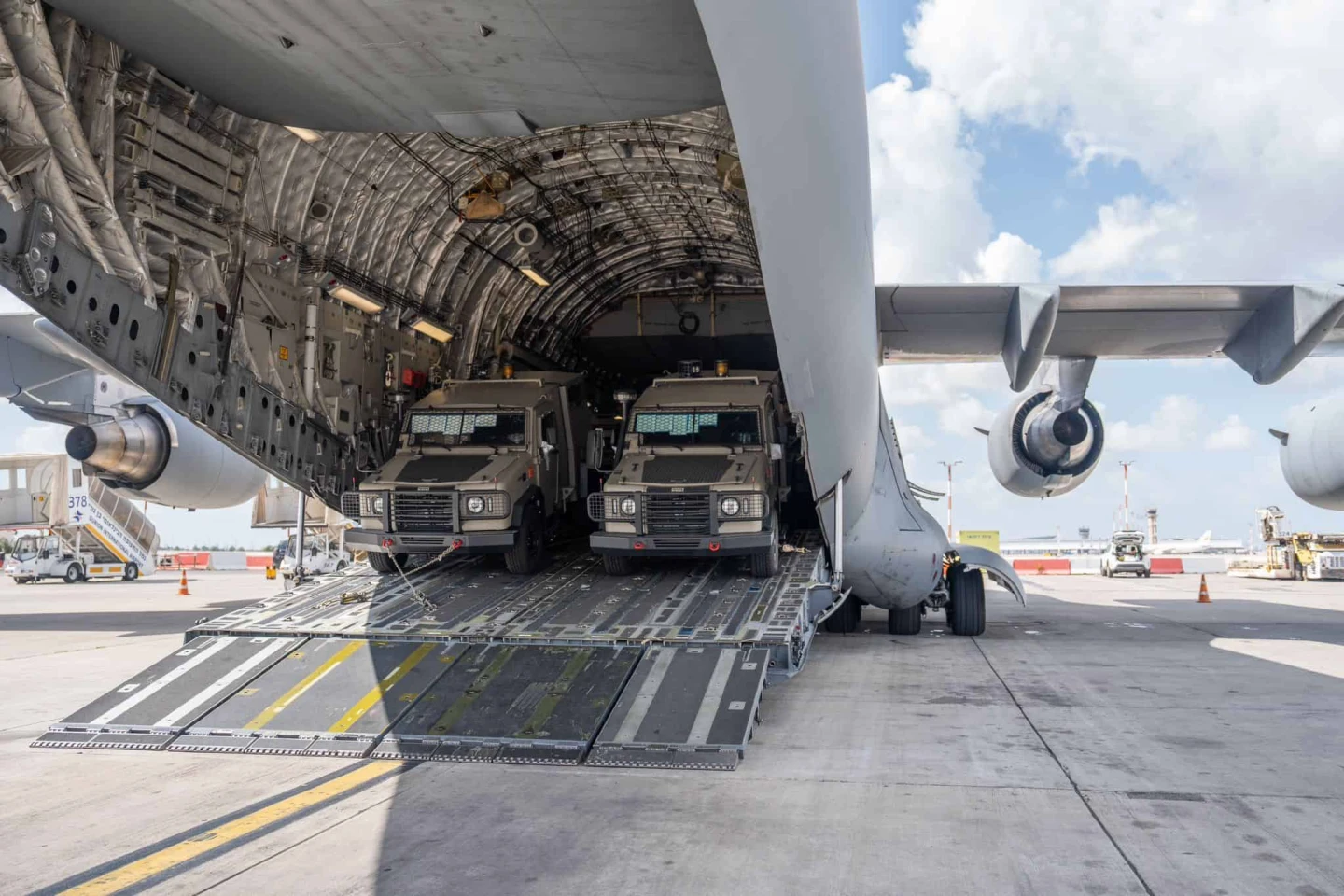
“If you have an available slot for a 747 cargo plane on a specific date and time, you need to make sure that all the procurement items will arrive at the same time to the airport, because you cannot store it in the airport,” he told JNS.
“They’re leaving the company. They have to be all on the exact minute, because you have a two-hour window after the plane lands. It has to be booked or filled,” Hasson said. “It should go to Israel. It’s a different kind of work, but it’s working on the bits and the bytes of everything—of how long it takes from the factory to the runway. How long it will take to load it, and who will load it.”
“This is a fully different world,” he told JNS. “It causes white hair as well.”
Hasson spoke at length to JNS from New York, during a meeting that his staff said must take place over video rather than in person as a precondition.
He told JNS that the world is becoming more dangerous everywhere, and Jew-hatred can be seen in every corner of the world, from Australia and Belgium to France, Spain and Canada. And the United States, he said.
“We should not overlook the signs,” Hasson said. “I think that the past three years not only grew antisemitism but also caused all kinds of hidden antisemites to come out of the closet.”
JNS asked about the Jewish state’s recent decision to move its defense attaché from Ottawa to Washington. Iddo Moed, Israeli ambassador to Canada, told JNS that the decision to move the role to Washington wasn’t due to eroding relations between Israel and Canada, which has recognized a Palestinian state and which has increasingly tense governmental relations with Israel.

Still, a spokesman for Moed told JNS that the ambassador “doubted” that a robust defense partnership with Canada “is feasible with a non-resident attaché.”
“There are a lot of constraints with Canada,” Hasson told JNS. “You see a lot of actions that we used to do with them together, joined by them, have been stopped dramatically.”
“We laid the foundation for alternate solutions. As long as they decide to continue to withhold cooperation with the State of Israel, we will seek alternate solutions,” he said. “We usually stationed an attaché where there is collaboration. Where there’s no collaboration, there’s no need for somebody to sit there and waste the taxpayer money.”
‘Whatever it needs’
Hasson oversees a mission that is responsible for all of the Defense Ministry’s procurement on behalf of the Israeli military in the United States.
It used to manage some $3.8 billion in annual support funds from the American government, $.5 billion of which was for developing and procuring active defense systems and $3.3 billion for buying new platforms, maintenance, spare parts and related needs. The mission would field requests from the Israel Defense Forces for “whatever it needs,” he said.
“Humvees, weapons, armament, planes, each and every platform, whether it’s helicopters or fighter jets,” he said. “We are responsible for the discussion and the negotiation with the manufacturers.”
The mission’s responsibility begins when the Israeli military mentions the need and it ends when the items arrive in Israel.
Since 2023, the budget that the mission handles has been twice the annual one prior to Oct. 7. In September 2024, Israel received $3.5 billion in special aid from the Biden administration. (U.S. President Donald Trump, and others, have said that the Biden administration withheld certain weapons from Israel, including 2,000 pound bombs.)
In 2025 and 2026, Israel added another $3 billion from its national funds for “massive procurement from the United States,” Hasson told JNS.
“We are keeping all our channels open with the American industries,” he said. “They know exactly what we need. They know exactly when we need it.”
The Defense Ministry told JNS that since Oct. 7, its mission to the United States has “led one of the largest sustained logistics operations in Israel’s history.”
“To date, well over 1,000 cargo aircraft and more than 150 vessels have delivered upwards of 130,000 tons of munitions, armored vehicles and military equipment to Israel—an air and sea bridge that has continued without interruption through ‘Operation Roaring Lion’ and ‘Operation Rising Lion’ against Iran,” the ministry said. “Alongside this logistics effort, the mission has anchored a series of landmark procurement agreements that reinforce Israel’s qualitative military edge for years to come.”
That procurement includes “a third F-35 ‘Adir’ squadron expanding the Israeli Air Force’s stealth fleet to 75 aircraft, 25 advanced F-15IA fighters valued at $5.2 billion, the first Iron Dome interceptor contract signed under the aid package with Rafael and new KC-46 ‘Gideon’ refueling tankers, CH-53K heavy-lift helicopters and hundreds of joint light tactical vehicle and high mobility multipurpose wheeled vehicle ground vehicles for IDF forces,” the ministry said.
In 2025, Israel broke its record of defense exports for the fifth year in a row, with $19.2 billion—about a 30% increase from 2024 and more than double the amount five years prior and four times a decade prior, per the ministry.
In addition to procurement, the mission maintains ties with bereaved North American families and wounded veterans and partners with Jewish groups and philanthropists to support the wellness and rehabilitation of the Israeli military.

He and his team of 200 people, mostly in New York but some on military bases in the rest of the country, procure items for the Jewish state via military channels, starting with the Defense Security Cooperation Agency, an agency within the U.S. Defense Department. (Hasson refers to the latter as the “War Department,” which is also the name that U.S. President Donald Trump uses.)
“I think we are its biggest client,” Hasson said. “They are all very committed and very responsive to our needs. Needless to mention that since Oct. 7, most of them are used to working weekends and supporting Israel by all means.”
The mission also works with branches of the U.S. military directly, including the Air Force, Army and Navy, Hasson said.
‘An odd bird’
JNS asked Hasson if his background in research and development has served him well in his job.
“I’m a bit of an odd bird in this role, because I’m not a procurement specialist. I’m an engineer,” he said.
Hasson used to work on the development of the Arrow weapon system, Iron Dome and David’s Sling in the Defense Ministry.
“I’m not a specialist, but I’m aware of the procurement processes, as my army service was related to procurement,” he said. “I was responsible for the Hawk and the Patriot system. I used to do a lot of procurement processes as an officer in the Israeli Air Force, with the help of the Ministry of Defense.”
His background has helped “a lot,” he told JNS.

“Some processes need acceleration. There is a need to think outside the box. In war, there’s a huge difference if the armaments arrive today or in a month or two,” he said. “That might be at the end of the war.”
His team has expertise in areas including airfields, infantry and technology, and there is a special transportation team that makes sure, for example, that items that leave Cincinnati or San Antonio arrive in Israel the next day.
“What’s been happening during the past two and a half years is tremendous,” he told JNS.
Even when airports in Israel have been closed amid missile attacks, equipment has continued to fly to the Jewish state, according to Hasson.
“When you are dealing with war, you are managing your risks, and our partners flew 24/7 throughout the war, throughout missiles falling in Israel, bringing everything,” he told JNS. “They had an extra amount of fuel, making sure if there’s a missile attack on Israel, they do some circles above the Mediterranean waiting for it to stop or to be intercepted, and then they would have landed, disembarked and continued their mission.”
“That shows some of the strength of this logistics chain that has been built here to fulfill the IDF needs by all means every day, every night, in any circumstances,” he said.
Days instead of years
Hasson didn’t want to name particular companies, for fear, he said, of them being harassed or sabotaged for working with the Jewish state, but he told JNS that the companies with which Israel works “understand the time of need.”
One company in the middle part of the United States escalated its production from 150 units monthly to that same number daily, he said.
“Working shifts, doubling lines, doubling efforts, and I think most of our partners—that’s what I call those manufacturers—understood the necessity, whether it’s from the U.S. armament forces or whether from Israel or other clients, because everybody’s now piling up,” he said.
Since it has been essential to accelerate delivery of weaponry, Israel has bought “long-lead items” in advance though it doesn’t need them immediately.

“So you are taking the long-lead items procurement time out of the equation. Then you have only to build the items while you have all the ingredients on the table,” Hasson said. “That makes a lot of manufacturing processes very quick.”
Some of Israel’s “partners” also made materials on spec, even before Israel presented them with procurement orders, according to Hasson.
“They started building the item before we even approached them,” he said. “They said, ‘We know you’re going to ask us. They’re ready.’ In this way, I think Israel gained a lot of goodwill and trust with our partners, and we’re trying to make sure that it will continue as long as the war continues.”
From Hasson’s perspective, the U.S. government is providing Israel with everything it needs, and the process is going quickly.
“The administration is very committed to supporting us,” he said.
He understands that politics is a factor stateside, as it is in Israel, and politicians often talk to their bases rather than saying what they mean.
“I think time will tell, but I’m not a fortune teller,” he told JNS. “I live here in the United States. I hear what people say. I’m following the votes in the Senate, but I still think that Israel is the last barricade from a very wild neighborhood.”
“Israel is not doing its own battles, and I think everybody knows that. If Israel fails—I don’t want to say it loudly but if it happens, I think that’s only the first stone that caused the whole collapse,” he said. “It’s not Israel. The problem is Western culture. Israel is just very close and very near, and I think we are doing the whole world war against those who praise murder, those who praise terror, those who praise laws which do not support democracy.”
“We are standing in front of the line,” he said. “Israel is working to defend the State of Israel and the West with its own troops. We don’t ask anybody to fight for us. We are fighting by ourselves.”

He showed JNS a map, which he said shows how much money—both aid and cash—Israel spends in each state in the United States. “It’s a huge amount. More than $7 billion was invested in Texas in the past three years. In Arizona, $458 million. In California, 210. In Wyoming, 131. In Michigan, 359. The amounts are very big, and that’s actually a win-win.”
Only Iran should be troubled
JNS asked Hasson to what extent, if at all, those who care about the Jewish state should have trouble sleeping at night when they read news stories about Israel running low on interceptor missiles.
“I think that the Israeli defense industry especially is very resilient, and I think they know how to adapt to the new situation,” he said.
Hasson noted that there used to be a joke that Israelis would decide whether to worry if a missile was headed for the country based on its origin, and if it was from Yemen, no one would worry.
“Invention comes from a need and since the industries are very resilient, I think that during the war, we did a lot of tweaks and tricks to our defense system to make sure that they are always more efficient,” he said. “There is no 100% guarantee that each missile will be intercepted. But I think that if you are checking it on percentage of success, I think the final number that I recall, and I might be mistaken so you have to check me on that. I think it was 94%.”
A spokeswoman for the director cut in. “92% during the recent operation ‘Roaring Lion,’” she said. “And in the previous operation ‘Rising Lion,’ it was 86.”
“First of all, that shows you what we call ‘battlefield learning,’ meaning each and every miss is downloaded in a matter of minutes and goes into the debriefing systems,” he said. “The debriefing systems show what’s happening, whether it’s early detonation, late detonation. It could be a huge amount of issues, and it is fixed for the next night of war.”
That means that on the same day, people go with disks or flash drives “into the systems and upgrade them and make sure that every patch is installed as soon as possible,” he told JNS. “Of course with a lot of responsibility, because you don’t want to put another problem when fixing problems.”
“What you see here is a growing percentage of success,” he said. “Iron Dome started in the low 80s and now we are speaking in the high 90s.”
From Iran’s perspective, just eight out of 100 missiles penetrated Israeli defense systems. “I would choose other ways to attack,” Hasson told JNS. “I don’t think they have other ways, but I don’t think that 8% success can be called a tremendous success.”
And when it comes to news reports of Israeli interceptor wells running dry, Hasson noted that “those lines are in Israel, so we can recruit all our engineers and all our workers to make sure that they are supporting this incentive and important line.”
“Nobody should be troubled except the Iranians about the number of the interceptors we have, because we do have solutions by all means,” he said.
The partnership between Israel and the United States draws on the strengths of each partner, according to Hasson. “Israel is very small, very agile,” he said. “The United States is very good in knowledge as well but in production and heavy machinery.”
“I think that we can find together how to utilize each nation’s strength,” he told JNS, “and make sure that it will bring better products.”

“Of course whatever Israel plans or develops is available for the United States, and there’s a lot of cooperation, which does not reach the newspapers in this area,” he said.
‘Networked era of systems’
Looking forward, Hasson thinks that a “system of systems” looms on the horizon, where networks will operate instead of autonomous units.
“I think we’re going into the network era of systems. More data will flow between systems, and that will cause them to be much more efficient,” he said. “I’m sure that AI will be part of the systems. I don’t know how much AI will influence the systems, but you cannot avoid it, because you can get a lot of decisions in a fraction of seconds using AI, and it will be a waste not to use it.”
People will still need to make decisions. “I wouldn’t count at this time on AI to make the final decisions for actions,” he said.
For example, one soldier can direct a satellite, a plane, a swarm of attack drones and surveillance “all fused into one picture,” he said. “One soldier can handle everything.”
“It’s going to be more efficient,” he added. “I think that the world now understands that it has to pursue reducing the cost of the war, because you have another war in keeping your budget alive. You cannot go bankrupt during the war.”
“If you can shoot something with $1 and not with $10, you should do it,” he said. “That’s pretty much what we’re thinking about. How to do it in a mass way or the cheapest way available.”


‘Not alone’
Many companies with which the mission has worked say that they support the Jewish state, but some have told Hasson and his colleagues that “we are defining our markets again, and Israel is not one of our target countries.”
“We did get those here in the United States,” he told JNS. “For each and every industry that decided not to work with Israel, we search for a substitute.”
Part of Hasson’s work at the mission is to communicate with American Jewish communities, and part of that work is the most difficult thing he has to do.
“The past two years that I’ve been here, I’ve met a lot of the Jewish community here, and I told them each and every meeting that I wish—you know, Israel on Oct. 7 pretty much felt that it had been left alone,” he said. “There were a few weeks when everybody hugged us, but it ended very quickly and bad words started very shortly afterwards.”
“I told them, ‘I wish I could teleport the feelings and the warmth that you feel for the State of Israel to my friends back home—to understand that they are not alone,’” he said.
One of his active duties is to inform American families about their fallen Israeli soldiers.
For the first time in about 45 minutes, Hasson’s voice broke as he recalled having to tell families that their children were killed in battle defending the Jewish state. He paused to compose himself briefly a few times.
“That was very hard,” he said. “We try to hug them as much as we can.”
“We invest a lot of effort making sure that those bereaved families will keep in touch with us,” he said. “We try to keep in touch with them as much as we can to support them.”
“It’s hard,” he said. “My people are brave.”
“We owe these people a lot, and I don’t think that we will ever be able to stand for the debt that the country of the State of Israel will owe those people,” he said.
In some senses, Hasson hopes that his job will become less important in the future.
“Hopefully, the next two years we will be bored, and I will have a lack of work,” he said. “This is what I’m praying to happen, only usual maintenance for training, not more than that.”
“But we are prepared for each and every escalation,” he added. “We have a lot of tasks getting ready to be sent in case of need. From zero to one in zero seconds. That is what I always tell my people.”