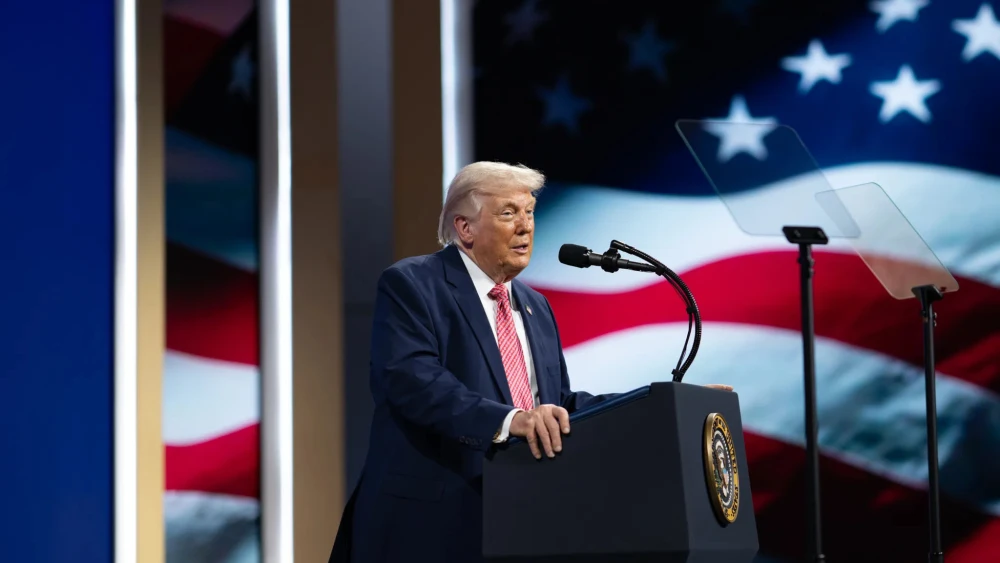

Despite the constant talk of negotiations with Iran, few real signs show that an agreement is within reach. U.S. President Donald Trump welcomed the rescue of the pilots of the F-15 shot down by Iran, while thousands of kilometers away, Israeli Prime Minister Benjamin Netanyahu expressed satisfaction at having played a meaningful role in the operation.
“We spoke today and congratulated each other,” the Israeli prime minister said, though clearly far more was discussed. The atmosphere is more than heated.
After Trump extended his ultimatum until Tuesday morning, following an Iranian signal of possible flexibility regarding the Strait of Hormuz that was quickly withdrawn, a barrage of missiles from Tehran sent Israelis across the country into bomb shelters, leaving four dead in Haifa and causing significant destruction there, even as Israeli aircraft struck Iran’s largest petrochemical complex.
Trump has spoken of a decisive night. He does not openly threaten, yet in Tehran, every word is weighed carefully. Uncertainty prevails, and the regime may still be searching for a last-minute maneuver to shift the diplomatic equation.
As the rescue operation for the American pilots unfolded, Iran was reportedly discussing with Islamabad the possibility of a 45-day ceasefire. Yet the reality is defined by the 15 demands placed before Tehran: reopening maritime traffic through Hormuz; surrendering uranium enriched to 60%; ending the production and deployment of missiles; and dismantling the proxy forces that have destabilized the Middle East for decades.
From Iran’s perspective, the list appears impossible to accept, and officials there have responded with their own proposals rejecting a ceasefire while insisting that Hormuz remain closed.
Trump cannot easily accept such a position. The paradox of a regime whose infrastructure, weaponry and leadership have been severely weakened, yet which still refuses compromise, reflects the fundamental logic of the ayatollah system: survival at all costs.
The regime seeks to continue confronting the West even amid casualties, shortages and growing isolation, relying on the Islamic Revolutionary Guard Corps and the Basij forces, while suppressing its own population without restraint. Democratic considerations are irrelevant in a political structure built on ideological absolutism.
Trump’s political base has signaled support for continued pressure. He has again emphasized the heavy human toll inflicted by the regime and indicated that assistance has reached elements of the Iranian opposition. Analysts suggest that even without the physical transfer of enriched uranium, key elements of Iran’s nuclear infrastructure have been set back for years, perhaps decades. Meanwhile, discussion has already begun about potential future leadership scenarios in Tehran.
The approximately 20,000 American troops now positioned in the region effectively constitute a full division. Saudi Crown Prince Mohammed bin Salman has indicated readiness for broader cooperation alongside Sunni states that feel directly threatened by Iran’s ambitions. The strategic equation remains centered on a regime that imprisons and executes young people for so-called offenses against religion, while projecting power through networks of militant proxies across the region.
Trump may maintain a degree of deliberate ambiguity, but his direction is clear. This is a turning point and the president appears to be preparing for it—unless some unexpected development emerges.
The new ultimatum has sharpened the dilemma facing Iran: accept conditions that limit its power, or risk further escalation that could fundamentally reshape the balance of power in the Middle East.