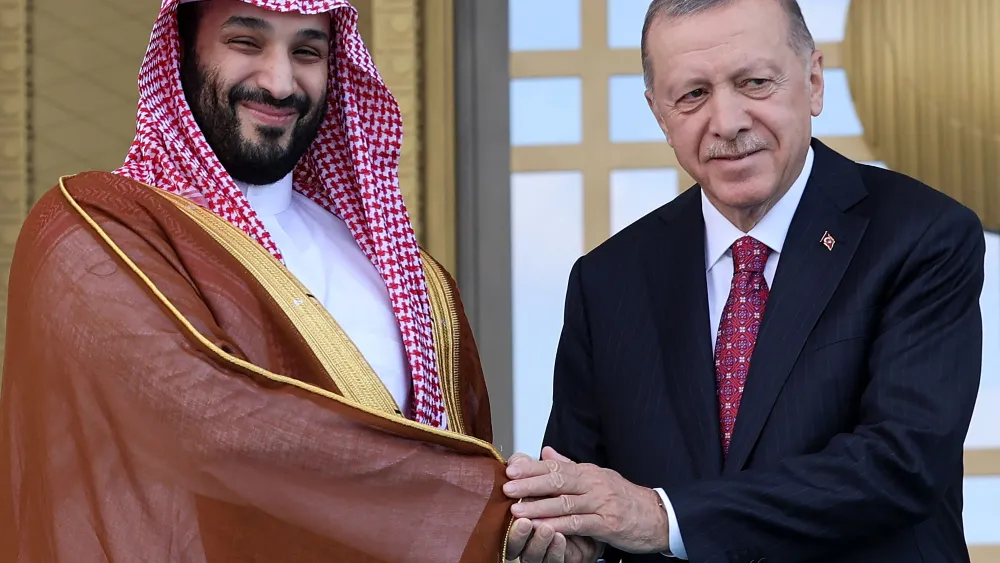
Pakistan, Saudi Arabia and Turkey signed a NATO-style mutual defense pact in the Saudi city of Mecca on Friday.
The agreement brings together three of the largest military powers in the world including, in Pakistan, the world’s only nuclear-armed Muslim state, amid the ongoing war between the United States and Iran.
The three countries did not release the text of the defense pact, but a statement issued by Pakistan’s foreign ministry echoed the language of Article 5 of the North Atlantic Treaty.
“The agreement is intended to strengthen collective deterrence against any act of aggression and stipulates that any armed attack against any one of the three states shall be regarded as an attack against them all,” it stated.
“It further provides for the enhancement of all aspects of defence cooperation among the three states,” the Pakistani ministry said.
Iran has repeatedly fired missiles at Saudi Arabia and Turkey since the United States and Israel began military operations against the Islamic Republic in February, and in recent years, the regime has engaged in border skirmishes with Pakistan.
Pakistan is also in an ongoing “open war” with Taliban-controlled Afghanistan, in addition to its long history of wars and border clashes with India.
It’s not clear how the defense pact will operate in practice, but it is the latest signal of deepening ties between the three Sunni Muslim states, all of which are also allies of the United States, either as a member of NATO in the case of Turkey or as designated major non-NATO allies in the case of Pakistan and Saudi Arabia.