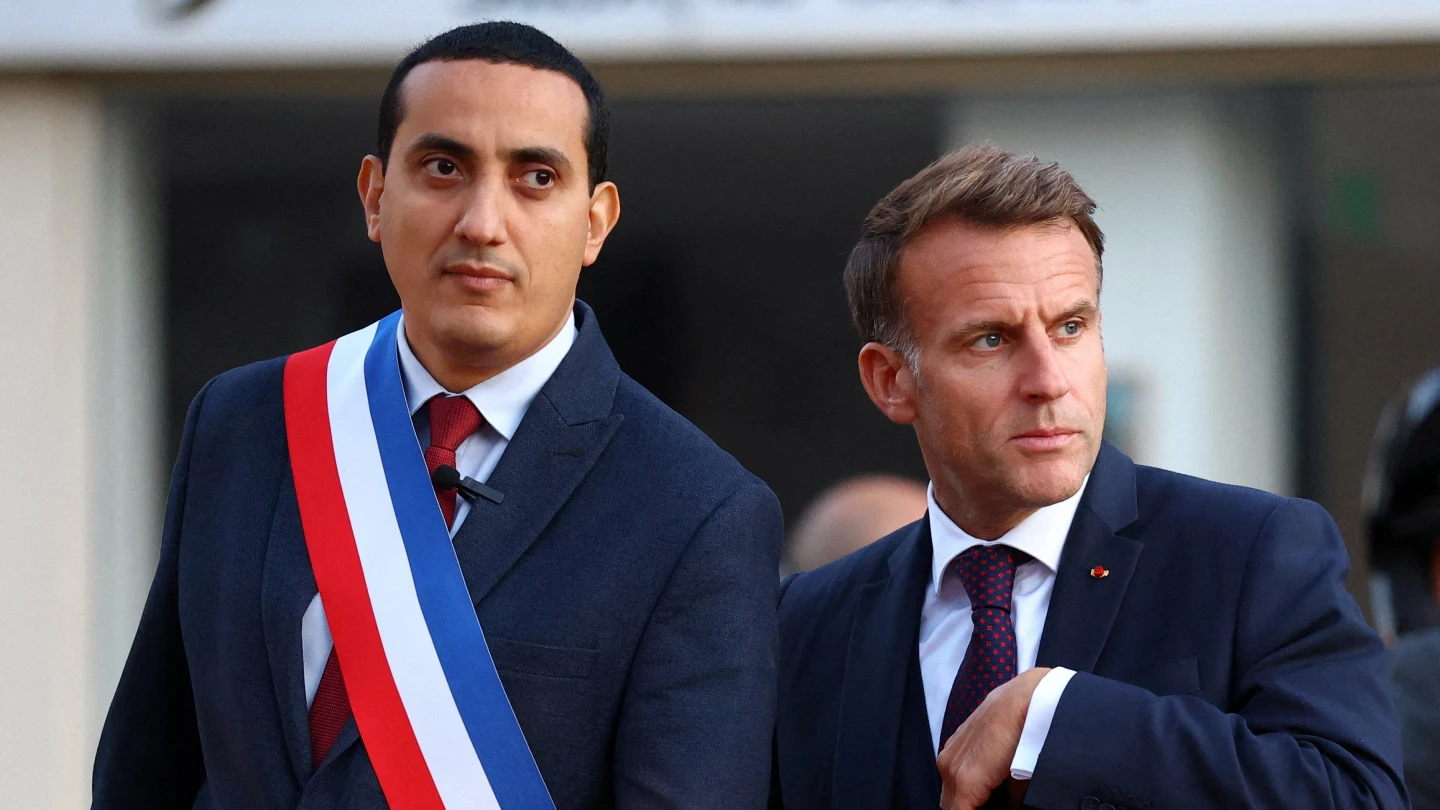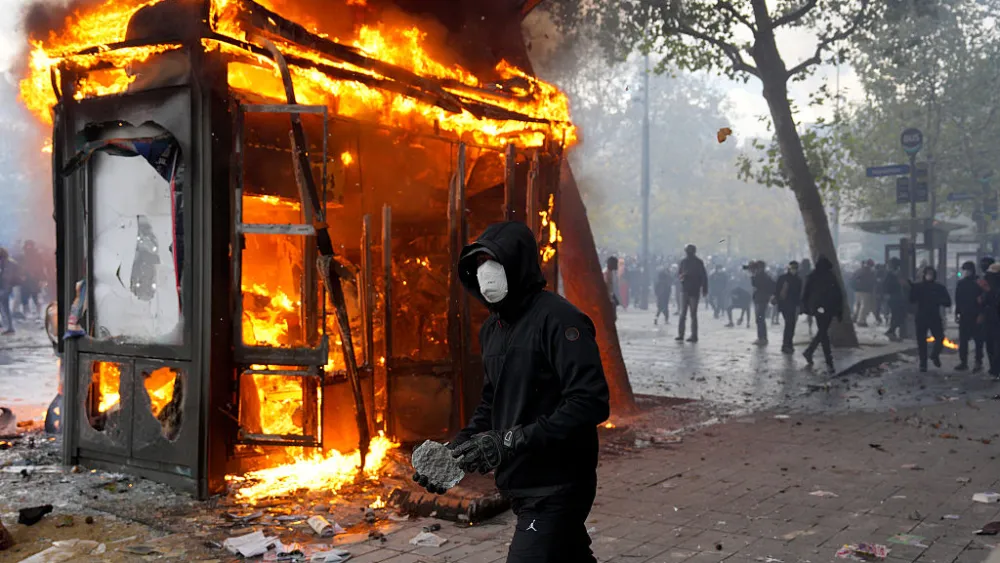

Flames rose above Paris’s Place de la République in mid-October. Cars burned, some 3,000 businesses across France were damaged or looted and public buildings were set on fire. The turmoil remains ongoing.
Interior Minister Laurent Nuñez conceded that in several large cities the authorities cannot claim to have maintained control. France imposed localized nighttime curfews. A week later, more than 400,000 people marched again, and clashes broke out in Paris and Marseille. In Italy, after riots in Milan, the government approved the deployment of 500 additional soldiers.
The immediate task is obvious: restore public order. The more consequential question is: Who is positioning themselves to benefit from Europe’s instability long after the rioters have gone home?
Let me be precise: There is no evidence that Islamist organizations orchestrated these particular riots. The protests were driven by students, unions and citizens angry about schools and the cost of living. French security sources identified radical-left activists as key drivers of the violence, while much of the looting was opportunistic. Recasting the protests as a Muslim uprising would be false and a gift to extremists.
However, those who ignite unrest are not always those organized to exploit it.
When mass protests against former Egyptian President Hosni Mubarak erupted in January 2011, secular activists, students and civil society groups led the demand for change. The Muslim Brotherhood joined in, bringing what most revolutionaries lacked: decades of religious, charitable and political networks.
In June 2012, the Brotherhood’s candidate Mohamed Morsi won the presidency. Tahrir Square had demanded freedom, not Islamist government. But when the system was opened up, the best-organized movement won.
The military removed Morsi a year later, yet the lesson stands: a revolution’s beneficiaries need not be its architects.
Syria followed a far bloodier path. Protests against former President Bashar Assad began in 2011 with demands for dignity and reform. The ensuing repression, state fragmentation and civil war allowed armed Islamist factions to expand. In December 2024, Assad fell to an offensive led by Ahmed al-Sharaa, the former commander of al-Qaeda’s Syrian affiliate. He now presents himself as a pragmatic national leader, a transformation that deserves scrutiny rather than assumptions.
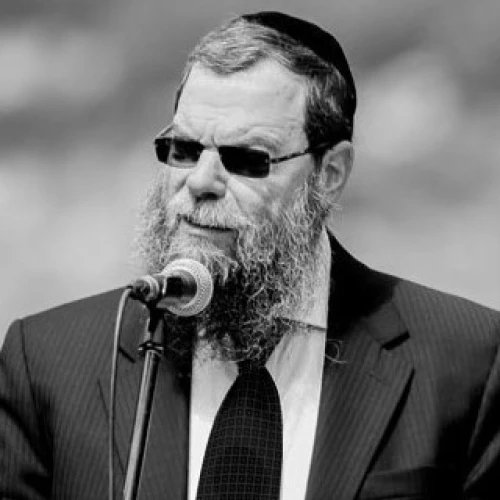
I watched this mechanism up close. From 2016 to 2018, I commanded “Operation Good Neighbor,” Israel’s humanitarian mission to Syrian civilians across the Israeli border. Ordinary families, local armed groups and jihadist groups occupied the same fragmented space while pursuing profoundly different goals. The essential problem was how to distinguish vulnerable people from ideological actors and to understand how organized groups gained influence once state authority collapsed.
Europe is neither Egypt nor Syria. Its institutions are strong, and no government is about to fall. The comparison concerns a mechanism, not a prediction.
There, the threat is not a dramatic seizure of power but a slow expansion of local influence: a neighborhood where the state is seen to have failed, and an organized network ready to fill the gap with schools, charities, sports clubs and a narrative of grievance. The risk is not that Islamist organizations are directing today’s riots. It is that repeated crises of public trust create openings that Islamist networks are better positioned than anyone else to exploit.
Recasting the protests as a Muslim uprising would be false and a gift to extremists.
France is already aware of this mechanism. It is precisely what a May 2025 report commissioned by France’s Interior Ministry warned about. Examining the Muslim Brotherhood and political Islam in France, it described a strategy of entryism: building influence through religious, educational and community institutions rather than open violence. Its central goal was “municipal Islamism,” a bottom-up spread through local ecosystems of mosques, schools, sports clubs and pressure on elected officials.
The report did not establish that there was a plan to seize the French state. Instead, it warned of a long-term project liable to harm “the fundamental interests of the nation.”
Charity and religious schooling are not subversion in themselves. The test is whether a network seeks to subordinate civil law to religious authority, suppress dissent and undermine equal citizenship.
According to French security sources, much of the recent looting was carried out by young men from the housing estates, many of which are home to large populations of immigrant origin. That does not make the looters Islamists. Many were simply opportunists. But these are the kinds of neighborhoods where, according to France’s 2025 report, Brotherhood-linked networks have spent years building local ecosystems. Alienated young men with no stake in the Republic are not the Islamists’ soldiers today, but they could be their recruitment pool tomorrow.
It is also essential to follow the money. In January, the French National Assembly called for the Brotherhood to be placed on the European Union’s terrorist list, which is a political demand rather than an E.U. designation.
The committee report behind that resolution estimated that Qatar had invested tens of millions of euros since the early 2000s in Brotherhood-oriented institutions in Europe. Citing the 2019 Qatar Papers investigation, it referred to some 140 projects financed through Qatar Charity, mostly mosques, schools and Islamic centers. The same report noted that Doha has since moderated this support and tighter oversight has dried up some channels, but cultural, educational and sports associations remain outside that oversight.
The radical left and Islamists hold clashing values: secular individual liberty on one side, religiously grounded authority on the other. But tactical alignment does not require a shared future. Hostility toward Israel, elites or the police can create temporary convergence.
During the October riots, French security sources described an “unprecedented” street alliance between the ultra-left and youths from the housing estates. That was not an Islamist alliance, but it shows how quickly opposing worldviews can find a common adversary.
Symbols work the same way. In Lille, Palestinian flags flew among union banners at a protest over schools and living costs. For some, the flag means solidarity with Palestinians; for others, resistance to Western governments. These meanings should not be conflated. Nor should Europe ignore how a distant conflict has become a unifying symbol of its domestic protest culture.
Islamists are not the only ones positioned to profit from all this. Parties on the far-right and far-left hope to channel this anger into electoral victory. This electoral contest is fought in the open, and voters will ultimately decide it.
The Islamist project is different: It is patient, local, often foreign-funded and built to work through institutions rather than headlines. That is why it garners less attention, and why it deserves more.
This struggle is not between Europe and its Muslim citizens, millions of whom seek the same security and freedom as their neighbors. It is between democratic constitutional authority and any movement that uses democratic freedoms to erode the rights of others. Treating Islam and Islamism as identical would hand extremists a propaganda victory.
Europe should prosecute arson and looting, protect peaceful protest, enforce transparent rules on foreign funding and confront the grievances that fuel alienation. Police cannot substitute for political legitimacy, and social reform cannot substitute for vigilance.
On Oct. 7, 2023, Israel paid a catastrophic price for relying on assumptions about Hamas’s intentions while underestimating its ideological ambitions and operational capabilities.
Europe’s demonstrations are nothing like that massacre, but the lesson applies in many ways. A street protest may last an afternoon; organizational infrastructure can outlast governments. Europe is focused on the people setting fires in its streets. It should also ask who is quietly building power while the streets burn.