


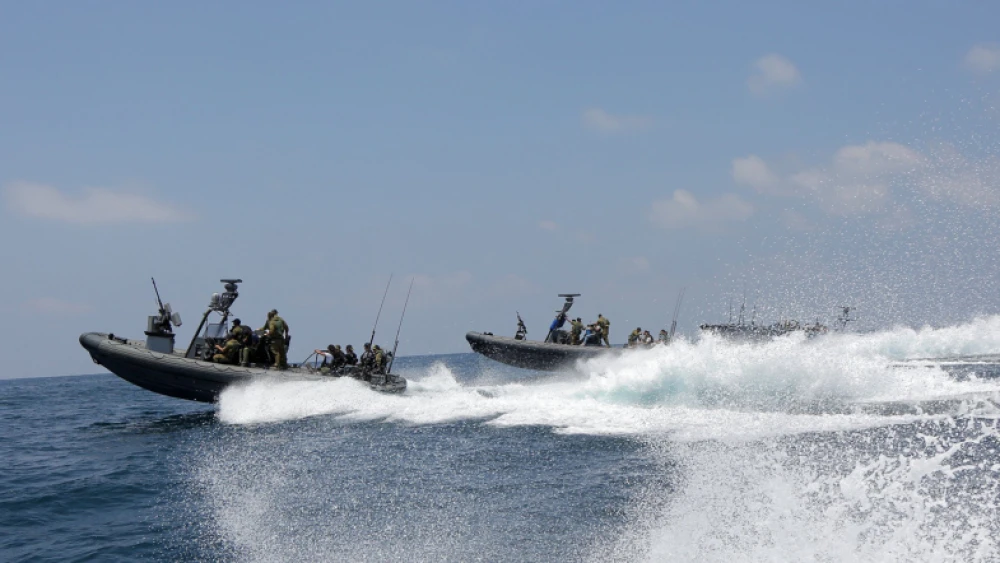
This week’s report that the Israeli Navy has acquired two new amphibious landing craft has again raised the issue of how vital such capabilities are to the Israel Defense Forces and how it can use them when the day arrives.
Over the years, the Israeli Navy carried out a number of amphibious landings on all fronts, such as at the Suez Canal in the War of Attrition.
The jewel in the crown of these actions came in the 1982 Lebanon War when an out-of-date fleet of landing craft under the command of Maj. Gen. Yoram Yair dropped a brigade of paratroopers at the Awali estuary. The troops moved toward Beirut, behind the enemy’s back. That night, I was in command of the warship that secured the southern flank of the landing, and we provided cover fire for the forces that had just reached the beach. The complicated landing was a success and made an impressive contribution to the land maneuvers that followed.
After the war, the Israeli Navy presented a plan to acquire new landing craft that would replace the outdated fleet but encountered resistance from the General Staff, which decided not to fund the proposal. Since then, the IDF has had little ability to outflank enemy forces through amphibious landings.
Years of knowledge and capabilities went to waste until the concept of such landings saw a revival in 2008. Then-IDF Chief of Staff Gabi Ashkenazi approved the acquisition of a few small landing craft for the Israeli Navy, which would allow landings on a small scale. It was enough to revive the idea.
Marine landings are complicated, multi-branch operations that require complex planning and execution but are achievable. The advantage of sending forces in from the sea to outflank the enemy lies in the element of surprise, but it can also help shatter the enemy’s defenses in order to shorten and win a war.
The main threats that face the Israeli Navy are Hezbollah’s surface-to-surface missiles and drones. The Navy, which foresaw this, has acquired Sa’ar 6 missile ships equipped with improved radar systems to detect high-trajectory fire, cruise missiles and drones, and intercept them with sophisticated missiles. Today, the Israeli Navy can attack targets deep inland and, in cooperation with the Israeli Air Force, hamper the enemy’s ability to fire missiles.
Vice Adm. (ret.) Eliezer Marom served as commander of the Israeli Navy from 2007 to 2011.
This article was originally published by Israel Hayom.



