


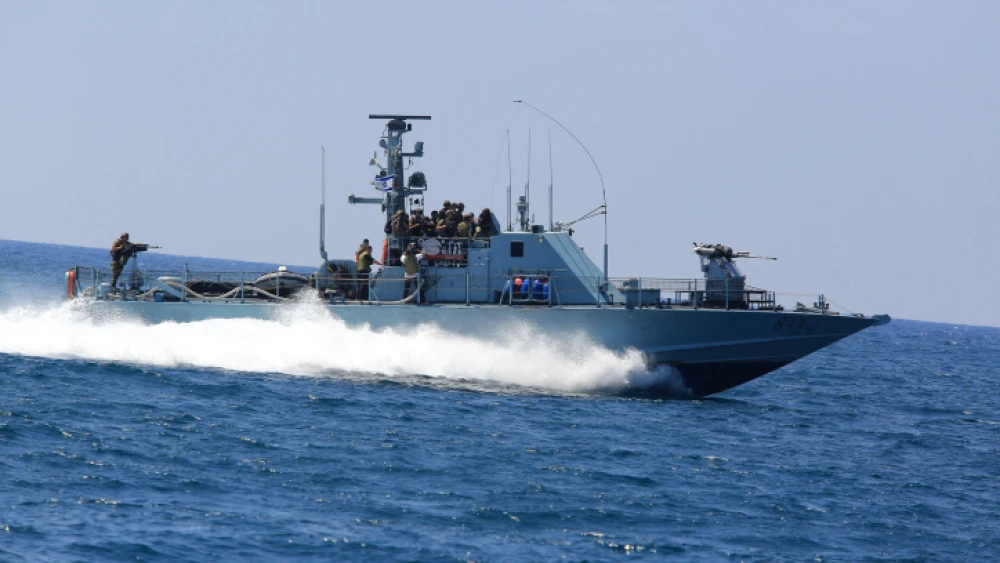
On Saturday, the IDF’s Barak 1 missile system intercepted three drones that had been launched by Hezbollah towards Israel’s Karish gas field “on an intelligence-gathering mission.”
This is a historic interception because, for the first time, it showed that the Barak system, which was installed on navy ships many years ago, was operational, effective and accurate.
During the 1973 Yom Kippur War, Israeli missile boats were targeted by 50 missiles daily, all of which were shot down by electronic warfare systems that had been installed on the vessels shortly before the war.
The Israeli Navy later concluded that in order to succeed in future battles, it needed to develop a system that would neutralize missiles as a generic system without the need for intelligence on the systems installed in the specific missile itself.
This is how the Barak missile project, which was developed in cooperation with two other navies, was born. In the 1990s, the Israeli Navy installed the system on its missile boats—as did the other countries involved in the development—but it never got to intercept a cruise missile or a drone until Saturday.
After the economic water declaration and the discovery of gas fields, Israel decided to task the navy with protecting its maritime zone and resources, which is how the integrated defense system came to be. It includes Sa’ar 6-class corvettes, advanced radar systems, the Barak 8 system and Protective Dome—the maritime version of Iron Dome.
Naval and air force teams have worked for years to create a single defense system that would protect Israel from such threats. We owe them our gratitude.
Hezbollah’s threats to hit the gas rig and, by definition, Israel’s energy independence, put the navy on alert and led to these successes, but it is not enough.
Israel must respond to Hezbollah’s attempt to spy on its gas field by targeting the terror group’s drone system. This will deter Iran and Hezbollah from further attempts to fly drones over Israel’s economic waters.
Vice Adm. (ret.) Eliezer Marom served as commander of the Israeli Navy from 2007–2011.
This article was originally published by Israel Hayom.



