
The decision to prevent Iran from establishing itself militarily in Syria required bold determination, and intelligence and operational capabilities, alongside prudence, so as not to provoke an escalation that would drag the region into an overall armed conflict.
Now, however, it seems that this campaign has exhausted itself.
Israeli officials continue to claim that the Israel Defense Forces’ operational leeway in Syria has not been compromised in the wake of the Sept. 17 downing of a Russian plane by Syrian air defenses trying to counter an Israeli airstrike. Add that to the ensuing crisis with Russia, with Defense Minister Avigdor Lieberman and Israeli Prime Minister Benjamin Netanyahu both asserting that Israel will do whatever it takes to prevent Iran from realizing its ambitions in Syria, but reality on the ground proves otherwise.
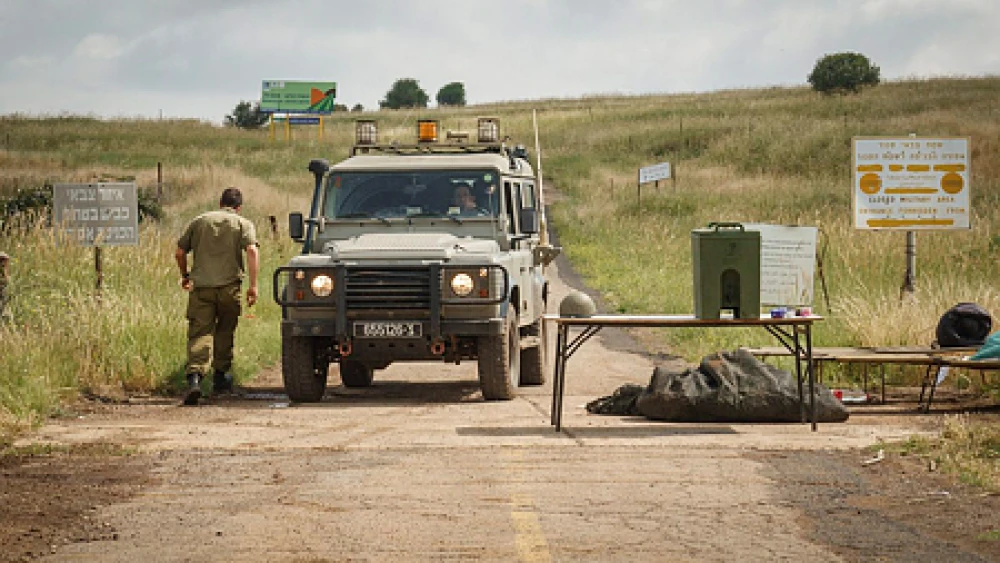
A review of the situation reveals a gap between Israeli rhetoric and reality. Rather than reports of Israeli strikes in Syria, we see reports of the deployment of Russian S-300 air-defense batteries in Syria, and reports on how Mustafa Mughniyeh, son of Hezbollah archterrorist Imad Mughniyeh, is setting up terrorist infrastructure along the Israel-Syria border.
It is safe to assume that the window of opportunity for Israel to truly operate freely in Syria would have closed regardless of the downing of the Russian plane. After all, Russia wants to ensure peace and stability in Syria so it can capitalize on its investment in the war-torn country. Moreover, Moscow does not perceive Iran as a threat, nor does it see the presence of Iranian forces in Syria as a Russian problem.
But even without Russian indifference, it’s hard to imagine that the Israeli airstrikes would be enough to make the Iranians rethink their plans for Syria.
Such attacks can perhaps foil an Iranian hold on one site or another and possibly the deployment of advanced weapons systems, which are easy to identify. But all this is a drop in the bucket given the presence of thousands of Iranian soldiers and Hezbollah operatives, and tens of thousands of Shi’ite militia fighters imported into Syria.
In light of this reality, Israel must think outside the box and recalibrate its course of action. One possible policy shift is to return to tried and true policies, namely exacting a price not only from Iran but also from its host, namely Syrian President Bashar Assad.
The Israeli defense establishment mistakenly sees Assad as an Iranian puppet but in reality, he is bolstering his position. It is possible that if he—and his Russian patrons—are made to understand that the Iranian presence on Syrian soil has a price, he will act to restrict it.
Israel missed its chance by allowing Assad’s forces to simply regain control of southern Syria without exacting a price, as this also made way for Iranian and Hezbollah presence near the Israeli border.
But it’s not too late: A change of direction is still possible, and it must be made very carefully so as not to provoke an overall confrontation. There is no better time to pursue this than now, as a new IDF chief of staff is about to take office.
Eyal Zisser is a lecturer in the Middle East History Department at Tel Aviv University.