
Arabs living in what Jews call the Land of Israel, including Judea and Samaria, call themselves “Palestinians” after “Palestine,” the non-Jewish term for the region.
They did not do so until quite recently, but nonetheless, many Arabs in the region and their sympathizers have co-opted the words “Palestine” and “Palestinian” to give their national movement a sense of longevity, credibility and ownership.
The word “Palestine” is not Arab or Middle Eastern in origin. It dates back some 1,900 years and is derived from a people who were not native to the region: The Philistines, a people from the Aegean Sea who were closely related to the ancient Greeks. They lived on the coast of what is now the Gaza Strip and Israel, but had disappeared by the 6th century BCE.
The name associated with them, however, did not die out. The Romans, in a fit of spite, reapplied the term “Palestine” to the Land of Israel centuries later, after they defeated a Judean uprising in 135 CE.
In effect, the Romans sought to erase the association between the Land of Israel and the Jewish people.
The “Palestine” moniker continued to be used long after the Roman Empire fell. When Muslim armies conquered the region in 629 CE, they Arabized the name to “Filastin.” This term cannot be found in the Quran, while the name “Israel” is mentioned several times.
The regional name “Palestine” endured. During the Middle Ages, it became common in early modern English and was employed by the Crusaders. But for nearly 2,000 years, it never referred to a country or a group of people.
In short, for most of recorded history, there were never any “Palestinians.”
After World War I, the modern contours of “Palestine” were established. The British Mandate for Palestine originally consisted of present-day Israel, Gaza, Judea and Samaria, and Jordan.
During the British Mandate period, the term “Palestinian” usually referred to Jews living in the Mandate, as well as their institutions.
Before Israel was founded, several prominent Jewish and Zionist organizations used the name “Palestine.” These included The Palestine Post newspaper and the Palestine Symphony Orchestra, which are now The Jerusalem Post and the Israel Philharmonic Orchestra.
At the time, many Arabs in British Mandatory Palestine considered themselves part of Greater Syria rather than “Palestinians.” In 1937, a local Arab leader told the Palestine Royal Commission, “There is no such country [as Palestine]. Palestine is a term the Zionists invented! Our country for centuries was part of Syria.”
Arab historian Philip Hitti echoed this sentiment shortly before Israel declared independence, saying, “There is no such thing as Palestine in history, absolutely not.”
The watershed moment for the “Palestinian” national movement came after the 1967 Six-Day War, when Israel won control of Judea and Samaria from Jordan. The words of author Walid Shoebat of Bethlehem sum up the profound shift in local Arabs’ identity: “On June 4, 1967, I was a Jordanian, and overnight I became a Palestinian.”
Since 1967, a whole national mythology has been created around the terms “Palestine” and “Palestinian.” For example, the Palestinian Arabs have claimed to be descendants of the Canaanites who preceded the ancient Israelites and Philistines in the Holy Land.
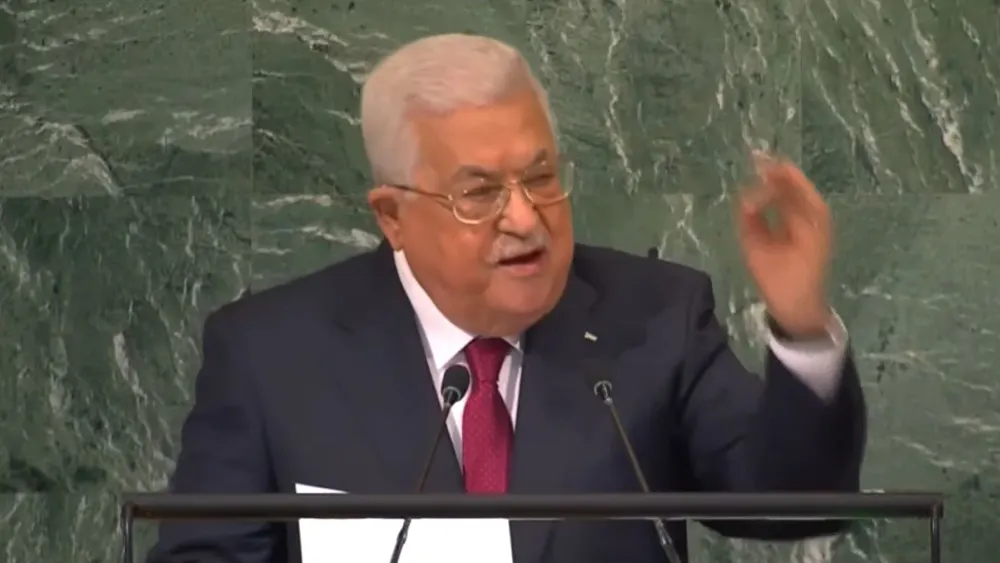
In 2018, Palestinian Authority chief Mahmoud Abbas told the United Nations’ Security Council, “We are the descendants of the Canaanites that lived in the land 5,000 years ago and continued to live there to this day.”
But most Palestinians trace their origins to prominent tribes in Saudi Arabia, Syria, Iraq, Yemen and Egypt. Yasser Arafat was born in Egypt. Even the Kanaan family in Nablus (Shechem) traces its ancestry to Syria. In any case, the Canaanites had disappeared more than 1,600 years before the Arabs first arrived in the Holy Land.
Preposterously, Palestinians have even asserted that Jesus was a Palestinian. In a 2013 Christmas message, Abbas called Jesus a “Palestinian messenger.” In 2019, Palestinian-American activist Linda Sarsour posted on Twitter, “Jesus was a Palestinian of Nazareth.”
We beg the pardon of Mr. Abbas and his fellow fantasists, but Jesus was a Jew from Judea, which was named Judea because it was and still is the homeland of the Jewish people.
While the Arabs of the region are free to call themselves whatever they want, they are not free to hijack the 3,000-year history of the Holy Land for themselves. In the end, the name “Palestine” represents the Jews’ original dispossession of their homeland 1,900 years ago.
James Sinkinson is president of Facts and Logic About the Middle East (FLAME), which publishes educational messages to correct lies and misperceptions about Israel and its relationship with the United States.