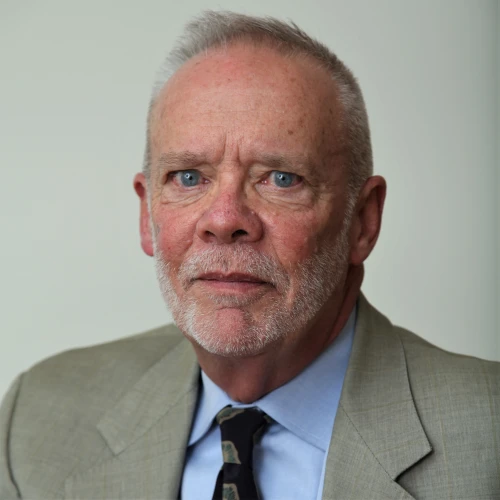

The announcement that sanctions had been imposed by Canada, joining its counterparts in the European Union, against me and the organization I serve did not come as a surprise. For years, I have been well aware that we were in the Europeans’ crosshairs, ever since a petition we filed led to the demolition of an illegal school that the Palestinian Authority had built with European Union funding in the Herodium Nature Reserve on the edge of the Judean Desert.
Who was surprised by the announcement? The government of Israel, which failed to prepare in advance to stand alongside organizations like ours—organizations that operate through lawful and legitimate means in pursuit of a lawful and legitimate cause, yet find themselves the victims of sanctions.
During the Biden administration and the wave of sanctions imposed by the United States, significant efforts were initiated under the leadership of right-wing members of the Israeli government, but those efforts were shelved when U.S. President Donald Trump was elected and immediately rescinded the previous administration’s Executive Order. As a result, the current wave has caught Israel’s leadership unprepared—and somewhat clueless. What they do not fully understand is that they are next in line.
The sanctions regime that entered our lives some two years ago reminds me of the famous World War II-era protest poem by Pastor Martin Niemöller: “First they came for the socialists, and I did not speak out—because I was not a socialist. Then they came for the trade unionists, and I did not speak out—because I was not a trade unionist. Then they came for the Jews, and I did not speak out—because I was not a Jew. Then they came for me—and there was no one left to speak for me.”
Israeli society—from its leaders and politicians to its judges, and down to the very last citizen of the Jewish state—must understand: We know where this begins, but we have no idea where it ends.
The very idea of imposing sanctions on individuals and organizations in another country is a clear declaration: We do not trust your legal system, your courts or your law-enforcement institutions, and therefore, we deem it necessary to intervene.
Although sanctions were invented to address malign actors that operate beyond the borders or reach of individual states, their application may also be justified as a means of protecting human rights within countries plagued by anarchy, where governmental systems have collapsed and no longer function. This is most certainly not the case in Israel, where a robust and independent justice system continues to uphold the law.
When Israel’s ostensibly democratic allies interfere in internal processes—brazenly trampling the apparatus that is the cornerstone of Israeli democracy and sovereignty—the result is a situation so absurd that it is nearly inconceivable. Imposing sanctions that circumvent the entire Israeli justice system reflects a profound lack of confidence in the State of Israel itself.
Today, the majority of the Israeli public and its elected representatives may remain silent. They may believe that creating distance between themselves and “the settlers” or Regavim will protect them from European abuse. But there is no doubt that this strategy is worse than shortsighted; it is suicidal.
Sooner or later, the Europeans will come for you as well. And when they do, there may be no one left to raise a voice in your defense or in defense of Israeli democracy.
When the European Union announced this new round of sanctions, at first I felt proud; by singling us out, it acknowledged that our work is significant enough—and disruptive enough to the European Union’s efforts to establish a Palestinian state unilaterally and contrary to Israel’s interests—that they felt compelled to use drastic, unprecedented, even desperate measures to stop us.
But it turns out that these sanctions are not merely a declarative measure intended to send a message or issue a warning. They carry practical consequences as well: restrictions on the use of credit cards; limitations on conducting transactions with individuals and companies connected to Europe; and other obstacles.
These measures have not stopped us, nor are they particularly dramatic in our specific case. On the other hand, rather than continuing our research and advocacy in an effort to advance causes that are supported by a very large segment of Israeli society, we now find ourselves running between lawyers and international consultants, preparing appeals in Luxembourg and legal petitions to clear our names, a process that will take many months.
Ninety years ago, Europe’s Jews acquiesced to the Nuremberg Laws and convinced themselves that these decrees were a passing storm they could weather. Only a few saw what was coming and urged people to join them in fleeing before the flames engulfed the continent, before it was too late.
Today’s Europe is the same. The sanctions are no different than the Nuremberg decrees; then, as now, they use financial restrictions to achieve devastating political goals that have catastrophic consequences for the Jewish people.
Will we learn from history—or be doomed to repeat it?