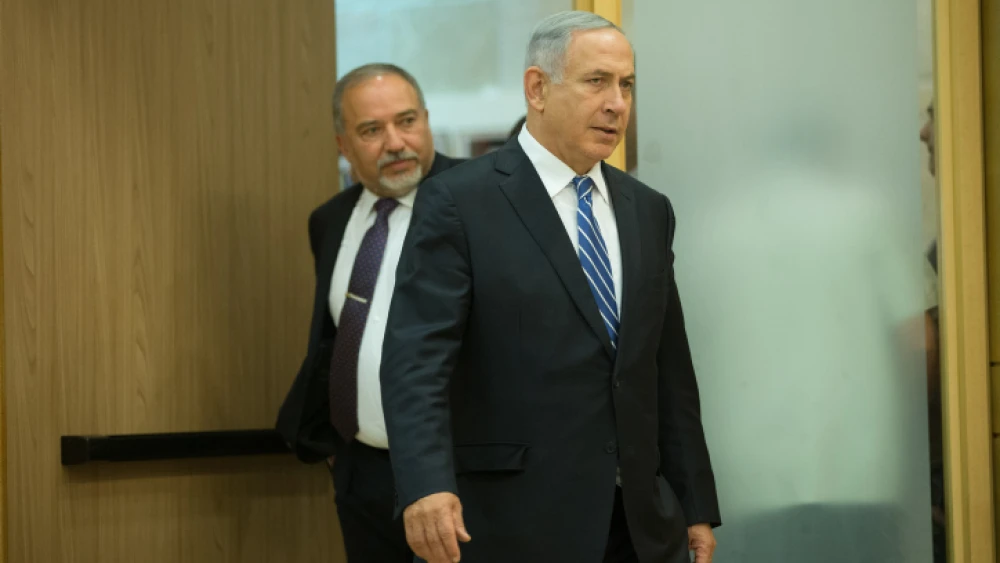
Contrary to assessments, Israeli Prime Minister Benjamin Netanyahu is in no rush to return the mandate he has been given to form a new government. As long as there is no conflict between the legal and political timetables, he has no reason to hurry. The longer he holds on to the mandate, opting not to take advantage of the time he has been allotted to forge new alliances and shirk the old, the easier it will be for him to ensure both the haredim (ultra-Orthodox) and the right-wing bloc stick by his side when Blue and White’s Benny Gantz is tasked with the job.
Of course, things could change another hundred times. But all signs point to the current faltering coalition negotiations dragging on until the very last minute, when President Reuven Rivlin will no longer able to task someone with forming a government. At that point, the mandate will go to the Knesset, where one lawmaker can be appointed prime minister should a minimum of 61 lawmakers throw their support behind him or her in the role.
This is a dangerous time for both Netanyahu and Gantz—one they have been preparing for weeks. Should they both fail to form a government in the 28 days allotted to them, other players in the Knesset will be given the opportunity to do so.
This brings us to the hottest name in the Likud Party outside of Netanyahu right now: Knesset member Gideon Sa’ar.
A short-lived initiative to hold primaries in the Likud Party made clear Netanyahu’s concerns Sa’ar would try to undermine him were not entirely unfounded.
To be sure, announcing your intention to run in democratic primaries you did not initiate is not the same thing as undermining a leader in office. But with the Likud and Netanyahu in such a precarious spot given the ongoing efforts to maintain the 55-member bloc under the prime minister, Sa’ar’s announcement has been seen as damaging and offensive.
But we may also see a surprising move from Blue and White. Seeing as his fellow party leaders Yair Lapid and Moshe Ya’alon continue to keep Gantz on a short leash in an effort to keep him from being tempted into leading a unity government that includes a rotation deal, the Blue and White chief may also fail to form a government. In that case, another candidate from within the party, Gabi Ashkenazi, for example, could show a little more assertive leadership than its current chairman and act to strike a deal with Netanyahu himself. Such a deal could lead to that party member finding his way to the Prime Minister’s Office in another two years, if not earlier in the case of an indictment.
Of course, one cannot completely rule out the possibility that in the end, when the threat of a third election becomes reality, redemption will come from, of all people, Avigdor Lieberman. The Yisrael Beiteinu chairman, who appears to have already made the politically cynical move of the decade, might as a result be less enthusiastic about the prospect of another election.
In this last election, the one he forced on the country, Lieberman’s party grew from five to eight Knesset seats. To the extent that he believes he has realized his party’s potential for growth, Lieberman may prefer to be seen as the responsible adult in the room that spares the country another election and enters a right-wing haredi government, the likes of which he has been party to so many times before.
Mati Tuchfeld writes for Israel Hayom.
This article first appeared in Israel Hayom.