
Nearly four decades after a quarter of a million people gathered in Washington, D.C., to demand freedom for Soviet Jews, Freedom Sunday remains a powerful reminder that advocacy is not merely symbolic. It is strategic, moral, persistent and capable of changing history.
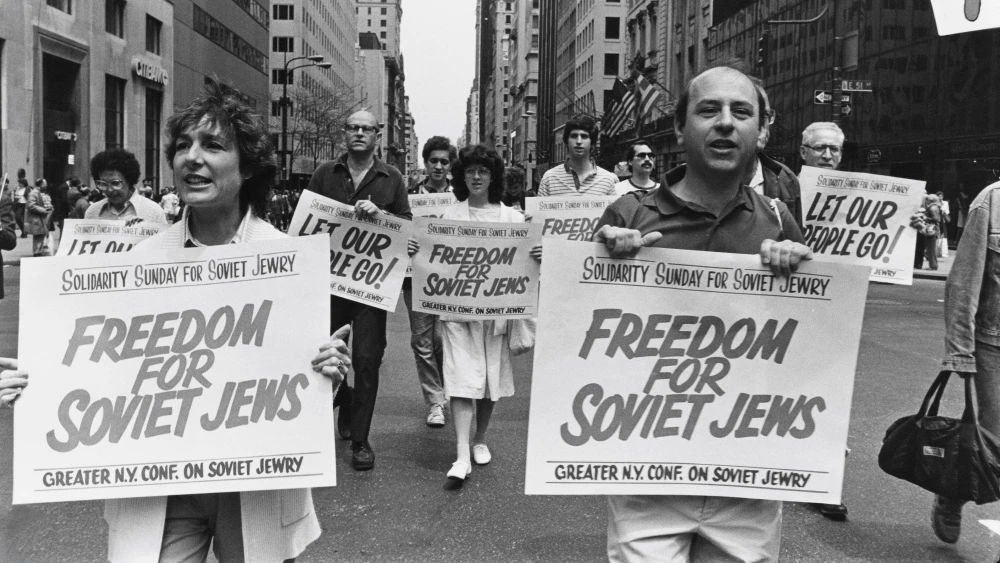
On Dec. 6, 1987, on the eve of a summit between then-President Ronald Reagan and Soviet leader Mikhail Gorbachev, American Jews and allies filled the National Mall under the banner “Let My People Go.”
They arrived from across the country by bus, train, car and plane. They came with signs, songs, prayers and a clear demand: Soviet Jews must be allowed to live freely, practice their faith and leave the Soviet Union if they chose.
The legacy of Freedom Sunday endures because it left us with five important lessons about advocacy that still resonate.
Meaningful advocacy begins with human stories. Statistics may demonstrate the scale of injustice, but stories create connection. When we learn a person’s name, understand the choices that person faces and recognize the cost of silence, an issue becomes harder to ignore. Advocates learned the names and stories of refuseniks and prisoners of conscience, and then made certain that the world learned those names as well.
Successful advocacy requires clear goals. The movement did not simply condemn the Soviet system. It demanded specific actions: freedom of religion, an end to persecution, the release of prisoners and the right to emigrate. Clarity made it possible for people at every level to participate. Whether someone was speaking to a member of Congress, organizing a local rally or writing a letter, the objective remained unmistakable.
Advocacy must reach beyond those already committed to the cause. Freedom Sunday brought together people from different communities, generations and political perspectives. It demonstrated that coalitions become stronger when they are built around shared principles rather than complete agreement on every issue. Human dignity and religious freedom offered a moral foundation broad enough to unite diverse partners.
Persistence matters. Social change rarely follows a predictable timetable. Years can pass without visible progress. Advocates may wonder whether their efforts are being heard. The Soviet Jewry movement showed that sustained pressure can shape public opinion, influence national policy and alter diplomatic conversations. No single letter, meeting or rally achieved freedom. Together, repeated over time, those actions created momentum that brought down the Iron Curtain.
Ordinary people are essential to extraordinary change. Freedom Sunday is remembered for its enormous crowd, but it existed because thousands of people completed less visible tasks. They arranged transportation, recruited participants, prepared materials, raised money and persuaded friends to attend. History often celebrates the public moment, but advocacy is built through patient work that happens long before the cameras arrive.
Freedom Sunday succeeded because it transformed individual suffering into a shared public cause. Soviet Jews were not treated as distant strangers. Their struggle became personal to people who might never meet them. Families adopted the names of refuseniks. Students wore bracelets bearing the names of prisoners. Congregations left empty chairs on stages and at holiday tables to represent those who could not live openly as Jews.
Its legacy is not only about what was achieved for Soviet Jews but also about how change becomes possible. Advocacy succeeds when moral conviction is joined with strategy, when personal stories are connected to public policy and when people remain engaged even after attention shifts elsewhere.
Today, we face different challenges, but the responsibility to act remains. We cannot assume that injustice will correct itself or that someone else will speak.
Freedom Sunday reminds us that advocacy is hope made visible through action. It grows when communities organize around a clear purpose. It succeeds when people refuse to accept silence as the final answer.