A delegation of European imams, religious leaders and theologians organized by the European Leadership Network (ELNET) arrived on July 6 at Israel’s Ben-Gurion International Airport.
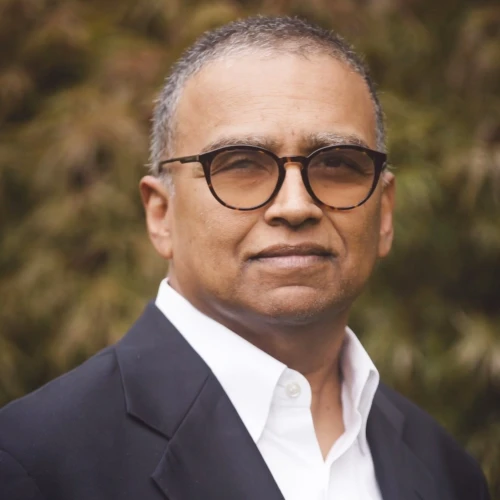
The delegation was led by a French imam, Hassen Chalghoumi, a well-known religious scholar. I was a part of the delegation, which included imams from Italy, France, the Netherlands and other European nations.
Oct. 7, 2023, marked a significant event that affected the world, particularly in countries with Muslim populations. Individuals and groups from backgrounds including the religious, political and secular worlds, publicly expressed support for the Palestinians in Gaza.
Since Oct. 7, several Muslim political and religious peace activists who had previously expressed support for Israel refrained from making public statements. Only a limited number of individuals within the global Muslim community publicly expressed opposition to Hamas and voiced support for Israel’s defensive military actions in Gaza.
The Jewish nation worldwide, particularly in Israel, experienced a perceived absence of support from the Muslim community. This situation posed a significant challenge for people advocating Islam as a religion of peace. Since Oct. 7, the Jewish community has sought public condemnation from Muslim leaders and religious institutions regarding the barbaric actions of Hamas on Oct. 7, which were carried out in the name of Islam.
For us, Sunday, July 6, 2025, was a historic day. Muslim religious leaders from across Europe arrived in Israel and publicly condemned the actions of Hamas while articulating the peaceful tenets of Islam. This marked an important milestone since Oct. 7, reflecting a commitment to interfaith dialogue and peace. The commitment undertaken in Israel represented a challenging course of action, and we were fully aware of the potential implications of our peaceful initiative.

Jerusalem and Yad Vashem
We began our diplomatic but neutral visit with a meeting with President Isaac Herzog, Israel’s head of state, during which we presented the principles of peaceful Islam and clearly denounced any acts of violence perpetrated by groups associated with political Islam.
We held further meetings and discussions with members of the Israeli parliament (the Knesset), including representatives from both governing and opposition parties. We met with the minister of the interior and the minister of religious services, both of whom welcomed us warmly and graciously expressed their support for our peaceful journey.
They affirmed Islam as a religion of peace and explicitly denounced the violent doctrines associated with political Islam.
The imams’ peaceful mission continued as we engaged with people from diverse backgrounds, ethnicities and religious affiliations, sharing the objectives of our visit in a respectful and transparent manner.
The delegation visited Yad Vashem, where its members observed exhibits and read accounts documenting the worst actions ever committed in modern history, carried out by the Nazis against the Jewish people based on race and ethnicity.
The visit included a guided tour in Arabic through the Holocaust history museum and a memorial ceremony held in the Hall of Names, where Imam Chalghoumi and I laid a wreath and lit an eternal flame in honor of the six million Jews killed by Nazi Germany and its allies during the Holocaust.
We saw the pictures of starving Jewish prisoners, nearly dead from hunger, who were dying at the rate of 2,000 per week due to a lack of food. We also saw photographs of the camps, which were used for “scientific” experiments on Jewish people.
Tel Aviv and southern Israel
We were escorted to the IDF Diplomacy Unit Center in Tel Aviv, where senior military officials delivered a comprehensive briefing on the Israel-Gaza war. During the session, we were presented with unedited raw footage recorded by Hamas members during the attacks on Oct. 7.
A few members of the delegation exited the room, unable to continue observing the distressing footage depicting acts committed by Hamas against Israelis. Those who remained were visibly affected and openly expressed their emotions.
The delegation also visited the site of the Nova music festival, where many Israelis tragically lost their lives during an attack by Hamas. It was a solemn experience for the imams to witness images of those who are no longer with us.
The delegation promptly traveled to Kfar Aza. On Oct. 7, approximately 250 Hamas and other Palestinian militants attacked Kfar Aza, a kibbutz located about three kilometers (1.9 miles) from the Gaza border.
We received a briefing from IDF officials about the massacres that took place and entered one of the houses where a violent incident occurred involving Hamas terrorists. Additionally, we met with the parents of a couple who lost their lives in the house during the attack.
It was a somber moment for the entire delegation to witness the acts perpetrated by Hamas against innocent and peaceful residents of the kibbutz, contrary to the values of our faith.
Kerem Shalom
We were taken to the Kerem Shalom Crossing near the Gaza border, where we observed the quality of food prepared for delivery to the people of Gaza in lorries at the crossing near Rafah. Each lorry delivering humanitarian aid to the Gaza crossing is subject to rigorous checks, oversight and inspection procedures.
There was a process of passing the humanitarian aid to Gaza. Once all aid has been cleared, it is loaded into lorries and enters the Gaza Strip. The IDF stated that its prime objective is that the humanitarian aid reaches the people of Gaza directly, not Hamas.
We also visited the Israeli military base that houses the Muslim Bedouin unit, which is often referred to as the “Reconnaissance Battalion” or the “Bedouin Battalion.” A significant proportion of Arabs serving in the Israel Defense Forces are Bedouin from the Negev region.
The delegation received a briefing from an Arab Muslim colonel of the Bedouin Battalion, who conveyed their firm commitment to defending both the country and the citizens of Israel.
Thousands of Muslim Bedouin are serving in the Israeli army. The IDF colonel stated, “Since Oct. 7, a number of Muslims have expressed interest in joining the IDF to participate in operations against Hamas, whom they identify as a common adversary.”
He conveyed the significant news that, to date, 33 Muslim IDF personnel from the Bedouin Battalion have lost their lives during combat with Hamas on Oct. 7 and throughout the war within the Gaza Strip.
The delegation was pleased to meet and engage with fellow Muslims serving in the IDF. Communicating in Arabic, they shared insights into the lives, service, dedication and challenges faced by members of the Arab-Israeli community while serving in the IDF.
Majdal Shams and the northern border
We also visited Majdal Shams, a Druze community where 12 children lost their lives as a result of a Hezbollah missile strike, and met with one of the children’s parents. They told us that they forgave those responsible for the deaths of their children and left the matter to God to take revenge for the loss of their loved ones.
The display of their patience and mercy left a strong impression on all members of the delegation. We extended our deepest condolences to them and prayed for the deceased children.
The delegation was escorted to the Syrian border, adjacent to the blue area designated as “no one’s area” by the United Nations, where a comprehensive security briefing was provided by an IDF officer holding the rank of major.
The major provided a briefing on the key challenges facing the IDF since Ahmed al-Sharaa (also known by his nom de guerre, al-Julani) assumed office as president of the new Syria, as well as operational updates regarding activities within that country. Due to security sensitivities, specific details of these operations cannot be disclosed here.
Subsequently, we were escorted to the nearby United Nations Disengagement Observer Force (UNDOF) office, where the officer who heads UNDOF delivered a brief video presentation. He said its primary objective was to facilitate peaceful interactions between Israel and Syria, as well as among communities residing near the border.
UNDOF firmly opposes military engagement in the region except in situations where it is essential for self-defense. However, it cooperates with the IDF to support peacekeeping efforts along the border or in its vicinity.
We also met two families of Israeli Arabs (Muslims). One member of one family had been abducted and held hostage by Hamas on Oct. 7 and was subsequently released as part of a deal between Israel and Hamas. Another Arab family lost four members as a result of an Iranian missile attack.
It was not unexpected to learn that Hamas, Hezbollah or Iran have
engaged in actions that target civilians, including Muslims residing in Israel, because their objectives are to kill as many civilians as possible, regardless of race, religion, age, gender or ethnicity. We offered our condolences to the bereaved family and observed a moment of silence in memory of those who passed away while praying for their souls
Objectives
The purpose of the imams’ delegation was straightforward and clearly defined. Our delegation maintains a neutral stance and does not support or oppose any particular community or religion.
We engaged with individuals from diverse backgrounds, including
Jewish, Druze, Christian and Muslim communities, as well as politicians from both government and opposition blocs, military personnel and community leaders.
We also met families of the deceased and observed the extensive destruction of villages, towns, buildings and commercial areas and the profound impact of war on individuals.
Israel serves as a center for Abrahamic religions and plays a significant role in the political landscape of the Middle East. With this in mind, we have conveyed a message of peace from the Holy Land to the world.
A majority of the European imams and religious leaders were visiting Israel for the first time, expressing hopes for peace for all individuals residing within and beyond Israel’s borders. The Prophet of Islam had also sent a message of peace to different nations before and during war.
We rejected political Islam, the ideology of the Muslim Brotherhood and actions committed by Hamas and other Islamist forces. These acts of violence adversely affected the lives of civilians in Israel and Gaza, undermined peace and stability in both areas and contributed to regional destabilization.
Islam does not support political or religious violence and unequivocally rejects all forms of extremism carried out in the name of religion. There is no place for extremism in Islam. The Prophet of Islam warned Muslims and said, “Beware of extremism,” while on another occasion declared, “Death to extremists.”
Without any doubt, the delegation represented Muslims across Europe as well as Islam itself, because the Prophet of Islam said, “Muslims are imams of the religion.” Any Muslim who pursues, advocates and fosters peace embodies the foundational principles of peace inherent in Islam. Likewise, a Muslim who endorses violence in the name of religion represents the political ideology of Islamism.
Challenges
The imams who visited Israel encountered significant challenges and reported receiving threats from some members of the Muslim community in Europe. One member of the delegation, who is an imam, had his business subjected to a boycott by members of the Muslim community. Another imam’s son was severely beaten by a Muslim mob.
An imam from Holland was forcibly dismissed from his role in local mosques. Muslim communities launched a social media campaign throughout Europe in response to the imams who visited Israel.
Islamist supporters and their groups have excommunicated us from
Islam, an act that is against Islamic law. Recently, Al-Azhar University, a distinguished Sunni religious institution in Egypt, officially issued a statement expressing condemnation of our visit to Israel, and in the statement, it declared Imam Hassen Chalghoumi a hypocrite.
I also received threats on social media and some Islamist groups have launched a derogatory campaign slandering me and accusing me of collaborating with Israelis. They recorded YouTube programs calling me a hypocrite and out of the bounds of Islam.
Conclusion
While Islam is a religion of peace, people from the Muslim community used Islamic texts and interpreted Quranic verses to generate a hateful atmosphere against the Jewish community across the Western world. Jews belong to the House of Abraham and Muslims and Christians are also members of the holy house.
The holy Quran declared Jews not only a people but a family of the book and the Abrahamic house. Regional peace is unlikely to be achieved while conflicts persist among people from the Abrahamic faiths.
Political Islam is a danger to civilized society and a security threat to the region. This Islamism should be condemned, rejected and countered by Muslims who understand the values of peaceful Islam.
Imams participating in the delegation are distinguished Muslims who have taken significant steps to oppose political Islam, which has become increasingly prevalent in the Western world. As a result of their commitment and courageous step to pursue peace in the Holy Land, they are facing considerable challenges.
Their courageous actions in support of peace since Oct. 7 should be acknowledged in the context of modern history. These imams are the real ambassadors of Islam and peace.