


The Vienna negotiations over the nuclear deal with Iran are now entering their final stretch. The Iranians have asked for a few more days for “consultations” and may engage in more foot-dragging before they give their final answer to the latest proposals.
Over the past 24 hours, the Qataris have once again entered the fray in order to help tie up loose ends and assist both sides in taking the final few steps to the finish line. Qatar’s Assistant Foreign Minister for Regional Affairs Dr. Mohammed bin Abdulaziz bin Saleh Al Khulaifi has left on an urgent mission to Tehran to meet with Iran’s Deputy Foreign Minister Ali Bagheri Kani, who is the head of the Iranian delegation to the Vienna talks. The Qatari official wasted no time calling in the European Union coordinator for the talks so that he could brief the Americans.
What is truly fascinating in this story is that there is already a draft deal that is ready for all sides to agree on. It includes gradual sanctions relief in return for a pause in uranium enrichment and mothballing advanced centrifuges. After Iran made the “concession” of dropping the demand of removing its Revolutionary Guards from the State Department’s list of terrorist organizations, there is still one issue that has not been resolved: The ongoing International Atomic Energy Agency probes into suspicious nuclear activity in Iran. There appears to be deadlock there.
While this issue might seem trivial, Iran has refused to provide answers that would help close these cases, including the question of uranium traces found at three sites. Tehran has so far remained hunkered down in its refusal to cooperate and has even gone beyond that by insisting the investigations be shut down before any deal takes effect.
It is easy to see why Iran has taken this intransigent approach. Any explanation would be tantamount to an admission that it had been lying to the world. This would make it a perennial suspect on such issues, earning the world’s designation as a country that could very well deceive its way to a bomb.
Mossad Director David Barnea is right that Iran has been lying to everyone, and everyone knows it. But he was wrong to publicly criticize the Biden administration for reentering a deal that is based on deception. This was a mistake not because it is not his role to criticize the U.S. administration, but because such criticism won’t be of any help.
Israel, despite its many efforts, was unable to stop the 2015 negotiations and eventual nuclear deal. Those who claim that trying harder this time would derail the deal are wrong. The main focus of Israel’s activity vis-a-vis the U.S. should be about coordinating with the administration on how to bolster inspections in Iran so that violations can be detected in real time, as well as coordinating a possible military response if such breaches are found.
The deal may grant Iran a “license” to construct a bomb by 2031, but the ongoing threat posed by Iran’s conventional capabilities will increase immediately after a deal is completed due to the billions of dollars that would fill Iran’s coffers and allow it to upgrade its missile production capabilities and terrorist endeavors.
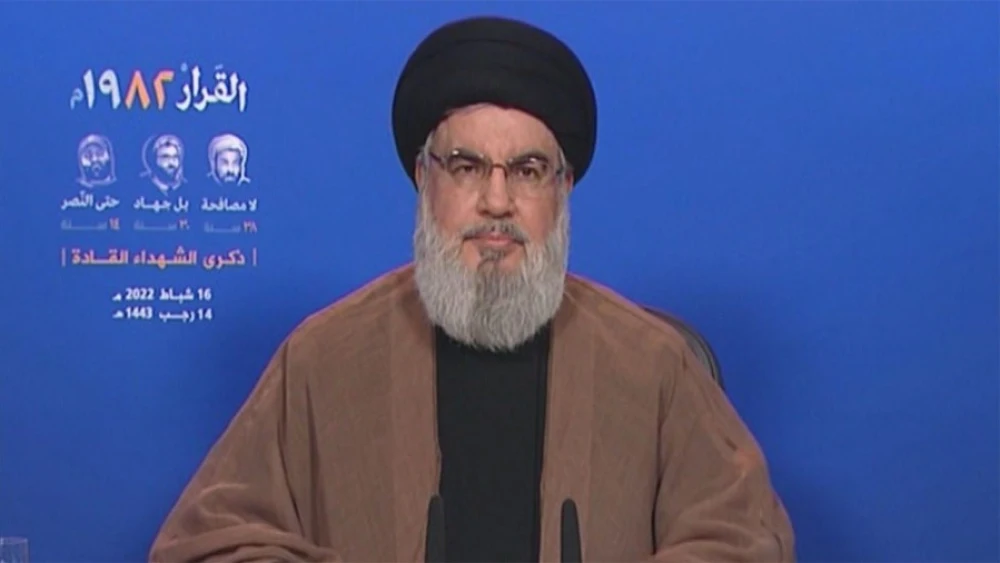
It is not necessary to look all the way to Tehran to see the negative impact of the deal. The very fact that the deal is nearing has already provided a tailwind to Hezbollah chief Hassan Nasrallah, who has been ratcheting up the threats to Israel almost daily over the Karish gas field dispute, which is solvable.
Hezbollah does not pose an existential threat to Israel, but we should not discount the potential damage that tens of thousands of missiles can inflict should hostilities erupt on the northern border. On this matter, coordination with the U.S. on the Israeli response if Hezbollah makes another mistake by launching an attack is very important.
Oded Granot is a senior Middle East and Arab World commentator.
This article was originally published by Israel Hayom.


