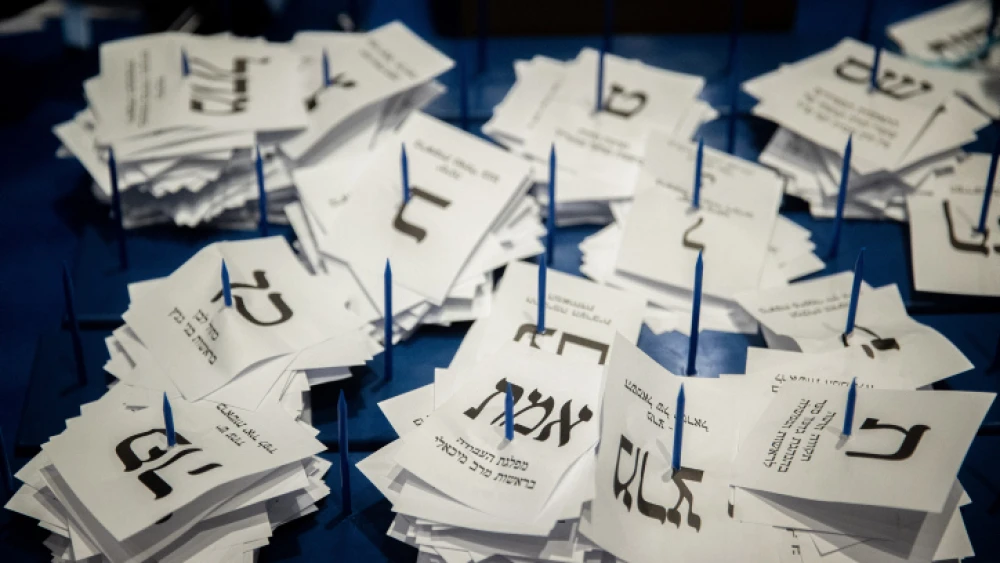

On Nov. 1, Israelis will go to the polls to elect the next Knesset. It is the fifth election in three years. While some of the faces have changed, some parties are no longer relevant and others have jumped in the polls, for the most part, the candidates and parties are the same as in the past.
Polls taken the week before the election not only showed little movement since the election was announced but little movement since the first election three years ago. Moreover, the most frustrating thing isn’t that the same parties are receiving the same number of votes time after time, but that the “blocs”—the two sides of the coalition divide—remain the same. Half of them refuse to join a government with anyone from the other half, and vice-versa. Thus, even though a government could be formed, it won’t be.
All of this leads to a sense of exhaustion and apathy among Israeli voters. Worn out by the near-constant campaigning, Israelis are sick and tired of having to listen to the same attack ads, unrealistic campaign pledges and poll after poll that never seems to get it right. They are sick of politicians who hold on past their time, refusing to retire when they should. They are tired of candidates making promises mid-campaign only to break them in order to get a seat at the Sunday morning cabinet meeting. There is a lack of enthusiasm for this election that is unparalleled in Israel’s history.
Indeed, it’s challenging for the Israeli citizen not to become cynical about the political process, the candidates and our leaders in general. It’s difficult not to feel that some candidates have put their own self-interest and political survival ahead of the needs of the Jewish people. Needless to say, this viewpoint doesn’t inspire enthusiasm for elections.
As a result, some Israelis, consciously and deliberately, may choose not to vote. Besides apathy and exhaustion, some of them have moral reasons for not voting: They don’t want to vote for someone who will harm Israel while they’re in office. Others take a more pragmatic stand, explaining that a non-vote is a protest vote. When challenged that no one will ever know they didn’t vote and their protest will be ineffective, they respond with the Torah’s idea of a machah, a legal protest that only requires two people to hear it.
A small group of Israelis, however, will want to vote and feel they should vote, but simply can’t bring themselves to do so. This small but growing segment of the Israeli population presents us all with a dilemma. Responsible leadership must address it.
There are Israelis who believe it is abhorrent not to vote. They maintain that every citizen in a democracy has a responsibility to every other citizen to participate in the nation’s elections. Refusing to vote because candidates don’t meet your standards is shirking one’s responsibility. After all, they believe, if enough citizens decide to protest by not voting, the elected officials won’t be representatives of the people.
Nonetheless, if these elections do not produce a clear coalition and a ruling government that lasts for at least two years, something must change, because if Israel’s political leaders continue on this path, more and more Israelis will feel alienated from the political process. They will choose to stay home.
We shouldn’t be pessimistic or cynical about elections. The ability to vote is not only a responsibility but an opportunity. For decades, the early Zionists battled so the two-thousand-year-old dream of Jewish self-determination in Eretz Yisrael would be realized. For the first time, Jews have the opportunity to vote for their future. That isn’t an opportunity to walk away from, even in protest. But Israel’s politicians also have a responsibility and an opportunity—to give us something to vote for.
Rabbi Uri Pilichowski is a senior educator at numerous educational institutions. He is the author of three books and teaches Torah, Zionism and Israel studies around the world.