
In the movie “Captain America,” a German dissident says: “People forget that the first country the Nazis invaded was their own.”
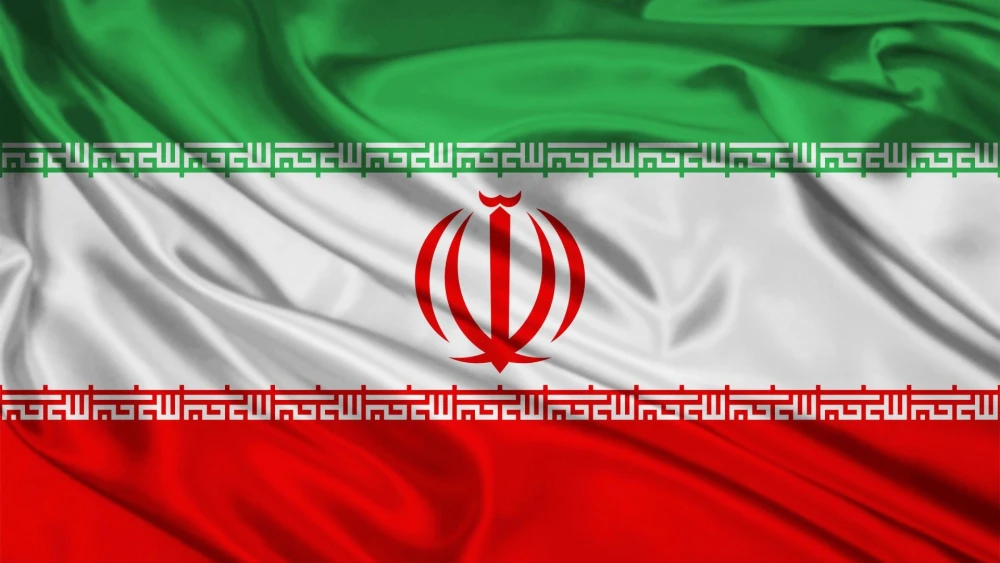
An even more extreme dynamic is at play in the American media. Journalists have forgotten that the Islamic Republic not only invaded Iran 47 years ago, but also subsequently invaded many other countries. The U.S. media’s blind spot on this point is all the more puzzling given the American intelligentsia’s anti-imperialism creed.
But first, let us explore the Islamic Republic’s expanding empire.
Immediately after the Islamic Revolution’s triumph in 1979, regime founder Ayatollah Ruhollah Khomeini created the Islamic Revolutionary Guard Corps, whose charter explicitly mandates exporting the revolution abroad. His provocative saber-rattling about imposing his Shi’ite revolution on Iraq fueled Saddam Hussein’s 1980 invasion of Iran.
Khomeini’s response was not patriotic but one of imperialism and ideology: “The road to Quds (Jerusalem) passes through Karbala,” meaning that Iraq was the first step to conquering Israel.
Along with its conventional war against Iraq as a waypoint towards Israel’s conquest, Iran also began supporting militant Islamist, anti-Zionist and anti-American groups, beginning with the Palestine Liberation Organization and Hezbollah.
The eight-year-long war between Iran and Iraq, which began in 1980, ended in a draw in 1988. Khomeini died the next year, but the regime he founded, including institutions such as the IRGC, has continued his quest.
In fact, out of all the revolutionary promises that brought the Islamic Republic to power in 1979—economic, social and foreign policy—only the imperial mandate has remained an unrelenting priority. Poverty, inequality and corruption are rampant, despite the regime’s ideological imperatives. In some ways, the regime has decreasingly enforced Islamic laws on the people since the 1990s. Simultaneously, it became more aggressive in its militancy.
In the 1990s, despite going through postwar reconstruction, Iran continued to support foreign legions wherever it could, even militarily and financially supporting Muslim Bosnians during the Yugoslav Wars, providing them with weapons and military advisers.
The recovery from the Iran-Iraq War, along with the U.S. invasion of Iraq, gave Iran the opportunity to adopt a more interventionist foreign policy in the 2000s. Iran began creating new foreign proxies in Iraq, fueling a devastating civil war in Iraq by initially supporting the Sadrist movement.
Meanwhile, it armed and funded Hamas, leading to the Islamist group’s victory first in the Gaza elections in 2006 and then in the 2007 Palestinian Arab civil war. The rise of Hamas resulted in a like-minded totalitarian theocracy in the Gaza Strip, from which it could bombard Israeli civilians.
Reduced U.S. presence in the region and the Arab Spring in the 2010s further strengthened Iran’s hand in its neighbors’ affairs. In 2013, Iran deployed its military to Syria to defend its partner, dictator and President Bashar Assad.
Two years later, Quds Force Commander Qassem Soleimani traveled to Moscow and recruited Russian President Vladimir Putin to likewise back Assad. Despite the popular view that Iran was fighting the Islamic State, Iran mostly targeted the secular opposition. In that way, it spared the Islamists from choosing between the United States and Europe, and Assad and the terrorists, so that the free world would choose Assad. The result was half a million dead and 14 million displaced Syrians.
Iran also encouraged Hezbollah to enter the Syrian Civil War as a belligerent, thereby boosting the terror organization’s military and financial power, enabling it to capture the Lebanese state and end Lebanon’s democratic experiment.
Iran also deployed its military to fight the Islamic State in Iraq, exploiting the opportunity to further strengthen its proxies, the Popular Mobilization Forces or Hashd al-Sha’abi, which have been a scourge to Iraq’s fragile democracy the same way Hezbollah has challenged Lebanon’s democracy.
In 2014, the Houthis overthrew the Yemeni government and ignited a civil war. The Houthis are a Shi’ite anti-Zionist death cult, and Iran has been supplying them with arms since 2009. Iran surged financial and military support, supplying them with drones and missiles to use against their rivals, the Persian Gulf Sunni states, and, of course, Israel. More significantly, the Iranian-backed Houthis leveraged their arsenal to halt international shipping in the Red Sea.
Alongside these imperial successes, Iran also flirted with overthrowing the Bahraini royal family. In addition, it supported Shi’ite separatists in Saudi Arabia. Iran also has Afghan and Pakistani Shi’ite legions—Liwa Fatemiyoun and Liwa Zainabiyoun—that it uses internally to oppress Iranian citizens as well as to threaten its eastern neighbors.
Former U.S. Secretary of State Henry Kissinger once said that Iran had to decide whether it wanted to be a nation or a cause. But Iran had already decided that it wanted to be a cause and an empire. Its ambitions are now expanding to the seas, with Supreme Leader Mojtaba Khamenei calling Iran’s access to the Strait of Hormuz a “Divine blessing” that his regime “will operate.”
Among the U.S. intelligentsia, it is an article of faith that meddling in sovereign states’ affairs is an imperial sin. The imperialist Islamic Republic ironically exploits this weakness to discourage foreign support for Iranian opposition, first and foremost, and to stave off efforts to disarm its terrorist allies like Hezbollah.
Voltaire said of the Holy Roman Empire that it was “in no way holy, nor Roman, nor an empire.” Iranians refer to the Islamic Republic of Iran as the anti-Iranian regime. Its Islamic character is also fading at the expense of its imperial foreign policy, which makes it un-republican. Even the supreme leader is an imperial figure protected by the IRGC acting as the Praetorian Guard.
Whether due to ignorance or misplaced sympathy, American journalists and intellectuals rarely turn the tables on Iran, holding it to the same standards they hold great powers such as the United States and Russia. They dismiss revealing statements made in Persian as domestic propaganda. They instead give priority to carefully crafted English statements designed to deceive foreigners. In short, they are reporting on Iran’s conduct without investigating the ideas behind it.
By doing so, they poorly serve their audience, the United States and the nations of the Middle East, including Iranians themselves. Only the imperial regime in Tehran wins.