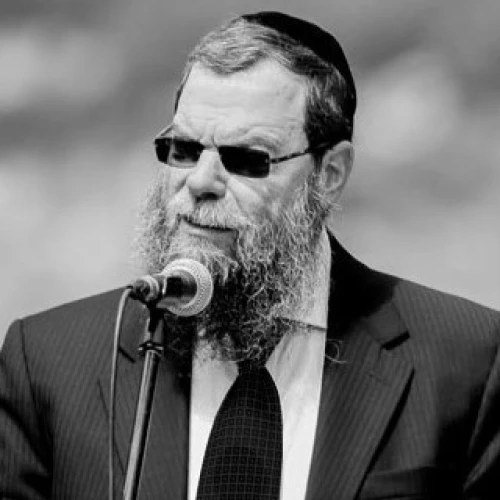
My daughter Alisa was murdered in a Palestinian Islamic Jihad-Iranian sponsored terrorist attack in Gaza on April 9, 1995. She was 20 years old, a college student studying at Nishmat in Jerusalem on a leave of absence from Brandeis University. She had worked hard at college for more than two years to take that leave of absence. It was her sixth trip to Israel.
In that instant, my world was divided into “Before and After.” It has never returned to Before; it never will.
I can’t read stories about hostage returns or terror victims without feeling that moment all over again. Even after 30 years, my mind and heart still go there. Which is why I have been watching the return of living Israeli hostages and bodies from captivity in Gaza—and the families who will now begin their own After—with a heaviness I can’t quite put into words.
There’s a tendency among politicians, journalists and the public to talk about “closure.” But closure is a myth. What comes next for these families is not an ending. It’s the beginning of a lifetime of learning how to keep walking—by putting one foot in front of the other—when the world has stopped.
The families of those who were murdered and those whose loved ones have returned after months of captivity are not just grieving a life or a traumatic experience. They are grieving time.
They mourn the time that was stolen—birthdays missed, weddings that will never happen, conversations that will never be had, grandchildren who will never be born, shared meals that will never take place. For those who return alive, they mourn the months or years taken from them—and the innocence or peace of mind they may never get back.
For the rest of their lives, these families will live with the knowledge of what might have been.
When a body comes home, the world breathes a sigh of relief. There’s a funeral. Speeches are made. Politicians offer words of comfort. Then the cameras leave.
But for the family, that’s when the trauma tightens its grip. Closure is a myth, no matter what the “experts” say. Closure isn’t real when your child’s bed is still made the way they left it. When you wake up in the morning expecting a call from your child because today’s your birthday, and that call doesn’t come. When you can’t bear to look at old photos, but can’t bring yourself to put them away either. When you’ve forgotten what your child’s voice sounded like.
I know, because I’ve lived it.
There are moments when life seems almost normal, when you can talk about your child without choking on the words. But then something—a headline, a holiday, a random smell, even a tune sung in the synagogue for Kabbalat Shabbat—opens the wound again. You’re not transported back to the funeral. You’re transported back to that moment of loss.
There will be therapists, grief counselors, rabbis and friends who will offer support to these families in the weeks and months ahead. Those people are essential. But they cannot make the pain disappear.
The trauma doesn’t fade on a schedule. PTSD doesn’t politely end after the first yahrzeit or a year of therapy. It can sit dormant for a long time and then re-emerge with full force. Even decades later.
In my own life, there are days I function fully. For the past two years, however, I have avoided opening the newspaper because I know a headline will be a trigger. I’ve learned to live with the weight. But the weight never lightens.
For the families receiving the bodies of their loved ones now or embracing those who have returned from captivity, this will not be a single chapter. It will be a long, uneven, often lonely road.
People often ask me how you keep living after something like this. The answer isn’t poetic. You sit shiva, it ends, and you get out of bed the next day. And the day after that. You put one foot in front of the other. You go to work, you tend to your other children if you are blessed to have them, and you work to make the world a better place.
For some, that turns into public advocacy. For others, it becomes quiet survival. Some build organizations, push for justice or speak out. Others simply try to keep breathing. Every path is legitimate. Every path takes courage.
I chose to fight—in the U.S. Congress, courtrooms, creating the Alisa Flatow Scholarship Fund that assists students seeking to study in Israel, in op-eds, in public forums. But that doesn’t mean the pain went away. It just means I found a way to live alongside it.
What the rest of the country often doesn’t understand is that support cannot end with a funeral or a press conference. These families will still need the community long after the world has “moved on.”
Grief anniversaries will come every year. So will birthdays. So will holidays. They will relive the moment every time a new attack makes the news. Every time a terrorist is freed. Every time someone says “closure” as if that’s a real thing.
If we truly want to support hostage families, then we must remember them not only when their stories are in the headlines, but when the world has already moved on.
What lies ahead for these families is not closure. It’s survival. It’s a lifetime of learning to walk through grief that never really leaves.
I wish I could tell them it gets easier. In some ways it does; the wound scars over. But a scar is different from healing. It is a reminder etched into your soul.
Even now, three decades after Alisa’s murder, I still can’t read or hear certain stories. I suspect many of these families won’t be able to, either. And that is OK. That is what living with loss looks like.