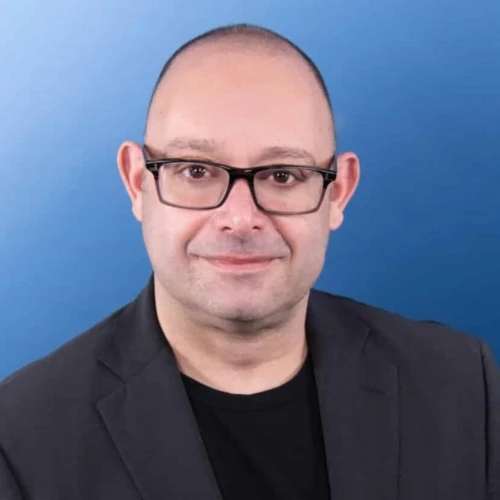
The “State of World Jewry” speech given by New York Times columnist Bret Stephens at the 92nd Street Y on New York City’s Upper East Side in February sparked some intense debate over whether the Jewish community should focus on fighting antisemitism or invest its resources into Jewish culture and education.
This debate, though important, obscured a point Stephens made about the sources of Jewish strength and survival: the Jewish imperative of saying “no” to a majority culture when its demands encroach on Jewish particularity.
“No to Pharaoh and Caesar, the Inquisition and the Reformation, the tsar and the commissar. No to emancipation from our peoplehood by the French Revolution or to the erasure of our faith by the Russian Revolution,” Stephens said. Jewish “courage to reject,” he continued, was “the central source of our inner strength and endurance as a people. We must never let go of it.”
Recent Jewish history offers a striking example of how this principle has played out in real life—one that carries important lessons for this American Jewish moment.
The USSR had all but erased Jewish culture and religion. But just when it seemed that Soviet Jews had finally assimilated, in the late 1960s, a group of Jewish dissidents arose and turned it all around.
They came to be known as refuseniks. The term referred to the regime’s refusal to grant them permission to emigrate, but that was only part of the meaning they themselves attached to their struggle.
The way refusenik activists saw it, before the system refused them, they refused the system.
They refused to join the chorus condemning Zionism and Israel because it was a betrayal of their people and themselves.
They refused to accept as normal the idea that the best universities, professions and entire career paths would be closed to them because they were Jews and therefore suspect of double loyalties.
They refused to live as double-thinkers, pretending it was normal to check their true selves at the doors of their schools and offices.
They formed underground groups that studied Hebrew and Israeli history. They wrote passionate essays about what it meant to be a Zionist. They staged dramatic acts of defiance, including insisting on observing Shabbat in prison and delivering powerful statements at their political trials. They held secret chuppah ceremonies.
Children of the “Jews of silence” (Holocaust survivor and Nobel Prize laureate Elie Wiesel wrote a book by that name published in 1966), whose parents kept the memories of their Jewish past to themselves, refused to follow in their footsteps. Young men and women in their 20s and 30s reclaimed Zionism, Judaism and Hebrew, all of which had been eliminated from Jewish life in the early years of Soviet power.
Notably, living in a country of state-sponsored antisemitism where anti-Zionist propaganda saturated the media and culture, they didn’t set themselves the goal of defeating Jew-hatred. In a system built on antisemitism, they knew that was an impossible task. Instead, they redirected their energy toward rebuilding Jewish life.
Theirs was an act of cultural and national resistance grounded in a loud “no” to a system that demanded they erase the memory of who they were as individuals and as a people.

Dramatic acts of refusal
The story of the refuseniks captivated millions around the globe. Two generations of American Jews placed it at the center of communal life and mobilized the community’s resources to bring their stories to the highest levels of American politics.
The generation now coming of age has not grown up with this story. And yet, in an almost eerie way, some of the young Jewish activists who rose to prominence in recent years have staged their own dramatic acts of refusal.
Eyal Yakoby refused to accept as normal that the University of Pennsylvania would host an antisemitic literature festival on its campus. Adela Cojab refused to remain silent when New York University awarded Students for Justice in Palestine a presidential service award. Lishi Baker refused to normalize people waving Hamas and Hezbollah flags at Columbia University. Shabbos Kestenbaum refused to accept that he could not walk through the Gaza tent encampment at the Massachusetts Institute of Technology as a free American citizen simply because he practiced Judaism.
These young Jewish activists are doing something else the Soviet refuseniks did: They are leaning hard into their Jewish identity.
Refuseniks spent their time learning all they could about what it meant to be Jewish. They fell in love with Zionism and Jewish holidays. They reclaimed everything their parents had been forced to surrender. We Are Jews Again: Jewish Activism in the Soviet Union (2017) is the title of a book by one of the leaders of that movement, Yuli Kosharovsky.
Many of today’s young activists come from homes that are religiously observant, Zionist or both. In my interviews with them, each emphasized the importance of staying Jewishly connected on hostile campuses, no matter how strongly the campus climate pressures students to shed parts of their identity.
This insistence on standing their ground echoes the civilizational Jewish qualities that Stephens pointed to in his speech. It also illustrates a crucial point he made: Refusal is provocative. When Jews reject the ideological and cultural terms offered as the price of admission, the reaction is often hostility.
Yet the example of the refuseniks and their contemporary counterparts teaches something else: When Jews rediscover the courage to say no, they also rediscover what it is that they say yes to. That rediscovery is often the beginning of renewal.
When Jewish students at Columbia University wrote their collective letter, “In Our Name,” they reclaimed the meaning of Zionism for themselves and for hundreds of their peers who signed it. When Noah Shufutinsky wrote his song “Diaspora,” he gave countless Jews around the world words to express their pride and defiance.
Like their Soviet peers 50 years ago, many young American Jews are rediscovering the boundary beyond which they refuse to accommodate. They are finding new meaning in their Jewishness and encouraging others as well. In doing so, they embody one of the most fundamental aspects of Jewish civilization that Bret Stephens referenced in his speech—its power to say “no.”