
The arrival of the first Somali ambassador to Israel—and a growing partnership between the two—could shock the Egypt-Eritrea alignment, which is primarily aimed at undermining Somaliland’s independence and constraining Israel’s growing regional role in the Horn of Africa.
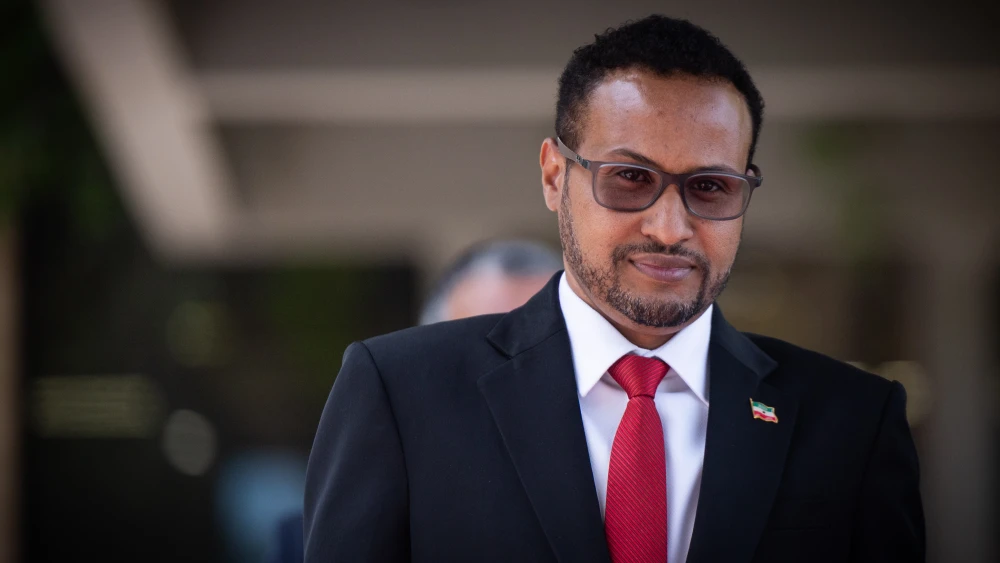
Congratulations to Mohamed Hagi on making history as Somaliland’s first ambassador to Israel, marking a bold diplomatic breakthrough. His arrival, coinciding with the 35th anniversary of Somaliland’s May 18 independence declaration, carries unmistakable symbolic weight. The ambassador has announced that the embassy will be established in Jerusalem, with reports of reciprocal Israeli diplomatic presence in Hargeisa, signaling a significant and assertive deepening of bilateral relations.
The Egypt-Eritrea alignment is often presented as a Red Sea stabilization effort. In reality, their publicly stated positions and recent diplomatic engagements point to something sharper: a political alignment driven less by integration and shared development, and more by coordinated hostility—toward Ethiopia, Somaliland’s independence and Israel’s expanding diplomatic presence in the Horn of Africa.
At the center of this convergence is a set of overlapping political narratives and security priorities that reflect a shared emphasis on preserving Somalia’s territorial integrity, particularly in relation to Somaliland’s independence, while resisting external realignments involving Israel, the United Arab Emirates and Ethiopia that could alter the strategic balance of the Red Sea corridor.
Eritrea’s President Isaias Afewerki has repeatedly framed regional developments through the lens of foreign interference and geopolitical encirclement. In public remarks in a July 2025 televised interview, he has alleged that the UAE and Ethiopia are advancing Israeli strategic interests in the Horn of Africa. Also, diaspora figures aligned with Eritrea’s dictator have promoted this narrative, portraying Somaliland and Ethiopia as part of a broader Israeli regional project.
Within this worldview, Somaliland’s push for independence is not treated as an isolated constitutional or legal question, but as part of a broader regional struggle over sovereignty, influence and control of maritime corridors.
He has also publicly indicated willingness to participate in regional cooperation aimed at preserving Somalia’s unity, including references to potential military support or deployment in Somalia in coordination with allied regional actors. In the same interview, he further claimed that Eritrea had trained and deployed approximately 10,000 Somali soldiers as part of this effort, and many defected to Al-Shabab.
This position was formally reflected in the October 2024 trilateral summit in Cairo, where the presidents of Egypt, Eritrea and Somalia reaffirmed their commitment to Somalia’s territorial integrity.
The meeting underscored a strategic convergence: a shared interest in reinforcing Somalia’s unity at a moment when Somaliland’s international engagement is gradually expanding, including reported discussions around Israel’s recognition, alongside broader speculation that the UAE, Ethiopia, the United States and others could eventually follow.
The summit thus reflected not merely bilateral cooperation, but an emerging alignment in the Red Sea-Horn of Africa theater between Egypt and Eritrea centered on preserving Somalia’s territorial integrity and opposing Somaliland’s independence, including through the possibility of coordinated security or military involvement.
Since the late 1990s, Eritrea’s posture toward Israel has increasingly taken on an adversarial tone, reflected in a series of publicly observable positions: opposition to Israel’s engagement in African Union observer frameworks, diplomatic friction with Israeli representation in Asmara and closer alignment at various points with actors hostile to Israel’s regional interests, including Iran.
Eritrean official rhetoric has also, at times, framed Hamas as a “resistance” movement, while offering limited public response to maritime attacks by the Houthis in the Red Sea involving Israel-linked shipping near Eritrean waters. In this evolving context, newer political narratives have further linked Israel’s regional engagement—alongside the UAE, Ethiopia and Somaliland—to alleged geopolitical designs in the Red Sea corridor.
Eritrea’s authoritarian leader has backed and participated in the Saudi-led, Egypt-backed Red Sea and Gulf of Aden regional framework, which excludes Israel, despite its clear geographic status as a Red Sea littoral state. As the leader of the only non-Arab and non-Muslim coastal member, one would expect him to oppose Israel’s isolation on geographic grounds and the Tigrinya, the overwhelming majority in Eritrea’s strategic security, economic and cultural interests.
Egypt’s alignment with the Eritrean dictator is primarily shaped by its long-standing dispute with Ethiopia over the Grand Ethiopian Renaissance Dam (GERD), which Cairo views as a direct national security concern. It reflects a classic “enemy of my enemy is my friend” dynamic, reinforced by Eritrea’s own tensions with Ethiopian Prime Minister Abiy Ahmed.
Against this backdrop, Egypt has expanded security and military cooperation with Somalia in recent years, including defense coordination and training arrangements aimed at reinforcing Somalia’s central authority, with implications for limiting Somaliland’s independence and counterbalancing Ethiopia’s regional engagement.
Within this framework, Somaliland’s pursuit of recognition is seen in Cairo as a potentially destabilizing precedent that could undermine the principle of Somali territorial integrity. Israel’s recognition and expanding diplomatic engagement with Somaliland adds an additional layer of complexity to Egypt’s regional calculus.
Taken together, the Egypt-Eritrea alignment reflects not a strategic bloc but a publicly stated position shaped by overlapping defiance against a perceived common enemy.
These include resistance to Ethiopia, Somaliland’s independence trajectory and shared skepticism toward evolving diplomatic realignments involving Israel and the UAE in the Horn of Africa.
What binds this alignment is not a shared economic vision or a strategic agenda, but a common agenda to undercut Somaliland’s independence and Israel’s diplomatic engagement in the Horn of Africa and the Red Sea, alongside hostility toward Ethiopia over its perceived role in advancing these regional realignments.
Somaliland recognition is no longer just a Somali territorial issue; it has become part of a broader geopolitical struggle over Red Sea alignment and increasingly tied to Israel’s expanding engagement in the Horn of Africa.
Good luck to Ambassador Hagi. Strong bilateral relations between Israel and Somaliland could encourage the UAE, Ethiopia and others to follow suit, and eventually position the United States to align with this evolving diplomatic trajectory.