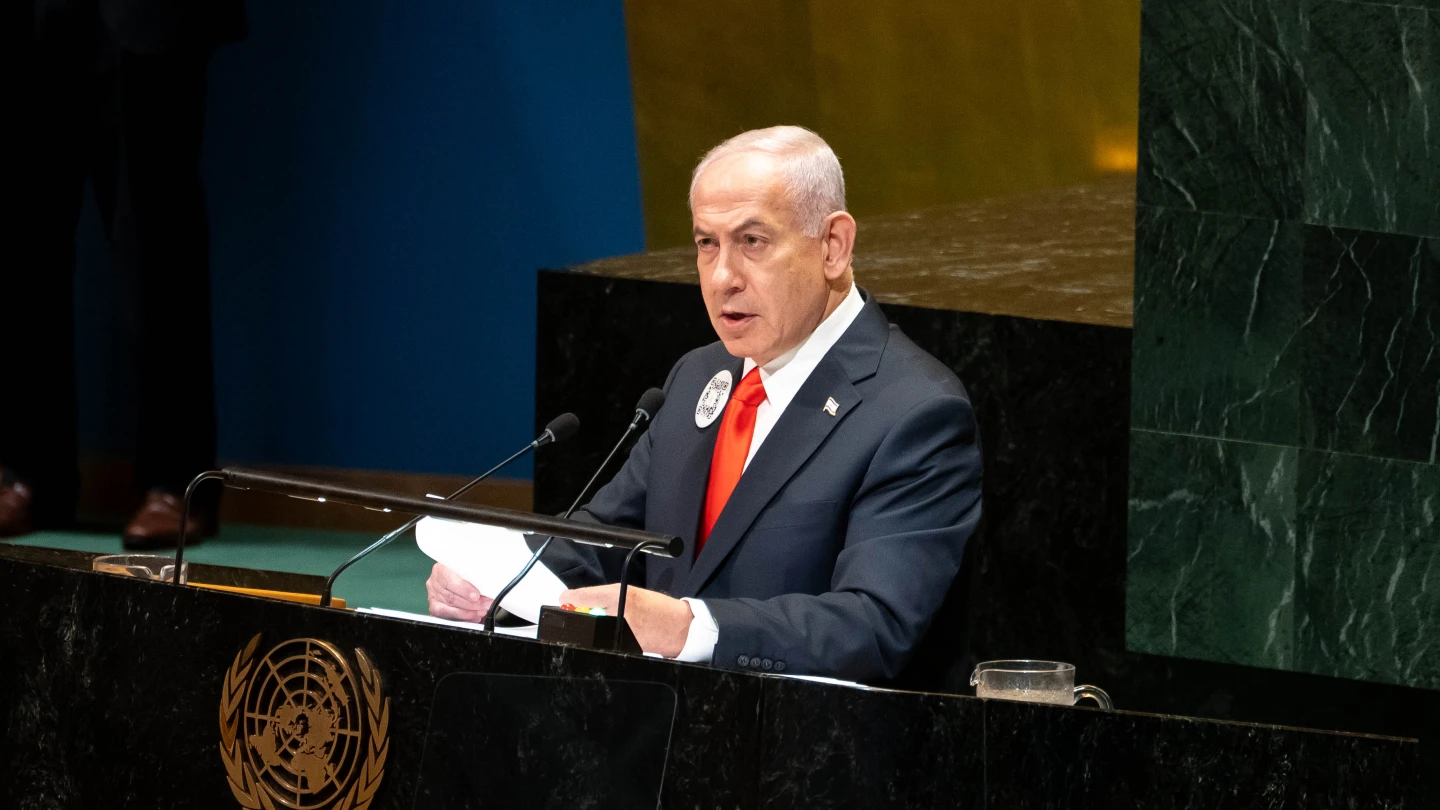
The Trump White House has released its comprehensive, 20-point plan to end the war in the Gaza Strip. Quite frankly, this is the best everyone’s going to get.
It accomplishes Israel’s stated war goals of total Hamas destruction and the full return of the hostages. While not a unilateral, unconditional Hamas surrender, realistically, it is the closest Israel will get. It gives the Palestinians in Gaza the chance to make something of their future and the possibility of self-rule if they can manage deradicalization and disarmament.
As for what Hamas gets, they get to leave with their lives. Israel has already agreed, as have most of the important Middle Eastern players (Jordan, Egypt, the United Arab Emirates, Saudi Arabia, Qatar, as well as some surprises in Pakistan, Indonesia and the European powers that just last week declared a Palestinian state as legitimate and rightful). This is not a perfect plan, and Hamas has yet to accept, though their international backers in Qatar and Egypt have said they are forcing them to the table. It represents a strong turnaround from a week ago, when the world was cheering Israel’s isolation.
As for the plan itself, it’s textbook peacebuilding that could be held up as an example in any undergraduate class. Israel’s airstrikes in Qatar and the international fallout created a ripe moment for intercession, for Hamas and Israel’s backers to say “enough” and to force a practical solution. This deal is built around assurances of demilitarization, international cooperation and peacekeeping forces that help build trust, along with interfaith dialogue and the belief (based on broadly accepted theories of conflict resolution) that economic advancement will deradicalize the population and disincentivize violence.
In a perfect world, it gives the Palestinian people a worthy goal and concrete steps to achieve it under the stewardship of an experienced and watchful governing body that has no prior allegiance to Palestinian terror groups. Most importantly, acceptance by Hamas will immediately release the hostages and create a path to disarmament that will leave Gaza a terror-free zone, ending the cycle of death and violence. More than that, the success of this plan could change the Middle East, integrating Israel into the larger diplomatic and defense frameworks that have the potential to create a lasting regional peace.
It is great in theory; however, theory and practice tend to disagree with one another. There are glaring issues that the Trump plan must address if it wants to truly be successful in the long term. The return of the hostages is conditioned on the release of almost 2,000 Palestinians—those imprisoned for violent crimes and terror, radicals now put back onto the Gaza streets. This is a price Israel has unfortunately become used to paying. As seen in 2011 with the release of senior Hamas leader Yahya Sinwar during the prisoner-exchange deal with captive Israeli Defense Forces’ soldier Gilad Shalit, there is a lot of risk in letting terrorists go free that must be addressed in the deradicalization process.
As it has been said, the best deradicalization is giving people something to lose, getting rid of the desperation and hopelessness that makes people susceptible to radicalization.
Yet the economic development and transitional government plans raise logistical questions. Aid must be delivered and food security must be established; however, is it a good idea to trust the United Nations, given its track record throughout the war? Who is to make sure the aid doesn’t go directly to Hamas? Furthermore, the U.N. Relief and Works Agency for Palestine Refugees (UNRWA), which operates most of Gaza’s infrastructure, hospitals and schools, is known to employ and work with Hamas. How can it be trusted with the rehabilitation process, as it had a direct hand in radicalizing the Gazans in the first place?
The international community has a long and full history of bias against Israel, and so, it is foolish to believe they will magically leave that all behind to help rebuild Gaza in good faith.
This goes for the transitional government and “Board of Peace” as well. Tony Blair, the former prime minister of England, and U.S. President Donald Trump have no reason to hand Gaza back over to Hamas, but Hamas knows the route to power is through infiltrating legitimate institutions. They will use this to keep their grasp on Gaza and set themselves up to take power when it is transferred over to the Palestinians. So it must be scrutinized, who else will be joining this government, and from where and what backgrounds?
This is not a normal international conflict, and everyone seems to have some sort of bias and prejudice about Israel and Gaza. Who is to pick these Palestinian and international experts, and deem them fit to rule? And what of the International Stabilization Force—those peacekeepers who are supposed to enforce disarmament and create a new Palestinian Police force that will continue to keep the peace after power is handed back to the Gazans? Who will make up this force, the United States and the UAE? There must be mechanisms to ensure that they are not just rehiring Hamas members to do so.
Ultimately, Hamas does not want deradicalization and will resist even if they do sign the agreement. Is the ISF, or more importantly, are Washington and the international public ready to put their soldiers in harm’s way in order to eradicate Hamas? If disarmament requires going door to door, like in Fallujah, Iraq—looking through every home for an AK-47, and hitting resistance in the form of terror attacks and guerrilla warfare that Hamas is all too known for—will these countries follow through, or will Israel have to go back in?
We saw how the American public reacted to long, protracted anti-insurgency conflicts in Iraq or Afghanistan. So how will people stateside react when the first U.S. soldier dies in Gaza? The rapidly growing isolationist and anti-Israel streaks in America will likely explode. It seems obvious that the United States has to make up the brunt of the peacekeeping force based on the proposition. There has to be a contingency plan for when, not if, this all goes wrong.
Nevertheless, the peace plan is the closest yet to a broad international consensus; it forces both sides to deal with the reality that nobody is going anywhere. The Gazans will not leave, and Israel will not crumble into the sea. Yet for a plan so heavily contingent on international cooperation, it has to be asked: Does the international community have the resolve to see this through when times get tough? It will be a long and hard fight to make Gaza better, and global leaders have to ask themselves if they truly are ready for it.
Of course, all of this is contingent upon Hamas accepting the plan.
That said, all of these points that would work in a perfect world must be called into doubt. How can Hamas be disarmed unilaterally and the hostages returned without violence? They will come to see the ISF and transitional government as nothing more than an extension of Israeli occupation; there is no reason to believe that the terror will stop without an overwhelmingly forceful counter-terror campaign.
Israel came to this conclusion a long time ago, and unfortunately, it seems that the United States and whatever international allies it takes into Gaza will not learn the same until it’s too late.