


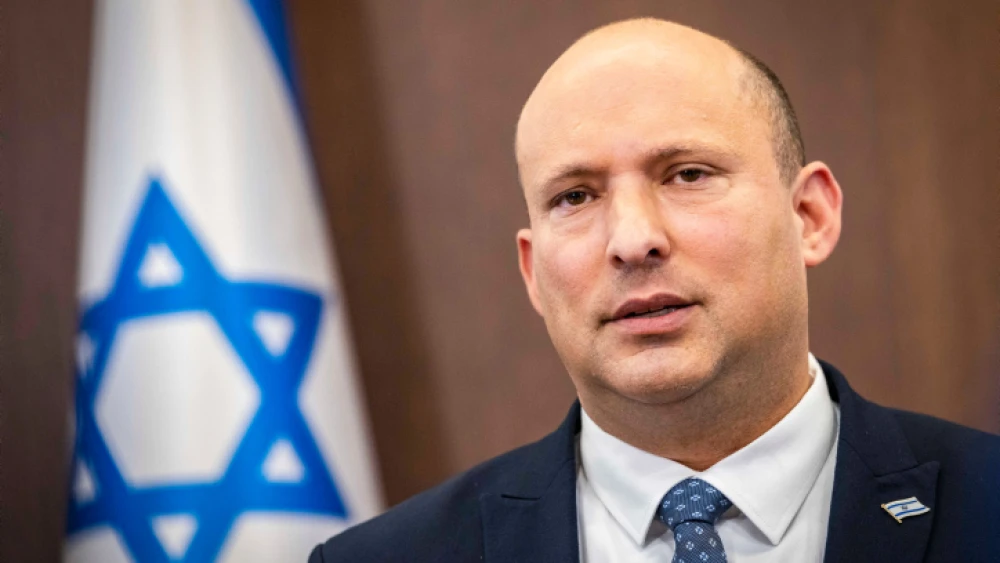
Israeli Prime Minister Naftali Bennett did not announce on Wednesday that he was leaving politics, but that he was taking a break. This is the right decision from his perspective, given that Israeli prime ministers are usually in their 70s, and he is still a young man of 50.
Bennett will probably take some time off, spend time abroad and stay mostly under the radar except for occasional media appearances and calculated public speeches, given that he now holds the prestigious title of “former prime minister.”
When he returns to politics, Bennett will follow in the footsteps of many others who have done the same, such as Benjamin Netanyahu, Moshe Kahlon and Gideon Sa’ar. Bennett will definitely be back.
The political implications of his resignation are exaggerated. Yamina is not a ruling party, but a small group that is coming apart at the seams. Amichai Chikli has left, Nir Orbach and Idit Silman are already on their way to Likud and Abir Kara and Shirly Pinto may or may not stay with Ayelet Shaked, who is taking over the party.
She is taking over a battered party, but one that nevertheless has a chance at succeeding in the next elections.
The right is looking for a party that represents right-wingers who are not ultra-Orthodox or religious Zionist and want an alternative to Netanyahu and the Likud because they are seeking to help the right-wing bloc reach 61 seats in the Knesset. Shaked has said all along that she does not rule out working with Netanyahu.
True, she is considered persona non grata by many in the Likud, and true, the right’s electoral power has been undermined, but Israeli election campaigns have always been characterized by unexpected surprises.
Yehuda Shlezinger is Israel Hayom’s religious affairs correspondent.
This article was originally published by Israel Hayom.



