

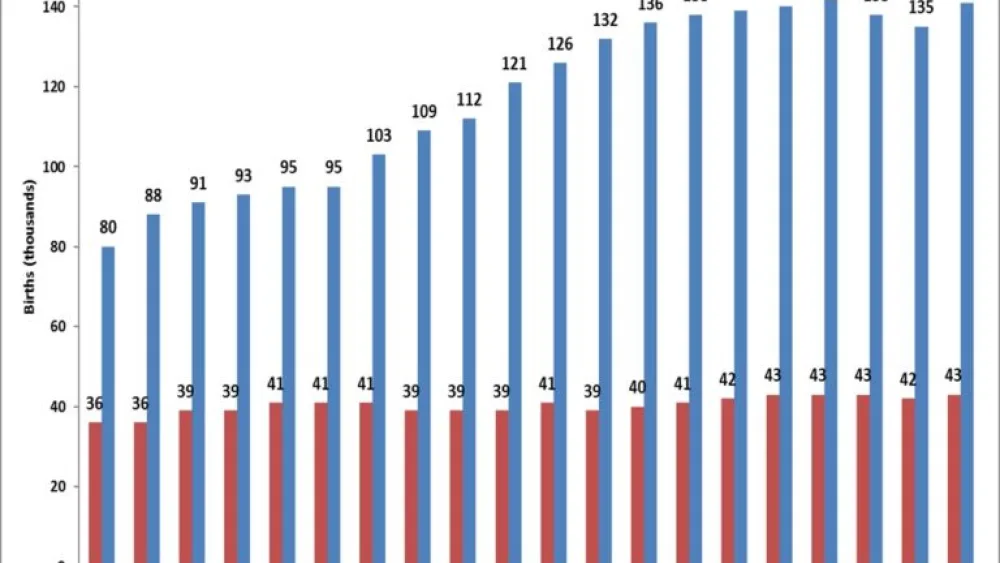
In 2021, the number of Jewish births in Israel was 141,250—76% higher than 1995 (80,400), compared to 43,806 Arab births—20% higher than 1995 (36,500). In 2021, Jewish births were 76% of total births, compared with 69% in 1995.
The surge of Jewish births has taken place due to the unprecedented rise of births (since 1995) in the secular sector, simultaneously with a rising level of education, income and marriage age, as well as expanded urbanization. Since 1995, Israel’s ultra-Orthodox sector has experienced a mild decrease of fertility.
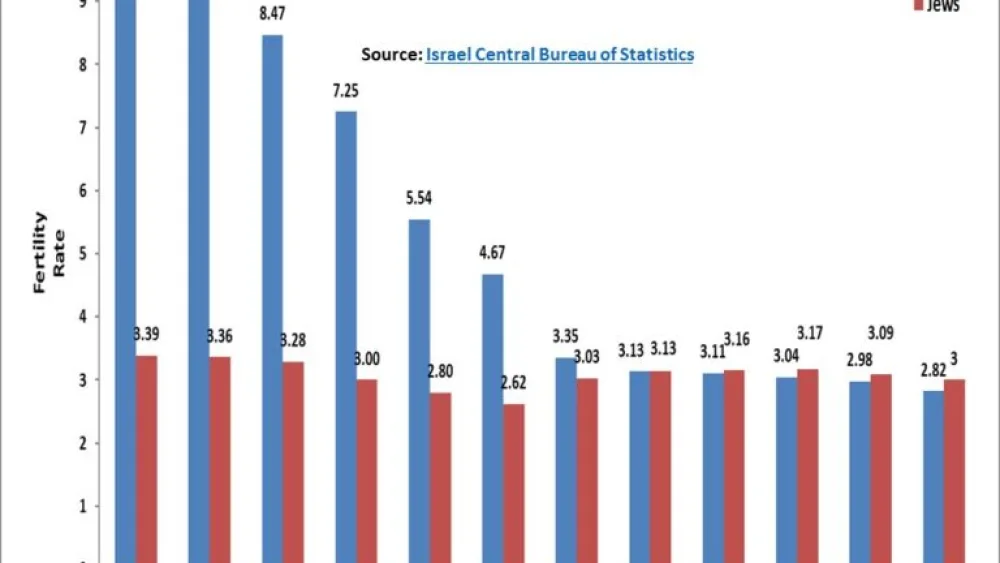
In 1969: Israel’s Arab fertility rate (number of births per woman) was six births higher than the Jewish fertility rate. In 2020: Jewish fertility rate—3; Israeli Arabs – 2.82; Judea and Samaria (West Bank) Arabs—2.96.
The Muslim fertility rate in the entire region has undergone westernization: Jordan—3 births per woman, Iran—1.93, Saudi Arabia—1.95, Morocco—2.29, Iraq—3.32, Egypt—3.23, Yemen—3.1, United Arab Emirates—1.65, etc.
Israel’s growing Jewish fertility rate reflects optimism, patriotism, attachment to roots, communal solidarity, a frontier mentality and fewer abortions. Arab demographic Westernization is attributed to sweeping urbanization, enhanced stature of women (education, employment, rising marriage age, shorter reproductive period) and contraceptives.
Yoram Ettinger is a former ambassador and head of Second Thought: A U.S.-Israel Initiative.
This article was first published by The Ettinger Report.