


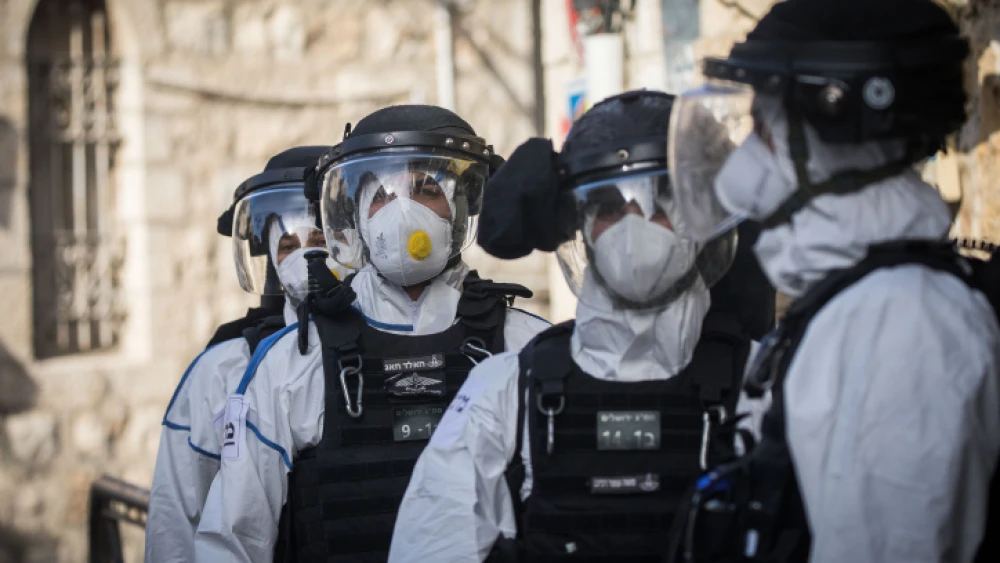
Following a public outcry this week, proposed legislation seeking to increase the Israeli government’s powers to deal with the COVID-19 pandemic is going to be softened.
In its current form, the “Coronavirus Law”—a memorandum of which was released on May 28—includes a clause that gives police the authority to enter the homes of individuals suspected of violating quarantine orders, without a warrant. Anonymous sources involved in the legislation told the Hebrew news site Walla! that the above clause will be removed from the memorandum before it is brought to the Ministerial Committee for Legislation for debate.
The revised bill is expected to provide police with the authority to enter homes only with a warrant.
Another change involves providing the Knesset with greater power to keep emergency coronavirus measures from going too far in infringing on privacy and civil rights. After coming under fire by Israelis claiming that the new law was an excuse for the government to extend its power at the public’s expense, Israeli Prime Minister Benjamin Netanyahu clarified his position.
During a faction meeting of his Likud Party, he said, “We will find the right balance between the need to enforce isolation guidelines, and the need to protect the rights of individuals and the civil liberties of Israeli citizens.”
The bill coincides with a sharp spike in COVID-19 infection, particularly in schools, raising concerns over a potential second wave of the pandemic in Israel barely a week after the country’s economy was allowed to resume normal operations.
Results of a new study by Tel Aviv University, in conjunction with Magen David Adom and the Israeli Health Ministry’s Center for Disease Control, indicate that exposure to coronavirus in Israel is far higher than the official figure, which stood at 17,219 on Tuesday, but too low for any hope of herd immunity.
Researchers recommended that in light of the low rate of exposure, which points to the absence of herd immunity, Israel maintain the measures currently in place to keep the virus in check.
As of Tuesday, the total number of COVID-19-related deaths in Israel was 287.



