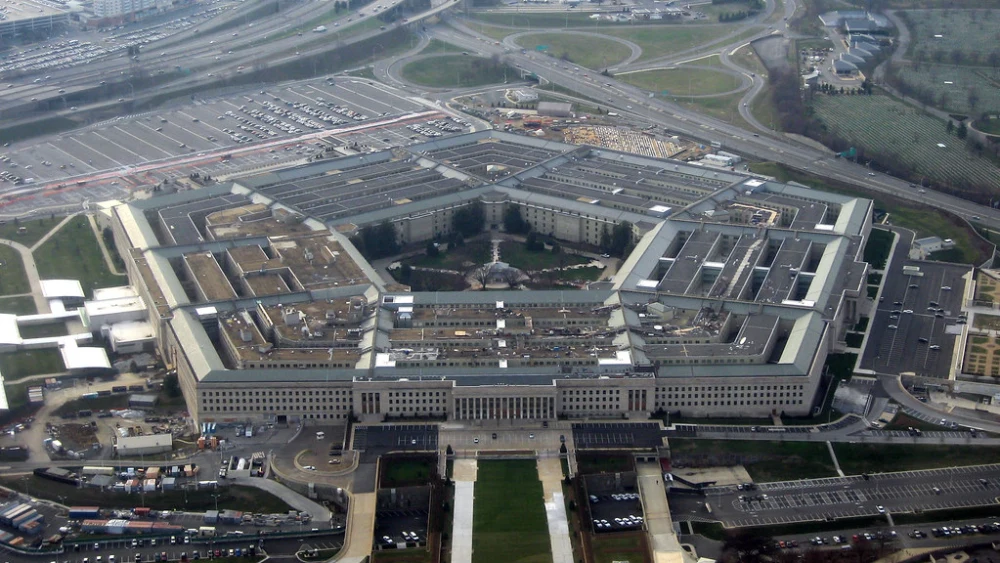
U.S. President Donald Trump has ordered the U.S. Central Command (CENTCOM), which oversees the mission of the U.S. military in the Middle East, to include Israel, reported The Wall Street Journal on Thursday, citing U.S. officials.
Until now, Israel had been part of the U.S. European Command for the sake of America’s Arab allies that have had adversarial relationships with the Jewish state.
The development of the Abraham Accords—in which CENTCOM members the United Arab Emirates and Bahrain normalized relations with Israel—has allowed for pro-Israel groups to make the case that the time is ripe for Israel to fall under CENTCOM as well. (Sudan and Morocco, the other more recent signees of the Abraham Accords, are not part of CENTCOM, as Sudan does not have military cooperation with the United States and Morocco is part of the U.S. Africa Command.)
One of the pro-Israel groups to advocate for the move was the Jewish Institute for National Security of America (JINSA), whose president and CEO, Michael Makovsky, said that the realignment “will strengthen strategic planning, defense cooperation and deterrence against Iran by America and its regional allies.”
“I hope it might also smooth the way for the Pentagon to utilize Israel more for regional operations, including by prepositioning precision-guided munitions (PGMs) and other much-needed weaponry for American, Israeli, and possibly, partner Arab forces,” he continued. “PGMs are critical to Israel’s continued ability to defend U.S. interests by rolling back the military footprint of Iran and its proxies.”