Newsletter
Newsletter Support JNS

UNHRC delays Israeli-Palestinian debate due to coronavirus

The UNHRC meets three times annually. The United States exited it in June 2018 over the body’s anti-Israel bias.

U.N. Human Rights Council
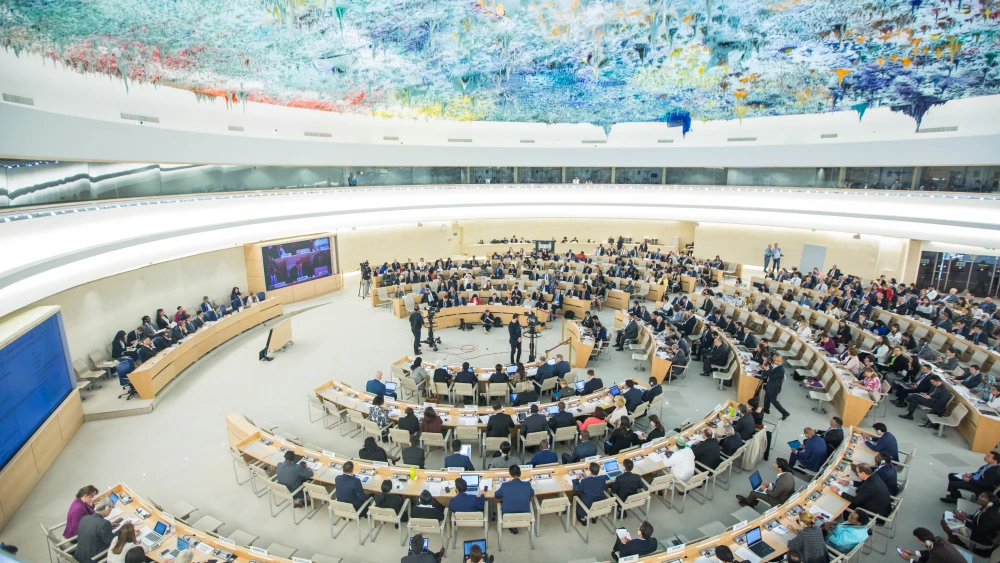
A view of the U.N. Human Rights Council special session on “the deteriorating human-rights situation in the occupied Palestinian territory, including East Jerusalem,” May 2018. Photo by Elma Okic/U.N.

The U.N. Human Rights Council (UNHRC) has delayed its 43rd session in Geneva, therefore suspending the Agenda 7 debate on the Israeli-Palestinian debate, due to the coronavirus pandemic.

“The Bureau discussed with the UNOG [Office at Geneva] Director for Conference Management and the HRC Secretariat the implications of the evolving situation,” said UNHRC president Elisabeth Tichy-Fisslberger. “It also took into account the recent assessment of the WHO and concluded that under the current circumstances, an orderly suspension of the session by the end of this week would be the best approach to follow.”

Agenda 7 is a UNHRC mandate that a discussion of Israeli human rights abuses against Palestinians must be part of every council session.

The UNOG voted on Wednesday for the suspension. The session began on Feb. 24 and was scheduled to conclude until March 20.

The UNHRC meets three times annually. The United States exited it in June 2018 over the body’s anti-Israel bias.

“Americans abroad should follow the guidance in security alerts issued by the nearest U.S. embassy or consulate.”
The latest wave of strikes was launched to “swiftly punish” IRGC forces responsible for the attack.
Israel must immediately dismantle the 70,000-strong P.A. force to prevent a catastrophe potentially far worse than Oct. 7.
“Even when a parent is convinced that they are ‘smoking carefully,’ it results in more awakenings, less deep sleep and fewer opportunities for real rest.”
Meir Amit Center deputy director told JNS a separate Sinwar document explicitly instructed terrorists to document atrocities against Israeli civilians and soldiers.
The fast day, considered the saddest day on the Jewish calendar, is an opportunity for “all people of moral conscience to work together to bring goodness and dispel hate,” Yeshiva University president Ari Berman told JNS.