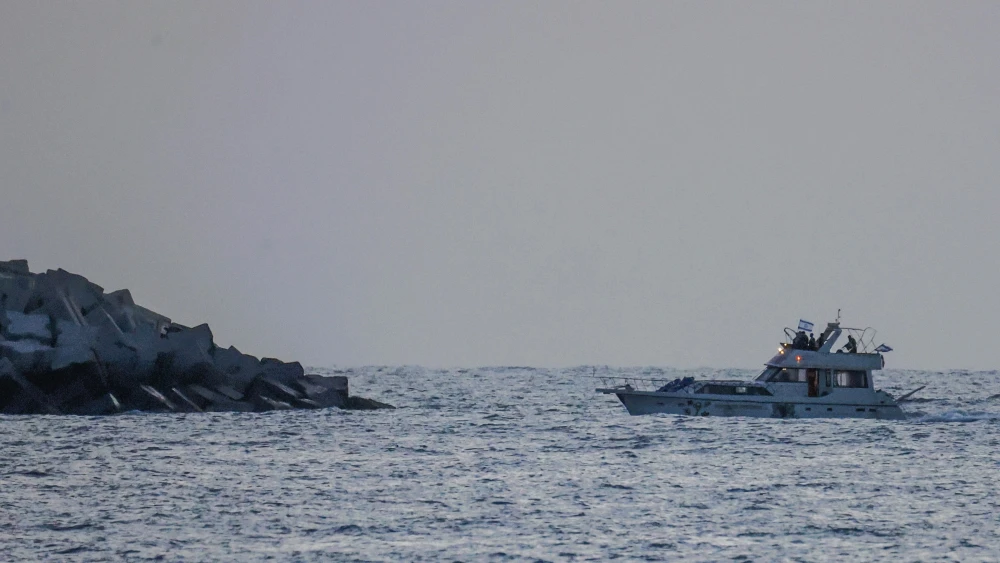

The foreign politicians who chose last month to criticize Israel’s treatment of the extremists detained from the so-called Gaza flotilla are wrong. The flotilla participants understood the risks and consequences of deliberately challenging a lawful and necessary Israeli maritime blockade designed to protect Israeli civilians.
The stated goal of the flotilla organizers was to open Gaza’s ports to unrestricted maritime traffic, and stopping the flotilla was essential to Israel’s security. Yet history has shown why Israel maintains the blockade. Weapons, dual-use material, and military technology intended for Hamas were repeatedly smuggled into Gaza despite international restrictions. Those materials were used to construct Hamas’s extensive terror tunnel network and to help prepare for the massacre in southern Israel on Oct. 7, 2023.
Leaders of the terrorist organization have repeatedly and publicly vowed to carry out another such attack if given the opportunity.
Hamas started the war in 2023 by leading the terrorist invasion of southern Israel. Ending the maritime blockade would make it far easier for Hamas to rearm and prepare future attacks against that very same area. It cannot be emphasized enough that successive Hamas leaders have threatened to commit more attacks modeled on Oct. 7.
As such, Israel has every reason to prevent these boats from reaching Gaza. In fact, Israel’s blockade is key to preventing future wars.
The flotilla was not about providing humanitarian aid; little actual supplies were found on their boats, according to news reports. The goal was to make it impossible for Israel to continue its blockade.
When Hamas, Palestinian Islamic Jihad and other terrorist groups fired rockets into Israel on Oct. 7, and after, the vast majority landed in empty fields or uninhabited sites. It’s not that the terrorists have poor aim. While Israelis do have sound defensive equipment, Hamas didn’t have the opportunity to import targeting technology systems.
Hamas still does not have that technology. And the reason they don’t is because of the blockade.
That’s right, the much-maligned Israeli blockade—the focus of so much invective by the critics of Israel, by the United Nations, even by previous American administrations. That blockade is working. It has always worked.
Israel took a lot of heat for intercepting this flotilla, even more perhaps than the previous ones.
It seems like it is seldom remembered now that the Oct. 7 invasion by Hamas, PIJ and other terrorists bypassed Israel’s border fence through a coordinated, multi-domain assault executing infiltrations from both the sky and the sea. While ground forces breached the security wall, specialized terrorist units simultaneously penetrated defenses using motorized paragliders to fly into Israeli airspace and fast speedboats to storm the southern coastline.
Imagine how much worse the attacks on Israeli civilians would have been if Hamas had been able to import guidance systems and more sophisticated rockets.
There is a reason that the enemies of Israel have sought for so long to stop Israel’s blockade. Tragically, so-called “dual-use” items, such as construction material, were still allowed into Gaza when it was under full Hamas control; thus, tunnel-building was conducted in earnest starting in 2010 when construction items were allowed in. This happened when Hamas was fully armed; it continues to refuse to disarm now.
As far back as 2011, a panel of five “independent human-rights experts” for the United Nations declared that the blockade was “a flagrant contravention of international human- rights law.” In 2012, the United Nations annual report on the Gaza situation called the blockade “collective punishment.” In 2013, James Rawley, the U.N. “humanitarian coordinator” for Gaza, claimed that “Gaza is becoming uninhabitable” because of the blockade.
And just this past March, the commissioner-general of the U.N. Relief and Works Agency declared that the blockade “is illegal and must be lifted.”
Fortunately, Israel resisted much of this international pressure. It maintained the blockade. And as a result, Palestinian rocket builders were without target-locating computers that would have made Oct. 7 a much worse catastrophe.
The United Nations, the European Union and the rest owe Jerusalem an apology and should support the blockade.
Let us learn the lesson: Blockading the enemy works. American supporters of Israel should have no doubts about it. The noise about the treatment of the flotilla protesters must be seen for the distraction that it is.