


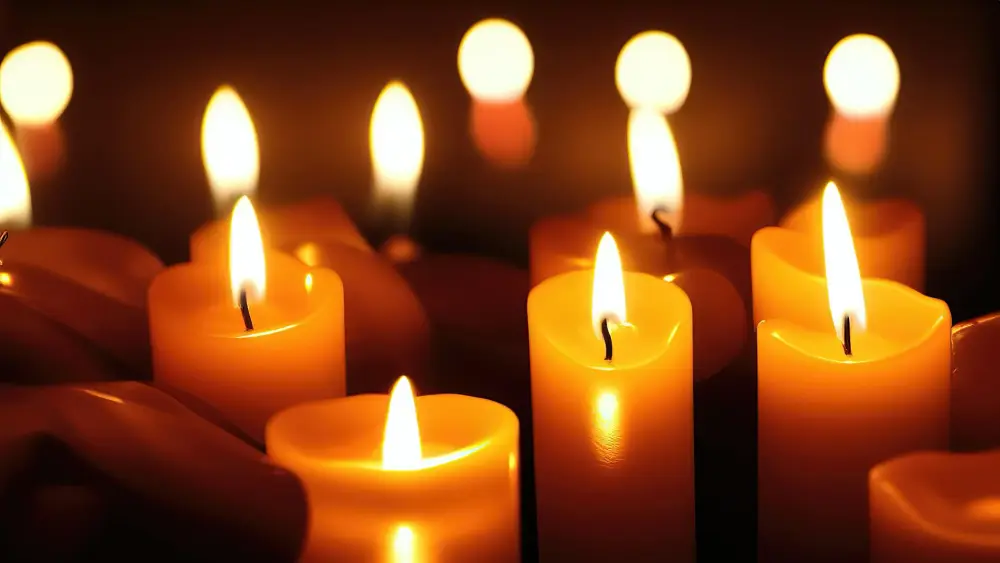

My wife and I are in Sydney as part of a speaking tour of Australia. As we landed here, before we even went to our hotel, straight from the airport, we stopped at Bondi Beach, the scene of the horrific massacre on Dec. 14, the first night of Chanukah. I felt I had a moral obligation to go and say a prayer for the 15 martyred souls of that shocking terrorist attack.
It’s quite frightening to see a city renowned for its beauty and tranquility become a hotbed of overt Jew-hatred. Speaking to Australians, it’s clear that they are still traumatized by this most unimaginable disaster. I gave a talk on antisemitism at one of the synagogues here, and many in the audience came over to thank me afterwards, saying, “Rabbi, we needed to hear that.”
I suppose it is quite understandable that the typical response to such events might be to hide one’s Jewishness from being outwardly visible. Don’t go to shul. Wear a baseball cap, not a kippah. Tuck that chai necklace, that Star of David, inside your shirt. But I encouraged people to do the reverse.
Of course, we should be careful and responsible, and not throw caution to the wind. Like I always say, “Trust in God, but lock your car.” Still, to become closet Jews is exactly what our enemies want. And so, we dare not give them the very satisfaction they seek. We should overcome our fears, be proud of our identity and not conceal it from the world.
At the end of the day, whether Jew-haters will achieve their desire depends on us, not them. My favorite quotation from David Ben-Gurion, one of Israel’s founding fathers and its first prime minister, is: “It doesn’t matter what the nations say. It matters what Israel does.”
Whether it is condemnation of Israel in the United Nations or international media, defamatory statements may sting but have little effect. What matters most is what Israel does, despite such venomous words of hate, disdain and distortion.
I recall that on the Lubavitcher Rebbe’s 25th yahrzeit, David Suissa, editor of the Jewish Journal in Los Angeles, wanted to know the Rebbe’s response to antisemitism. It was pro-semitism! Jews should be more Jewish, not less. The Rebbe launched 10 mitzvah campaigns encouraging us to live more active Jewish lives.

This week’s Torah portion (in the Diaspora) is Beha’alotecha. It begins with the instructions regarding the kindling of the menorah in the sanctuary of old. Beha’alotecha et haneirot means “when you kindle the lights.” But there are much simpler words for “kindling” than beha’alotecha, which literally means “when you raise up.”
Rashi explains that “when you raise up” is used to teach that the Kohen who kindles the menorah must ensure that the flames are well-lit and burning securely, so that they don’t flicker and become extinguished, as often does when a candle is lit. If we walk away and then come back, we may well find that the lights have gone out. Therefore, the Kohen was instructed to wait until the flames were burning strongly and independently, and would not be snuffed out when he turned his back on them.
Similarly, the light of Yiddishkeit kindled in our hearts, families and communities dare not flicker and fail. Our Jewish identity—feelings of who and what we are—must not weaken, falter or fade away due to the winds of hate in this world.
Sure, it’s easier to stay home than go to synagogue. It’s simpler to put on a baseball cap than wear a yarmulke. But that goes against the grain. Our neshamah—our Godly spark—needs to stand strong and dignified, tall and proud.
The winds of hate will pass. No, those who hate us will not suddenly come to love us. I’m not naive, and neither should you be. But if we yield to their pressure, and let their venom and violence intimidate us, then we hand them the victory they crave but do not deserve.
Like the light of the menorah of old, may the Jewish flame inside each of us burn brightly. And, slowly but surely, the truth and justice of Israel’s cause and the inherent nobility of the Jewish people will be recognized by the entire world.


