More than 7,500 Hezbollah terrorists have been killed since the Iranian-backed terrorist group launched a war against Israel a day after the Hamas-led Oct. 7, 2023, massacre, IDF Chief of Staff Lt. Gen. Eyal Zamir said on Friday.
“The cumulative and multi-system damage inflicted on Hezbollah is significant and unprecedented, with more than 7,500 terrorists eliminated since the start of the war, including 2,500 since the beginning of ‘Operation Roaring Lion,’” Zamir said, referring to the U.S.-Israel military operation against Iran that began on Feb. 28.
“We will continue striking the enemy wherever we can and we will expand upon our achievements,” he added.
“Our objective is clear—to intensify the damage to Hezbollah, push the terror threat away from our civilians, and strengthen the defense of the northern communities. This is the central goal guiding us in every action and every decision,” Zamir said.
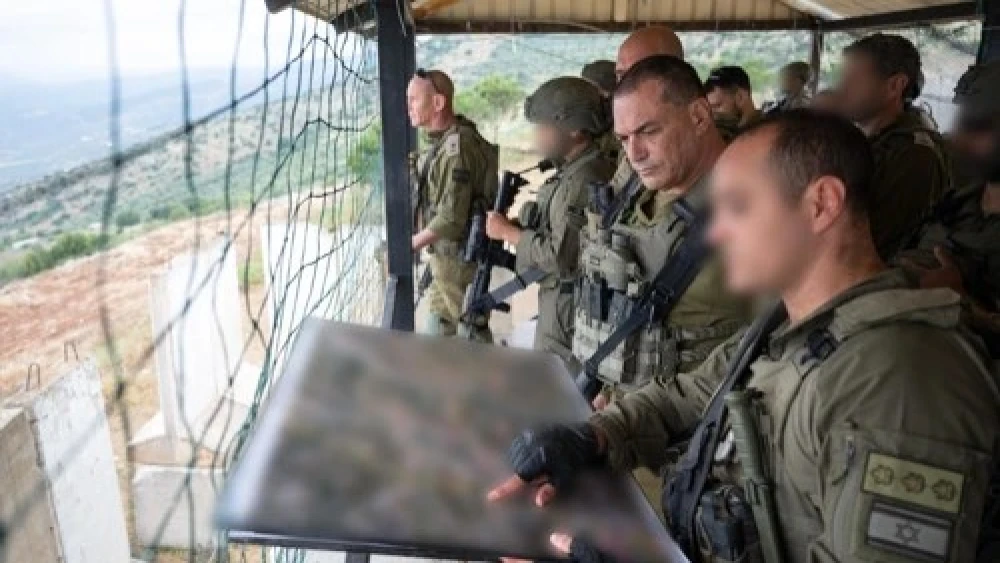
“Even at this moment, our soldiers are advancing and operating with determination, in the air and on the ground. We are acting precisely and responsibly; every additional achievement strengthens the security of our civilians and helps create better conditions for improved future security arrangements,” he said during a visit with troops alongside Northern Command chief Maj. Gen. Rafi Milo and other senior officers.
As part of the visit, Zamir conducted an operational assessment at IDF observation posts in the Mount Dov area overlooking the Ayoun Valley and the ridges to the north and west in Southern Lebanon.
“You are operating with creativity, initiative, and responsibility, including moving into new areas, and continuing to push back against the enemy, dismantling its capabilities, and striking key targets,” Zamir told troops.
“There is no place that can serve as a fortress for Hezbollah, and no place where it will have immunity. The Forward Defense Line is a basis for further operations; wherever we identify a threat, and wherever we are required to remove one, we will act,” he said.
“Every blow to Hezbollah is also a blow to the Iranian axis of terror and Iran’s investment in terror proxies in the region. We are prepared for every development and remain at a high level of readiness against Iran as well,” Zamir added.
Zamir noted that the drone threat posed by Hezbollah remains a “challenge,” but vowed to overcome it.
“The battlefield is not predictable and never will be, but we are dedicating the best resources, minds and capabilities of the IDF to this issue. Operational and technological solutions are already in stages of development and implementation, and we will continue rapidly integrating them into the battlefield,” he said.