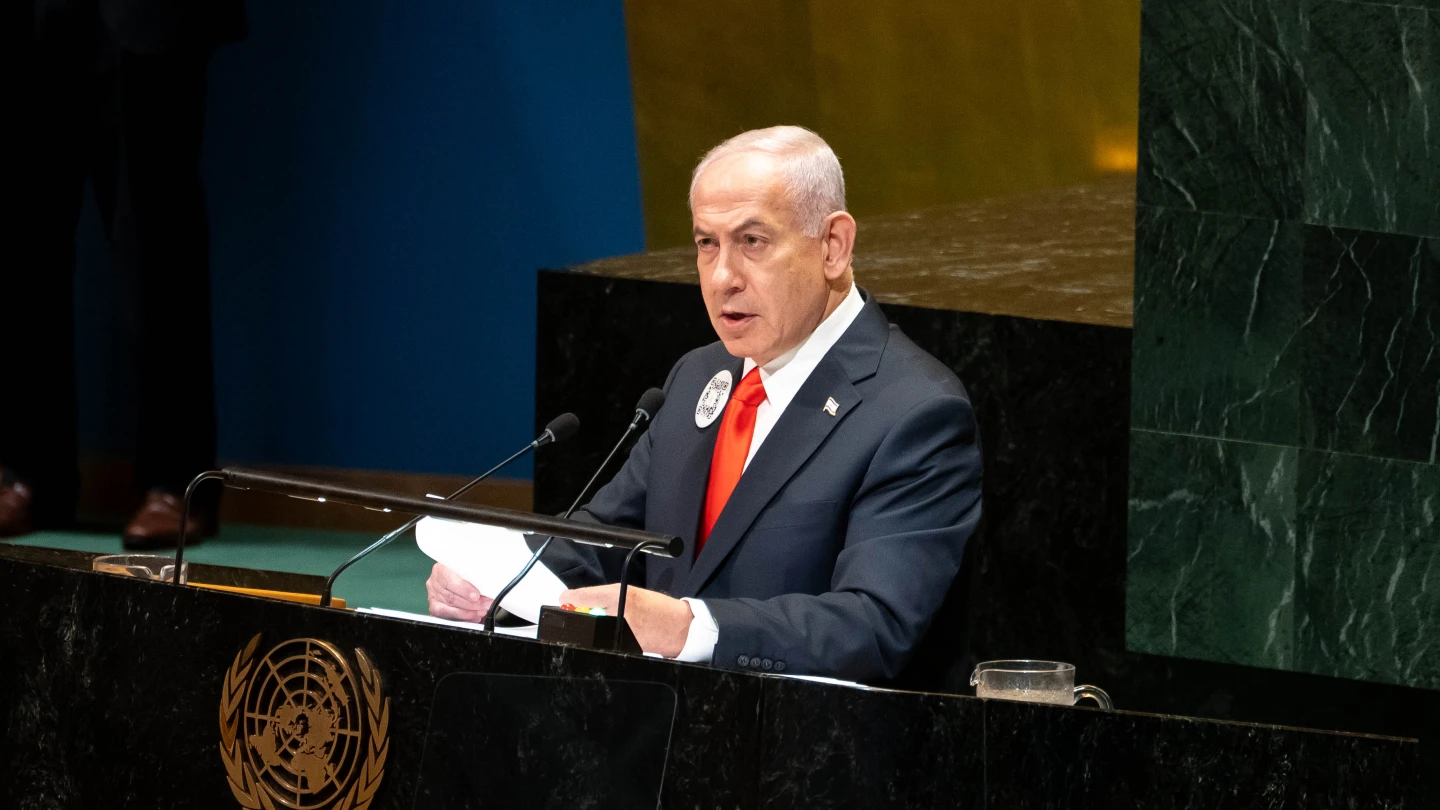
European Union foreign policy chief Kaja Kallas told press in Brussels on Monday that the Foreign Affairs Council, composed of the foreign ministers from all E.U. member states, was fearful about the prospect of a closure of the Strait of Hormuz by Iran.
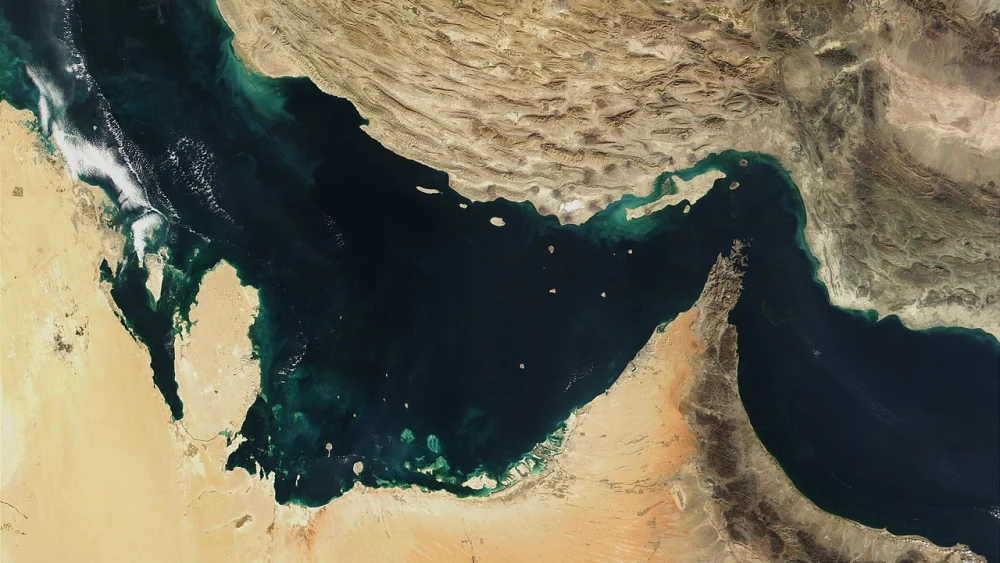
The Iranian parliament on Sunday agreed to close the strait, a key shipping lane for oil and gas, in response to the U.S. bombing of the country’s nuclear sites on Saturday.
“Closing up the Strait of Hormuz by Iran is something that would be extremely dangerous and not good for anybody,” Kallas said.
Foreign ministers remain focused on a diplomatic solution, but concerns about the war escalating are high.
— Kaja Kallas (@kajakallas) June 23, 2025
Any Iranian closure of the Strait of Hormuz would be extremely dangerous.
My doorstep ahead of today’s Foreign Affairs Council ↓ pic.twitter.com/VeHwCyxdL4
She added that the E.U. may support reimposing U.N. sanctions on Iran through a “snapback mechanism” in the Joint Comprehensive Plan of Action (JCPOA), the 2015 nuclear deal between the Islamic Republic and several world powers, if it continues with its nuclear program.
Following the parliamentary vote, Iranian state media said the ultimate decision to close the Strait of Hormuz rests with the Supreme National Security Council.
The maritime outlet, which connects the Persian Gulf to the wider world, is roughly 20 miles wide at its narrowest point and borders Iran.
Twenty percent of the world’s oil passes through it.
Iran painted a doomsday scenario for the world’s economy. Quoting “strategic experts,” state-owned Press TV reported, “Most multi-national corporations around the world would shut down within days as energy supplies necessary to keep them running would run out.”
However, oil traders took a wait-and-see approach. Brent crude futures were up 78 cents, or 1.01%, to $77.79 a barrel on Monday morning. U.S. West Texas Intermediate crude, U.S. crude oil’s benchmark, rose by 76 cents, or 1.03%, to $74.60.
Secretary of State Marco Rubio told Fox News on Sunday that Beijing should tell Iran to call off its plan.
China buys most of Iran’s oil—1.759 million barrels a day last month, according to Kpler, a data and analytics firm specializing in monitoring global trade.
If Iran moves on Hormuz, Rubio said, “it will be another terrible mistake. It’s economic suicide for them if they do it. And we retain options to deal with that. But other countries should be looking at that as well. It would hurt other countries’ economies a lot worse than ours. It would be, I think, a massive escalation that would merit a response, not just by us, but from others.”
U.S. President Donald Trump said on Saturday evening, “There will be either peace, or there will be tragedy for Iran far greater than we have witnessed over the last eight days. Remember, there are many targets left.”
Blocking the Strait of Hormuz, which Iran could potentially do by laying mines across it, would most severely affect Asian markets. Japan and Taiwan rely on the Middle East for nearly all of their oil imports.
As the secretary of state noted, it would also seriously hamper Iranian oil exports, which pass through the waterway. U.S. Vice President JD Vance told NBC on Sunday that it would be “suicidal” for Iran to close the strait. “Their entire economy runs through the Strait of Hormuz... I don’t think it makes any sense,” he said.
Iran oil exports have already suffered a heavy blow, having fallen from around 2.5 million barrels per day to just 150,000 barrels following the outbreak of war with Israel, according to Israel Hayom.
Most of the oil that is still being exported is being laundered in the Indian Ocean before arriving at refineries in China. The steep decline has already cost Iran more than $1 billion in revenue since the war began on June 13. If the trend continues, the regime stands to lose roughly $5 billion per month, the Israeli daily reported.
Contradicting that report is another by Rystad Energy, an independent energy research and business intelligence company, which estimates that Iran has actually increased oil shipments by 30%-to-40% since the attacks began.
One possible reason is that Israel’s attacks have concentrated on Iran’s domestic energy infrastructure and left its export facilities alone, in particular Iran’s main export terminal at Kharg Island, Daniel Ghali, director of commodities strategy for TD Securities, told Canada’s The Globe & Mail.
“It seems as though the decision has been made to strategically maximize the impact on Iran’s domestic energy consumption and minimize the impact to Iran’s energy exports,” Ghali said. “In fact, as a result of these strikes, Iran is actually exporting more barrels to the world.”