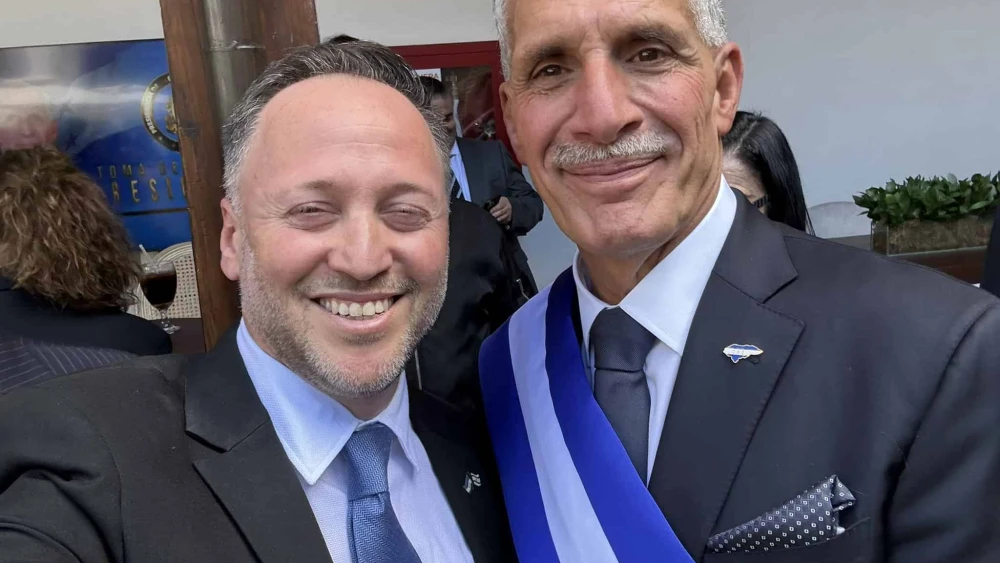
Honduran President Nasry Asfura was sworn into office on Tuesday and immediately received the credentials of Israeli Ambassador Nadav Goren, marking a new chapter in bilateral relations between the two countries.
Goren was the first diplomat afforded this honor after his posting had been held up by the previous leftist government. In a post on X, Goren wrote in Spanish, “It was an honor to present my credentials to President Nasry Asfura as one of his first acts after assuming the presidency—a clear symbol of the friendship between our nations and the beginning of a new chapter in our relationship.”
Minutes after being sworn in as President of Honduras, @titoasfura chose his first act: receiving the credentials of Israel’s Ambassador, @Nadavgoren - the first ambassador to receive this rare honor, signaling a strong commitment to 🇮🇱🤝🇭🇳 relations. pic.twitter.com/o9k7YmJBEg
— Israel Foreign Ministry (@IsraelMFA) January 28, 2026
The conservative president, who is of Palestinian Christian descent, took office just ten days after a visit to Jerusalem, where he expressed hope for a “new era” in bilateral relations with Israel.
The declaration and trip to both the United States and Israel signaled a return to close ties, building on decades of friendship following the recent period of strained relations under his predecessor, who had recalled her ambassador to Israel due to the Gaza war.
Honduras recognized Israel in 1948 and, over the decades, consistently supported the Jewish state at the United Nations. In 2021, Honduras moved its embassy to Jerusalem, following the United States and Guatemala, under the conservative National Party of Honduras to which the president-elect belongs.