A report by the United Nations’ nuclear watchdog warns that Iran is pressing ahead with an upgrade to its advanced uranium enrichment program, Reuters revealed on Monday.
The development comes as the West waits for Iran’s response to a “final” proposal to revive the 2015 nuclear deal.
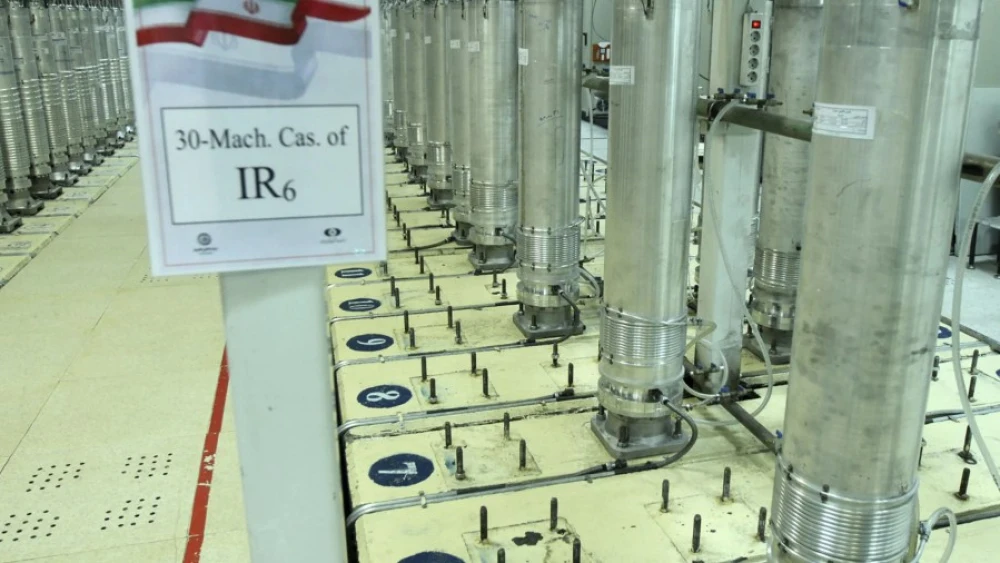
According to the International Atomic Energy Agency document, the first of three cascades of IR-6 centrifuges recently installed at the subterranean Fuel Enrichment Plant (FEP) in Natanz is actively enriching uranium, Reuters reported.
The IR-6 is the Islamic Republic’s most advanced model. Under the 2015 nuclear accord, Tehran would only be allowed to use less efficient first-generation IR-1 centrifuges.
Iran has been using IR-6 centrifuges to enrich uranium to up to 60% purity, close to that required for use in nuclear bombs, at an above-ground complex in Natanz for over 12 months, the report noted.
A second IR-6 cascade in Fordow, a site buried under a mountain, began enriching uranium in July.
In the confidential report to U.N. member states, the IAEA states: “On August 28, 2022, the Agency verified at FEP that Iran was feeding UF6 [uranium hexafluoride] enriched up to 2% U-235 into the IR-6 cascade ... for the production of UF6 enriched up to 5% U-235.”
Iran and the United States are moving closer to reviving the 2015 nuclear agreement, which removed sanctions against Tehran in exchange for promised restrictions on its nuclear activity. The Trump administration withdrew from the deal in 2018.