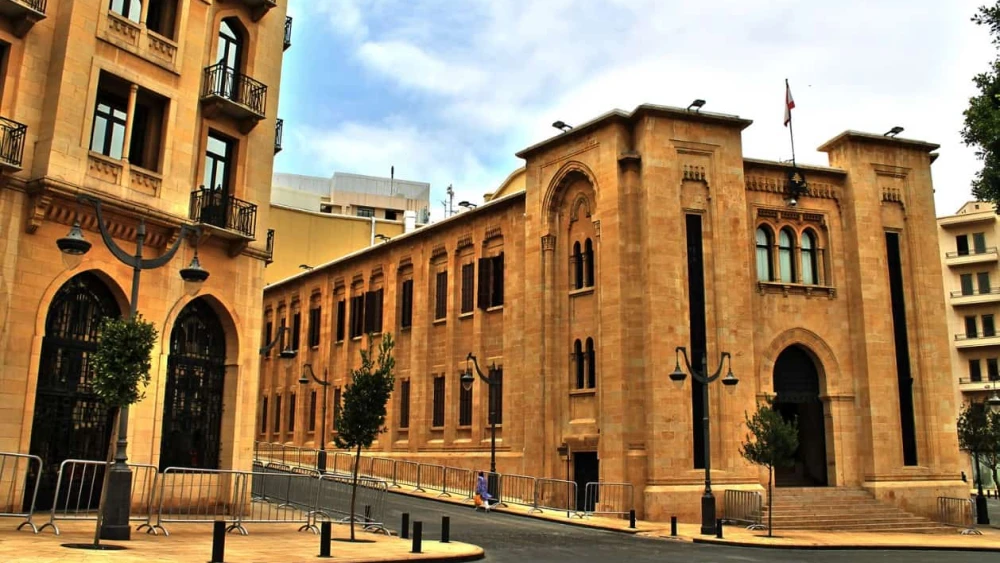
The Parliament of Lebanon is scheduled to convene on Jan. 9 to elect a president, seeking to end a leadership vacuum that has persisted for over two years, state media reported on Thursday.
The announcement followed the implementation of a ceasefire between Jerusalem and Beirut, ending the nearly 14-month war between the Jewish state and Hezbollah, which has had de facto control over Lebanon’s policies and large parts of its territory.
“Speaker Nabih Berri has scheduled a parliamentary session on January 9 to elect the president of the republic,” Lebanon’s National News Agency reported. Berri is a politician for the Shi’ite Amal party, and he has close ties to the leadership of Hezbollah.
The presidency has been vacant since Michel Aoun’s term expired on Oct. 31, 2022. Deep divisions between Lebanon’s two main political blocs—Hezbollah and its allies, backed by Iran, and their opponents—have prevented either side from securing the majority needed to elect a president.
In addition to ceremonial duties as the head of state, the Lebanese president has considerable executive powers, including as commander-in-chief of the Lebanese Armed Forces and security forces. He may appoint and dismiss the prime minister and Cabinet and veto bills. The constitution also allows him to dissolve parliament.
Prime Minister Najib Mikati expressed optimism on Wednesday, following the ceasefire agreement, saying, “I hope this marks the beginning of a new chapter for Lebanon and that the coming days will lead to the election of a president,” AFP reported.
Berri, who played a key role in negotiating the ceasefire after Hezbollah endorsed him as a negotiator, emphasized the urgency of resolving the political deadlock. “The country must move quickly to elect a president,” he said.
Hezbollah leader Naim Qassem, speaking earlier this month, affirmed the group’s intention to help end the stalemate, saying, “Following the war, Hezbollah will actively contribute to the election of a president,” AFP reported.
Lebanon’s political system mandates a sectarian power-sharing arrangement, with the presidency reserved for a Maronite Christian, the prime minister’s role assigned to a Sunni Muslim, and the parliamentary speaker position allocated to a Shi’ite Muslim.