British police have banned a pro-Iranian march scheduled to take place in central London on March 15, citing concerns over “extreme tensions” with counterprotesters and the potential security risks posed by Tehran during the ongoing conflict in the Middle East, Reuters reported on Wednesday.
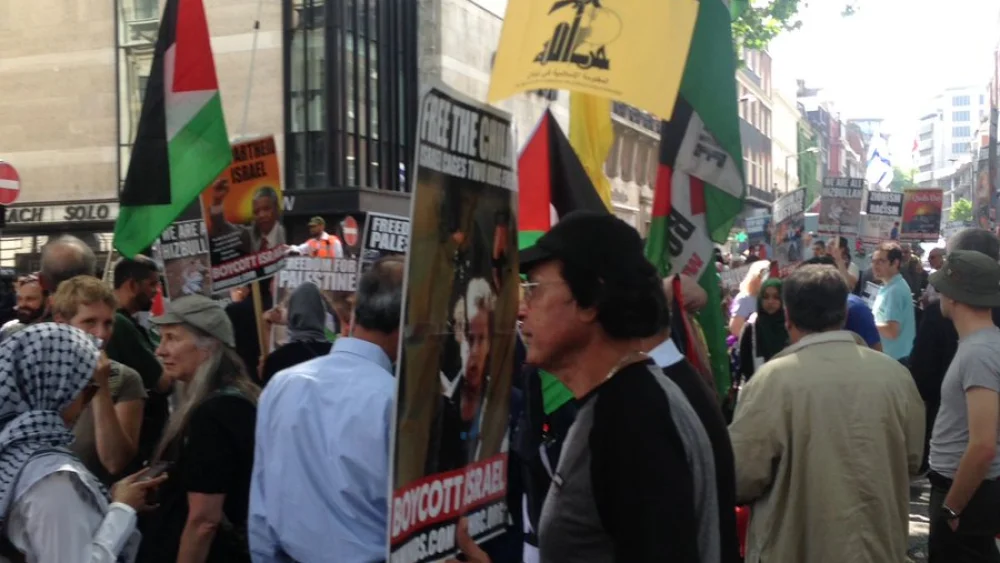
The annual Al-Quds march, organized by the Islamic Human Rights Commission, usually takes place in central London, drawing controversy in previous years over displays of support for anti-Israel groups.
British police said they had banned a pro-Iranian march due to take place in London on March 15, citing the possibility of ‘extreme tensions’ with counter-protesters and the risk posed by Tehran during the conflict in the Middle East https://t.co/KgWM2vk7OA
— Reuters (@Reuters) March 11, 2026
Police said the decision to prohibit the demonstration reflects the heightened risk of public disorder amid the current regional conflict. “The threshold to ban a protest is high,” authorities were quoted by the British news agency as saying, noting that the measure marks the first time in 14 years that police have exercised such powers.
Officials said the risks associated with the march were “so severe” that it was necessary to block the event entirely. The ban also applies to any counterprotests planned for the same day.
The Islamic Human Rights Commission indicated in the past that the march is intended to support what it calls “Palestinian liberation.” Police noted that previous Al-Quds marches in London have resulted in arrests for supporting terrorist organizations and for antisemitic hate crimes.
Even with the ban in place, authorities warned they are preparing for a “challenging, potentially violent weekend.”
“We have taken into consideration the likely impact on protests of the volatile situation in the Middle East, with the Iranian regime attacking British allies and military bases overseas,” police said in a statement published late Tuesday, according to Reuters.
The Community Security Trust (CST), a British Jewish security organization, welcomed the decision.
“CST strongly welcomes the actions taken by the police and the Home Secretary in banning the annual Al-Quds Day march in London, which comes after Iranian arrests for allegedly targeting Jews,” the group said in a statement.
“It shows the unprecedented volatility of the current situation and how extreme such marches have always been, up to and beyond what the law has allowed at any given time,” CST added. “We note that static Quds Day events may yet go ahead, as do many other pro-Iranian regime actions.”
Al-Quds Day events, held annually in several countries, were first established by Iran’s Islamic regime in 1979 to promote opposition to Israel.