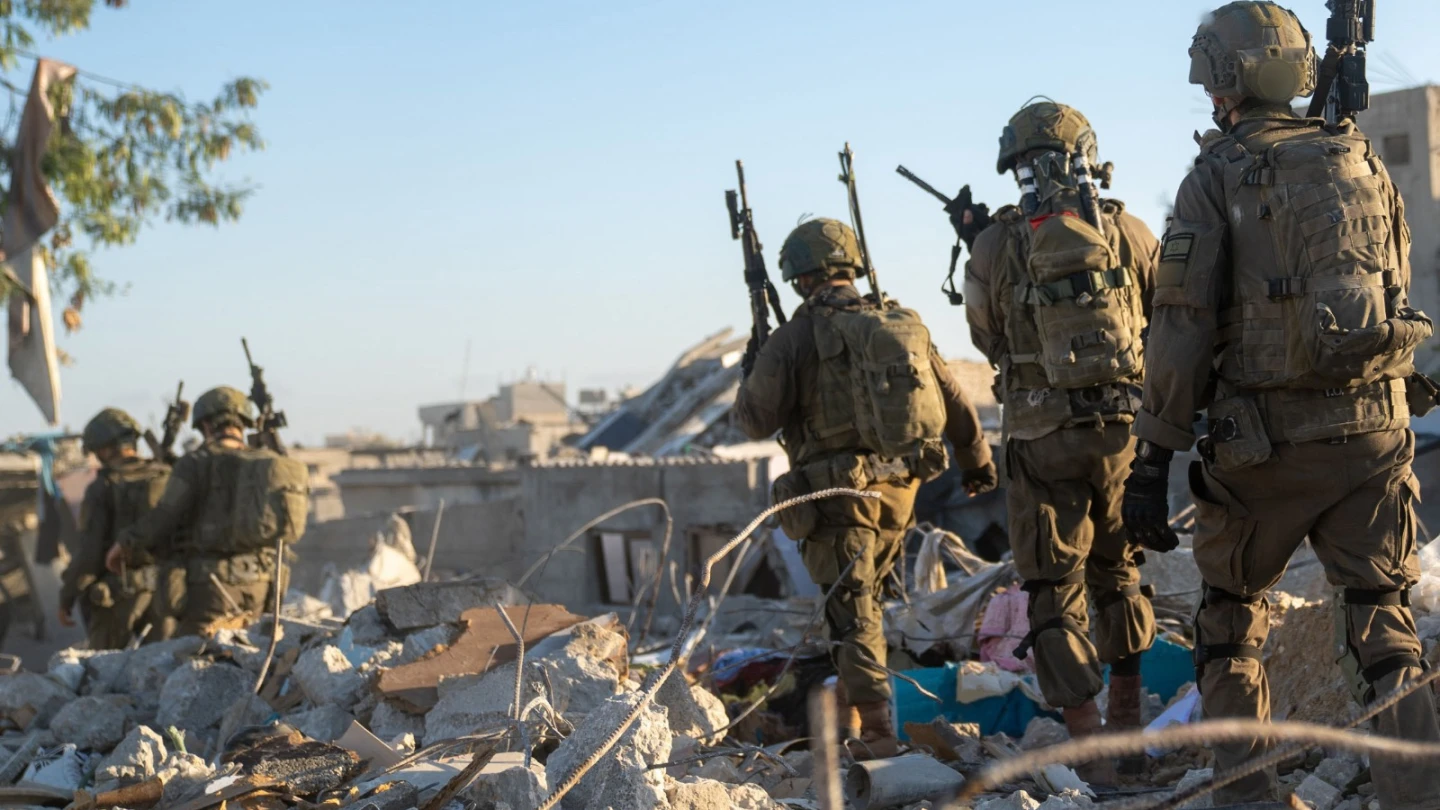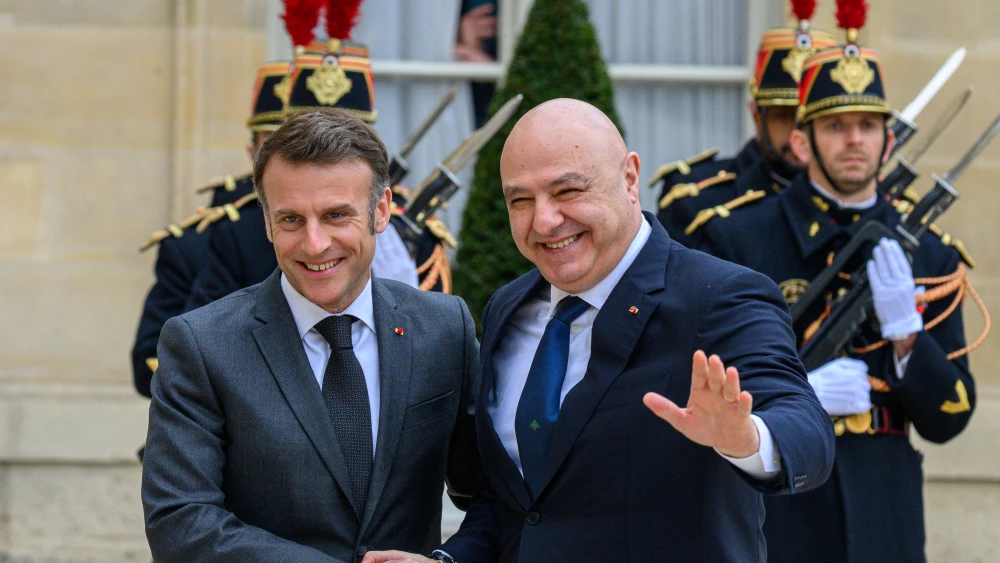

Paris last week announced a new push to “save the two-state solution” amid a fresh, government-initiated “war crimes” probe against Israel, which is growing increasingly vocal in its opposition to French involvement of this kind.
“It’s not a push for peace, it’s a hollow gesture by a toxic France that has become obsessive about Israel and frustrated about its loss of control in the region in favor of the U.S.,” Yitzhak Eldan, an expert on France and former head of protocol at Israel’s Ministry of Foreign Affairs, said of the French plan.
French Foreign Minister Jean-Noël Barrot said in a June 4 video message that the initiative, launched last week, will “gather 37 civil society organizations in Palestine and Israel, which embody hope. France will always be at their side to advance peace.”
Un an après l’adoption de la Déclaration de New York et la reconnaissance de l’État de Palestine, je réunirai à Paris, le 12 juin, les responsables de la société civile israélienne et palestinienne engagés en faveur de la solution à deux États.
— Jean-Noël Barrot (@jnbarrot) June 4, 2026
Il est impératif de mettre en…
He added: “One year after the adoption of the New York Declaration and the recognition of the State of Palestine, I will bring together in Paris, on June 12, the leaders of Israeli and Palestinian civil society committed to the two-state solution. It is imperative to implement the Comprehensive Peace Plan for Gaza, to address the existential threats weighing on the two-state solution.”
The French embassy in Israel hosted left-wing activists from Israel, including from Judea and Samaria, at an event on June 4. It was a follow-up to a similar event held with French support in Beit Jala near Bethlehem, a town under the control of the Palestinian Authority.
Attending the June 4 event in Tel Aviv were representatives of J Street, the U.S.-Jewish group that says it is promoting peace for Israel but whose critics say is anti-Israel, and the Israeli far-left groups Standing Together and Women Wage Peace.
The following day, prosecutors in France said they’d opened, at the government’s request, an investigation into alleged war crimes and torture by Israel against French anti-Israel activists who took part in a Gaza-bound flotilla in May, Le Monde reported.
Seen together, the two developments underline a French “attempt to remain relevant even though the government’s anti-Israel policies have made it toxic to Jerusalem. So Barrot is going over the head of Israel and the corrupt Palestinian Authority to produce an illusion of activity and relevance,” said Eldan.
The Israeli ambassador to the United States, Yechiel Leiter, recently described in unusually blunt terms Israel’s attitude toward French involvement.
Jerusalem prefers “to keep the French as far away as possible from pretty much everything, but particularly when it comes to peace negotiations,” Leiter said in reply to a JNS question in April, during a press briefing that followed direct talks between Israeli and Lebanese officials in Washington, D.C.
Since Hamas’s Oct. 7, 2023 attack on Israel, relations between Jerusalem and Paris have deteriorated in a series of public disputes. These have included President Emmanuel Macron’s calls to halt arms deliveries to Israel, French efforts to restrict Israeli participation in major defense exhibitions, repeated French criticism of Israel’s conduct in Gaza and threats of sanctions, public clashes between Macron and Prime Minister Benjamin Netanyahu, and, most significantly, France’s decision last year to recognize a Palestinian state.
That move made France the first G7 nation to do so and prompted Israel to accuse Paris of rewarding terrorism and abandoning its traditional role as a mediator.
Replaced by the U.S.
France, the former colonial power in Lebanon and a patron of Lebanese interests long after the country’s independence, “found itself isolated, replaced by the U.S., as the broker during one of the most critical phases in Lebanon’s history,” Eldan said.
“That’s a humiliating position for France, and the so-called peace push is an attempt to distract [from that],” he added.
The talks in Washington are about implementing a plan by Israel, Lebanon and the United States to have Lebanon take over from Hezbollah, which has controlled parts of Southern Lebanon for decades with Iranian funding and support.
France alienated Israel on the Lebanese issue as well, when Macron said in March 2025 that “there were no activities that justified strikes” on Hezbollah targets in Beirut.
The strikes came in response to the launch of two rockets from Lebanon into Israel, which Jerusalem attributed to Hezbollah and said constituted a violation of the ceasefire.
In addition to the foreign-policy considerations facing France, “it must also act against Israel and for the Palestinian cause for internal issues,” Eldan said, noting that the next presidential election, in which Macron cannot run because of term limits, is scheduled for April 2027.
Israel and Gaza have “become domestic issues” in the French media, Eldan said.
“More than in many other European countries, it is amazing to see how central an issue Israel and its faraway dispute have become in the French political discourse,” he added.
This means that the Macron administration “cannot afford to be seen as not doing enough to be involved” in Israel’s conflicts, Eldan said.
Macron has an approval rating of 26%, according to a June 4 poll by Elabe. While that was his highest score in more than a year, he still trailed the 38% approval rating of Jordan Bardella, the presumed candidate of the anti-immigration National Rally party.
Bardella has expressed support for Israel both before and after Oct. 7, 2023, when the Hamas massacre triggered a wave of antisemitic attacks that resulted in record-high tallies of hate crimes in France against Jews in 2023 and 2024.
Macron was relatively friendly toward Israel in the early days of his presidency. He called Netanyahu “Bibi my friend” in several speeches, hugged him during meetings and in 2017 became the first French head of state to call anti-Zionism a form of antisemitism.
Yet Macron changed his tune as early as November 2023, when he implied Israel was committing “barbarity” in Gaza. Now, throughout much of the French political spectrum, animosity toward Israel “runs so deep that the dynamic of bilateral relations has shifted,” Eldan said.