Newsletter
Newsletter Support JNS

Auschwitz museum warns against fake AI images of victims

Fictionalized images could encourage Holocaust denial, museum deputy spokesman says.

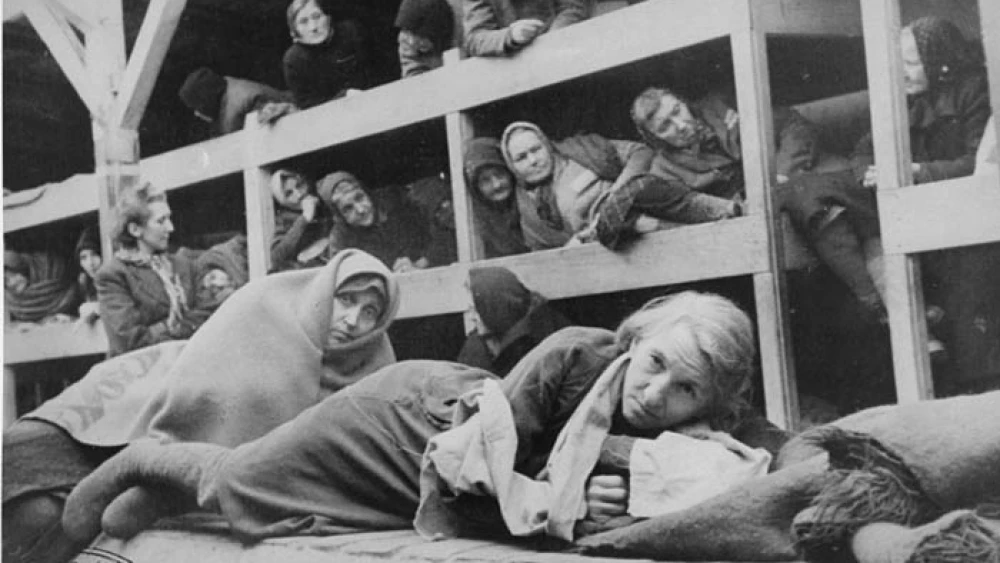
Women in the barracks of the newly liberated Auschwitz concentration camp, January 1945. Credit: United States Holocaust Memorial Museum, courtesy of National Archives and Records Administration, College Park, Md.

The Auschwitz-Birkenau State Museum on Friday strongly condemned Facebook posts with AI-generated fictional images of victims of the German death camp for their historical distortions.

“The use of artificial intelligence to generate fictional images of Auschwitz victims … is not a tribute,” the museum posted on X. “It is a profound act of disrespect to the memory of those who suffered and were murdered in Auschwitz. It undermines the integrity of historical truth.”

The computer-generated inventions use real content including names, dates and other biographical facts that are paired with fabricated information.

“Fabricating faces with AI does not preserve memory,” the museum noted. “It reshapes it, distorts it, and risks turning tragedy into aestheticized fiction.”

Fictionalized images could encourage Holocaust denial, museum deputy spokesman Pawel Sawicki told AFP.

The museum appealed to page creators to immediately stop this practice, and it has connected with the U.S. tech giant Meta, which owns Facebook, regarding one such falsified page titled “90’s History.”

“The tragedy of Auschwitz does not need to be made more visual, more “emotional” or more “shareable.” It needs to be remembered truthfully,” the museum said.

More than 1.1 million people were murdered at Auschwitz between 1940–1945, about one million of them Jews.

The Israeli airline said it would review its decision next week following an assessment of the situation.
The Israeli leader said the Jewish state turned the table on its enemies after Oct. 7, breaking through “the barrier of fear.”
The newly released State Archives trace the Israeli response from the Air France hijacking to the successful hostage rescue in Uganda.
Panelists at the JNS Summit argued that Israel must expand its domestic military capabilities while continuing strategic cooperation with the United States.
“Anti-Zionism can be a framework for justifying anti-Jewish hostility,” Rafaela Dancygier, of Princeton University, told the N.J. Advisory Committee to the U.S. Commission on Civil Rights.
A board member at the Orthodox synagogue told the FBI that members began attending services less frequently after Kevin Charles Pyles allegedly targeted the synagogue in separate July and August 2025 incidents.
Benny Gantz, JNS editor-in-chief Jonathan S. Tobin, Gilad Erdan, Mosab Hassan Yousef, Nissim Black and leading voices in security, diplomacy, media, law and Jewish communal affairs headline the summit’s third day in Jerusalem.