Archaeology
News and features about archaeological finds linking stories from the Torah and Prophets, or other historical events to the State of Israel

They utilized heavy machinery apparently to construct a parking lot as a way of collecting parking fees from visitors.

Measuring 2,422 square feet in area, its maximum volume is around 300,000 gallons.

Doron Spielman, vice president of the City of David Foundation, said, “It’s incredible to think that this beautiful ring sat at the bottom of a mikvah on the ancient Pilgrimage Road for 2,000 years until it was uncovered by archaeologists. It is yet another piece in the puzzle that is ancient Jerusalem.”

A unique lamp wick dating back to the Byzantine period was uncovered by the Antiquities Authority at the Negev Desert Roman Empire settlement of Shivta.

“The Beka was equivalent to the half-shekel, which every person from the age of 20 years and up was required to bring to the Temple,” explained Eli Shukron, who directed the excavations on behalf of the Israel Antiquities Authority.

A 2,000-year-old antiquities city near Afula were damaged by two antique robbers with a backhoe loader, according to the Israel Antiquities Authority Unit for the Prevention of Antiquities Robbery.
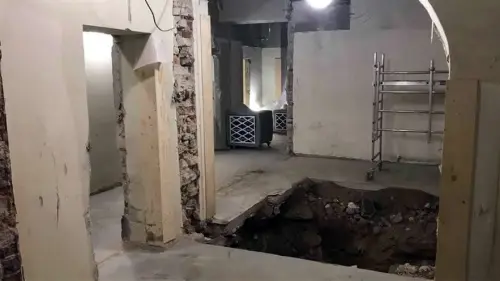
The archaeological work will continue into 2019, including annual tree-ring timing studies to verify the age of the wooden beams.
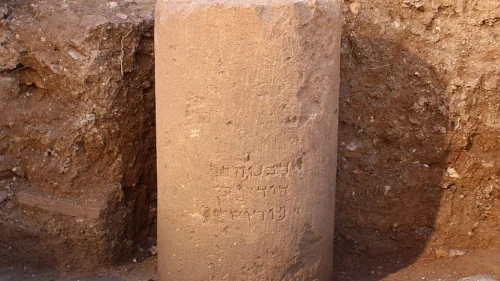
“My heart started to pound, and I was sure everyone could hear it. My hands were trembling so badly I couldn’t properly take a picture,” said Israel Antiquities Authority archaeologist Danit Levi.

The rare artifact depicts the finely crafted head of a horned animal and delicate filigree work, and is believed to date back to the second or third century BCE.

Archeologists and engineers from the Israel Antiquities Authority arrived on Wednesday to figure out what to do with the 2,000-year-old rock.
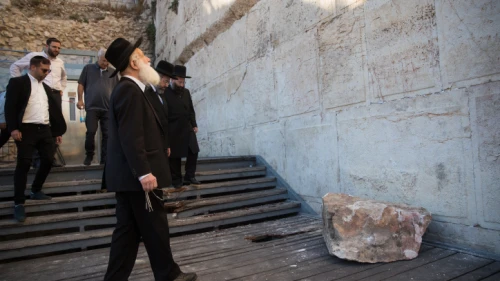
The breakage comes just a day after the Western Wall plaza was filled with worshippers marking Tisha B’Av—a day of fasting and mourning the destruction of the two holy Jewish temples at the site.

The 14-day pilot program combines a week of volunteering on an Israeli army base with a week at an active archaeological-dig site supervised by the Israel Antiquities Authority.