Newsletter
Newsletter Support JNS

Bahrain committed to advancing ties with Israel after ‘always expected’ Netanyahu win

The kingdom’s top diplomatic adviser says his country will abide by the Abraham Accords and “continue building our partnership together.”

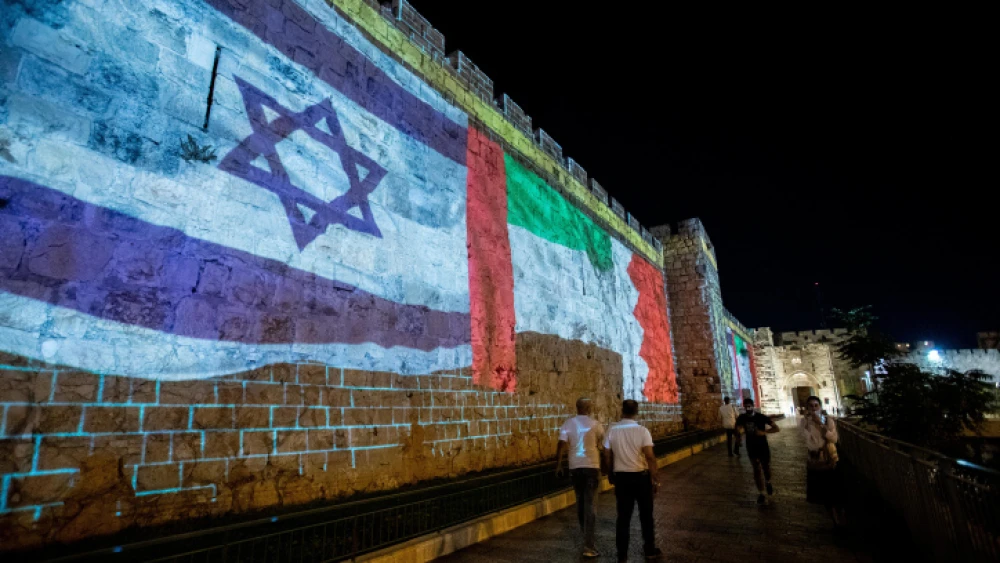
The flags of the United States, the United Arab Emirates, Israel and Bahrain are screened on the walls of Jerusalem's Old City, on Sept. 15, 2020. Photo by Yonatan Sindel/Flash90.
The flags of the United States, the United Arab Emirates, Israel and Bahrain are screened on the walls of Jerusalem’s Old City, on Sept. 15, 2020. Photo by Yonatan Sindel/Flash90.

Bahrain will continue to build bilateral ties with Israel following last week’s general election in the Jewish state, a top Bahraini official said on Saturday.

Opposition leader Benjamin Netanyahu and his right-religious bloc secured victory in the elections, with 64 out of 120 Knesset seats.

“We have an agreement with Israel, part of the Abraham Accords, and we will stick to our agreement and we expect it to continue in the same line and continue building our partnership together,” said Sheikh Khalid bin Ahmed Al Khalifa, according to Reuters.

The diplomatic adviser to the Sunni Muslim country’s king added that Netanyahu’s victory was “normal and always expected,” adding, “We will want to make an example and succeed together and face all the threats,” in an apparent reference to shared concerns over Iran.

Netanyahu was prime minister when Israel in 2020 normalized ties with several Arab states, including Bahrain, under pacts brokered by the Trump administration.

The comments out of Manama come just days after Turkish President Recep Tayyip Erdoğan said that his country’s rapprochement with Israel would continue irrespective of the outcome of Tuesday’s vote. Lebanon’s interim Prime Minister Najib Mikati also stressed that the U.S. would ensure the recent maritime border deal between Jerusalem and Beirut remains in force, regardless of the election results.

“It’s difficult to stand among ancient stones and not recognize the power of a people maintaining a connection to places that have shaped their story for thousands of years,” said one participant.
Panelists at JNS Summit call for a strong response to international legal challenges facing Israel.
The unarmed suspect unarmed, and there was no infiltration into Israeli territory, according to the Israeli military.
Israel will not withdraw from Southern Lebanon or Syria security zones despite potential U.S. pressure, said Israel’s defense minister.
The former U.N. ambassador and senior Likud member said he is focused on “significant decisions.”
Police suspect that the tunnel was recently excavated with the intention of carrying out terror attacks and the smuggling of Palestinians into Israel.
Benny Gantz, JNS editor-in-chief Jonathan S. Tobin, Gilad Erdan, Mosab Hassan Yousef, Nissim Black and leading voices in security, diplomacy, media, law and Jewish communal affairs headline the summit’s third day in Jerusalem.