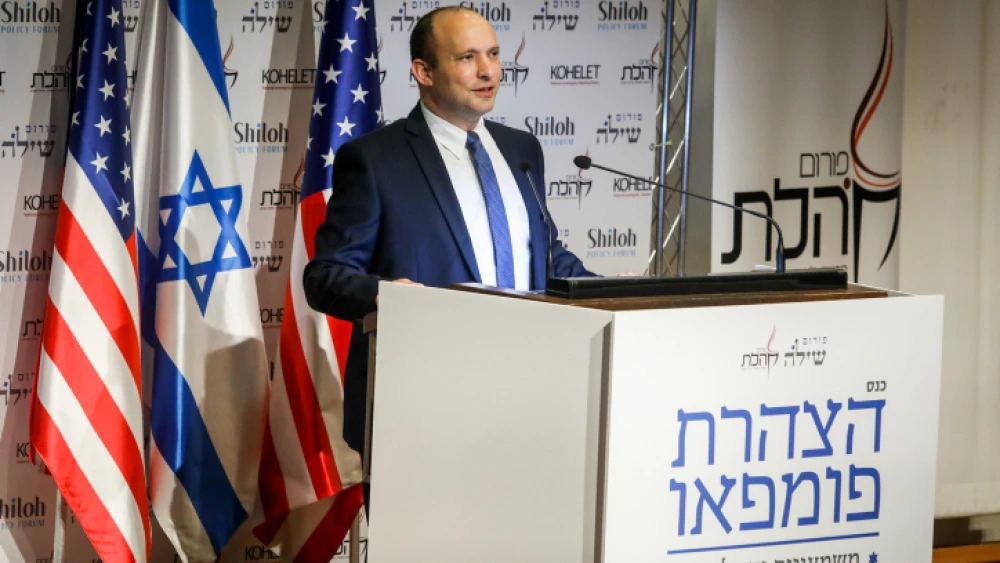
Israeli Defense Minister Naftali Bennett announced on Wednesday the establishment of a task force to develop and legalize unauthorized outposts in Judea and Samaria.
Speaking at the Kohelet Policy Forum Conference in Jerusalem, he said, “We are launching a campaign for the future of Area C; it started a month ago and I’m announcing it here today.”
Bennett said that he aims to increase the number of Israeli citizens in Area C, which represents 60 percent of the West Bank and is under full Israeli control, from 400,000 to one million within the next 10 years.
“We are not occupiers in our homeland, we are not occupiers in our own land, we are not like the Belgians in the Congo,” he said. “The State of Israel’s policy is that the land in Area C belongs to [Israel].”
U.S. Ambassador to Israel David Friedman, also speaking at the conference, confirmed that U.S. policy also states that “Israelis, Jews have the right to live in Judea and Samaria.”
Also at the Kohelet Policy Forum Conference, Blue and White head Benny Gantz ruled out a merger with other parties, though he suggested that a merger between the Zionist parties to the left was necessary for Blue and White “to lead a government of change, hope and come out of the next elections as the largest party in the Knesset.”
Though Labor-Gesher chairman Amir Peretz had suggested a merger with the Democratic Union and Blue and White on Tuesday, Gantz said that “Blue and White will continue to be the governing alternative at the center of the map and won’t team up with other parties—not to its left nor right.”