Israeli archaeologists uncovered a 1,600-year-old estate belonging to a wealthy Samaritan man.
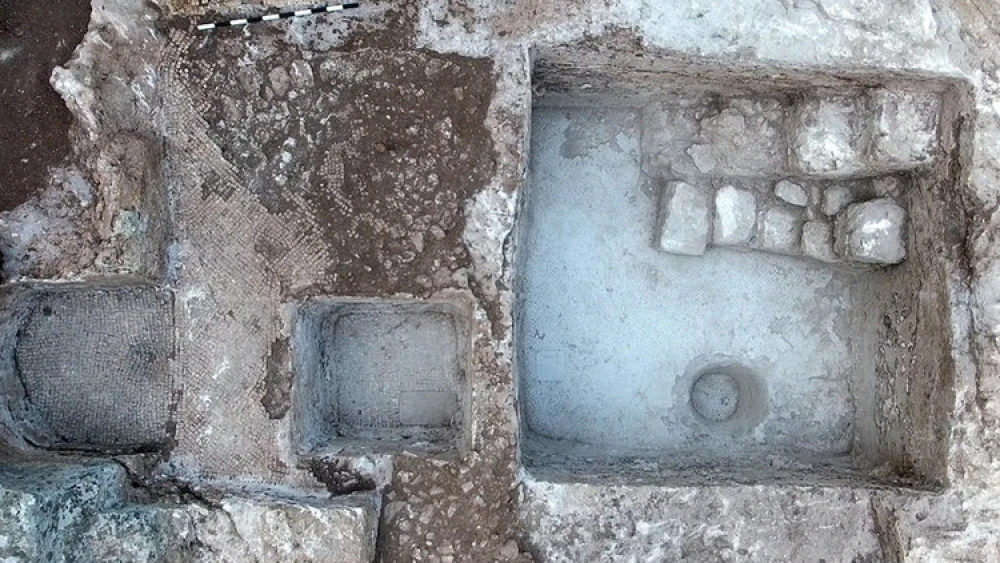
The property, which was discovered in Tzur Natan in central Israel, consisted of an inscription that reads, “Only God help the beautiful property of Master Adios, amen.” The inscription was deciphered and translated by Hebrew University professor Leah Di Segni, and dates back to the early fifth century.
“The inscription was discovered in an impressive wine press that was apparently part of the agricultural estate of a wealthy individual called Adios,” said Hagit Torge, director of the excavations on behalf of the Israel Antiquities Authority. “This is only the second such wine press discovered in Israel with a blessing inscription associated with the Samaritans. The first was discovered a few years ago in Apollonia near Herzliya.”
Near the wine press, the archaeologists uncovered stone quarries consisting of rock-cut depressions utilized for growing grapevines, apparently part of the Master Adios estate.
“ ‘Master’ was an honorific given to senior members of the community and attests to the high social standing of the owners of the estate,” said Torge.
“The location of the wine press is near the top of Tel Tzur Natan, where remains of a Samaritan synagogue were found with another inscription, and reveals Adios’ high status,” she added.
The Tzur Natan Samaritan synagogue was transformed into a church in the sixth century. A compound was uncovered nearby, consisting of large rooms and spaces for producing flour, oil and wine. There, a Pompeian donkey mill was discovered, utilized to grind flour and marked with a seven-branch candelabrum.