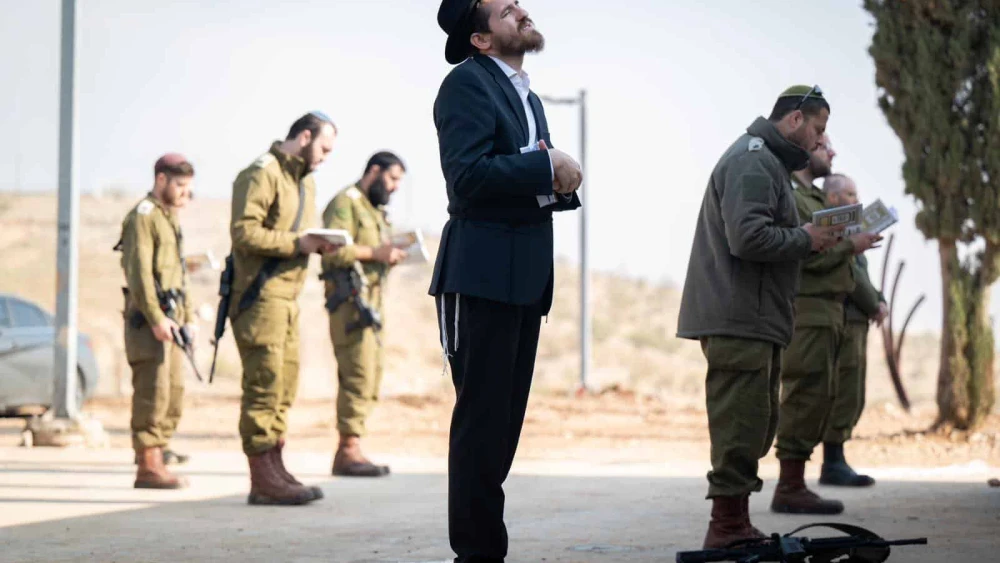
Some 50 ultra-Orthodox recruits were drafted into the Israel Defense Forces’ new Hasmonean Brigade on Sunday at the army’s Tel Hashomer induction center in Ramat Gan. The soldiers will form the brigade’s first company.
At the same time, 100 older haredi men are set to undergo further training before being drafted into the brigade’s first-ever reserve company.
The Israel Defense Forces called the enlistment a “significant milestone ... especially in light of the operational needs arising from the needs of the war.”
As part of the military’s preparation process for the brigade’s creation, a training base in the Jordan Valley was upgraded to suit the lifestyle of the haredi troops, including by establishing synagogues.
כחלק מתהליך הגיוס, ובמסגרת המהלכים להגברת האיוש ולחיזוק כשירות היחידות, צה״ל, בהובלת אגף כוח האדם, ממשיך ומשלים בימים אלה את הגיוסים למערך הלחימה וליתר המערכים, לרבות גיוס בני המגזר החרדי>> pic.twitter.com/crqo64cZxF
— צבא ההגנה לישראל (@idfonline) January 5, 2025
The IDF is taking a gradual approach toward recruiting haredim, hoping that the community will take note that the brigade is responsive to the religious needs of the ultra-Orthodox, fostering trust in the military.
The Hasmonean Brigade was named after the dynasty that began after the Jews threw off the yoke of Hellenistic rule in the Maccabean Revolt (167 BCE to 141 BCE) against the Seleucid Empire.
The brigade requires recruits to follow a strict halachic lifestyle—that is, one in keeping with Jewish law. Observant Jews serve as commanders.
Brigade enlistees were asked to sign a document accepting its rules. One clause states that recruits will at all times maintain a religious way of life, be careful to use “clean” speech, keep beards and sidelocks throughout their service if they entered the army with them, and wear Sabbath clothes during Sabbath prayers and meals “as is customary in ultra-Orthodox society (and even a suit and a hat).”
All the courses and training for soldiers in the brigade will be conducted internally to avoid mixing with non-Orthodox units, a nod to a concern among many ultra-Orthodox.