


The Hamas terror group on Tuesday night announced its long-awaited response to a proposed hostages-for-ceasefire deal with Israel, in what Jerusalem said amounted to a rejection of the outline.
Hamas said it “dealt with the proposal in a positive spirit, ensuring a comprehensive and complete ceasefire, ending the aggression against our people, ensuring relief, shelter and reconstruction, lifting the siege on the Gaza Strip and completing a prisoner exchange.
“We value the role of our brothers in Egypt, Qatar and all countries that seek to stop the brutal aggression against our people,” Hamas added.
The Ynet news site cited senior officials in Jerusalem as saying that while Hamas claimed it agreed to the framework as negotiated by Doha and Cairo, it was demanding “impossible conditions” from Israel.
“In any case, Israel will not stop the fighting. Hamas’s response amounts to a negative answer,” the officials said, adding that the Prime Minister’s Office was still drafting an official response to mediators.
Israel has repeatedly rejected proposals for a long-term or permanent ceasefire and maintains that it will continue in its goal to eradicate Hamas and ensure that Gaza can never again pose a threat to the Jewish state.
U.S. Secretary of State Antony Blinken, who is scheduled to arrive in Israel on Wednesday, said the Biden administration was reviewing Hamas’s response and stressed it was “essential” to go ahead.
“There’s still a lot of work to be done. But we continue to believe that an agreement is possible and indeed essential, and we will continue to work relentlessly to achieve it,” Blinken stated following meetings in Doha.
I had a productive discussion with @MBA_AlThani_ in Doha. The constant engagement at the highest level of our governments reflects our relentless focus on securing the release of all hostages and achieving a pause in fighting to address the dire humanitarian situation in Gaza. pic.twitter.com/WdiCllpwSK
— Secretary Antony Blinken (@SecBlinken) February 6, 2024
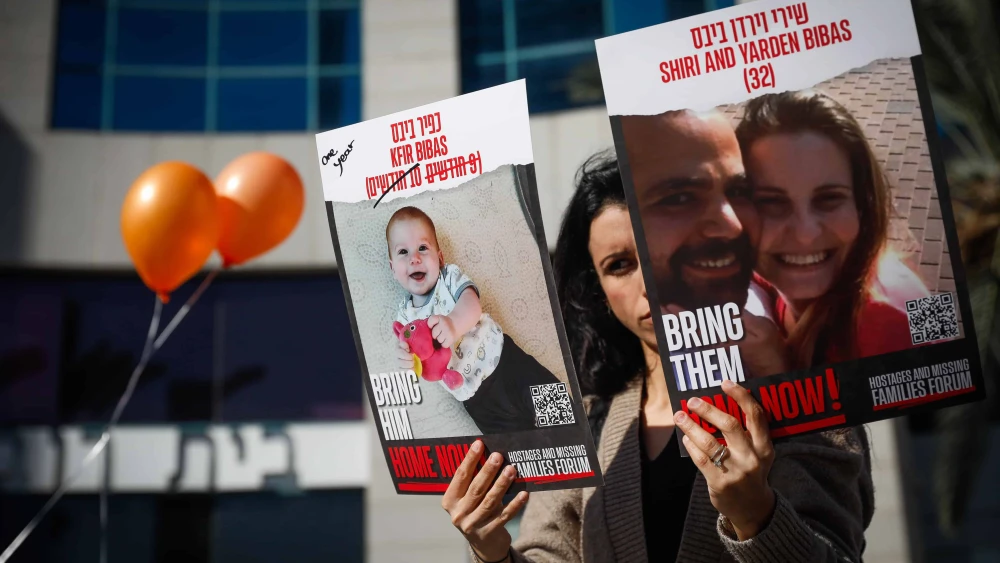
According to official figures, 136 hostages remain in Gaza. At least 32 of the remaining captives are confirmed to have died, The New York Times reported earlier on Tuesday, citing Israel Defense Forces officials.
Jerusalem was also assessing unconfirmed reports indicating that at least 20 additional captives may no longer be alive, the officials said.
Hamas abducted more than 240 people during its bloody rampage across the northwestern Negev, in which some 1,200 people were murdered and thousands more wounded.
One hundred and five hostages, mostly women and children, were released last year as part of a ceasefire deal, which Hamas broke when it refused to hand over the last group of captives.
Hamas is refusing a new deal along the lines of the November agreement, Saudi Arabia’s Al Arabiya previously reported. As part of that deal, Israel released hundreds of female and teenage Palestinian security prisoners, in addition to pausing its military campaign in Gaza.
The terrorist group is demanding that Israel release more Palestinian security prisoners in exchange for each of the remaining hostages. Hamas is reportedly insisting that Israel free terrorists arrested on Oct. 7.
Hamas is also seeking guarantees for the complete withdrawal of Israeli forces from the Gaza Strip and a total end to the war—a stance that is incompatible with Israel’s stated goal of destroying the terrorist group.
“The efforts to free the hostages are continuing at all times,” Prime Minister Benjamin Netanyahu told journalists on Sunday. “However, we will not agree to every deal, and not at any price.”
A recent survey by the Tel Aviv-based Institute for National Security Studies found that 61% of Israelis believe that the war must continue until Hamas is destroyed, even if that means not all of the hostages will return.
According to a snap poll conducted by Israel’s Channel 12 last week, 50% of Israelis oppose a deal that would see an extended pause in the fighting in Gaza and the release of thousands of Palestinian terrorists. Only 35% support the terms of the reported agreement, with the rest undecided.



