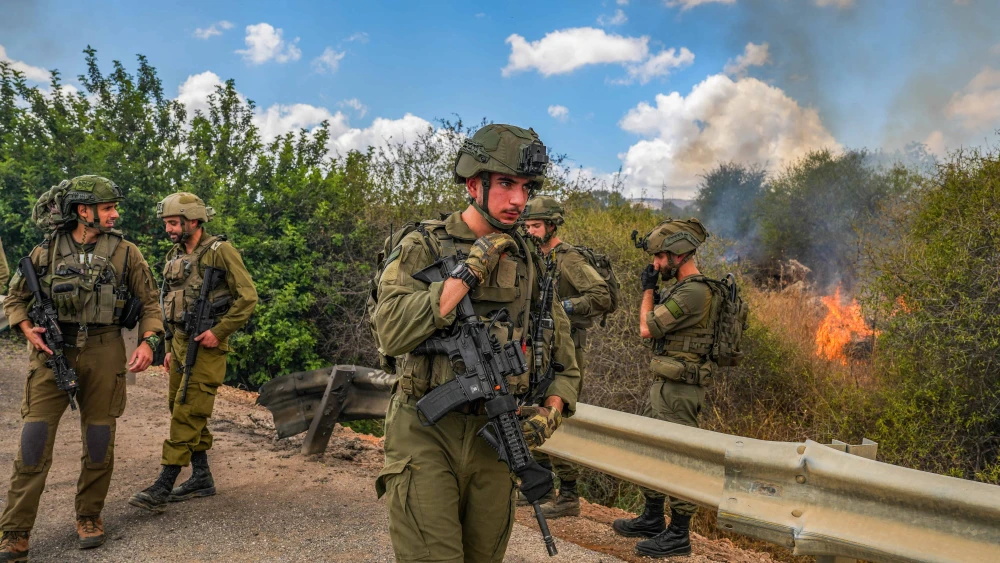
Hezbollah launched some 50 rockets at northern Israel from Lebanon overnight Saturday.
Some 20 projectiles were launched at around 1 a.m. and 2:30 a.m. at the area of Kiryat Shmona, according to the Israel Defense Forces. Most were intercepted, though a few impacts were identified. No injuries were reported, according to the military.
The Kiryat Shmona Municipality said one rocket scored a direct hit on a structure and another hit a sidewalk. The building, property, infrastructure and a parked car suffered damage, according to the city.
At around 5:35 a.m., the Iranian terror proxy fired another 30 rockets at the Upper Galilee, with the IDF’s aerial defense array shooting down several and the rest falling in open areas. No injuries were reported in that barrage.
Several Hezbollah drones also crossed from Lebanon into the Upper Galilee on Saturday evening, with several impacts identified and no injuries reported.
Meanwhile, the IDF said that overnight the Israeli Air Force had struck Hezbollah “military” structures in the areas of Aitaroun, Maroun El Ras and Yaroun in Southern Lebanon.
An IDF drone also struck and eliminated terrorists from the Hezbollah-aligned Amal terrorist organization operating within a Hezbollah compound in the area of Froun in Southern Lebanon.
A Hezbollah rocket launcher that had been used to launch rockets at Safed was also hit in the area of Aynata in Southern Lebanon, according to the IDF.
במהלך הלילה, מטוסי קרב תקפו מבנים צבאיים ששימשו את ארגון הטרור חיזבאללה במרחבים עיתרון, מארון א-ראס ויארון שבדרום לבנון.
— צבא ההגנה לישראל (@idfonline) September 8, 2024
אמש, כלי טיס תקף וחיסל מחבלים של ארגון הטרור אמל שפעלו בתוך מתחם צבאי של ארגון הטרור חיזבאללה במרחב פארון שבדרום לבנון>> pic.twitter.com/EVVqArBCsX
Additionally, IDF artillery hit targets in the areas of Odaisseh, Naqoura, Abou Chach and Tayr Harfa in Southern Lebanon.
מטוסי קרב תקפו במרחב עינתא שבדרום לבנון והשמידו משגר של ארגון הטרור חיזבאללה ממנו שוגרו היום רקטות לשטח פתוח במרחב צפת.
— צבא ההגנה לישראל (@idfonline) September 7, 2024
בנוסף, כוחות צה"ל תקפו בארטילריה במרחבים אל עדייסא, א-נקורה, אבו שש וטיר-חרפא שבדרום לבנון>> pic.twitter.com/7XaiejcvsA