Newsletter
Newsletter Support JNS

Hezbollah nominates prime minister as Lebanon wallows in fiscal, political crisis

“I don’t have a magic wand, and I can’t work miracles,” said Lebanese businessman Najib Mikati, who has served in the role twice before.

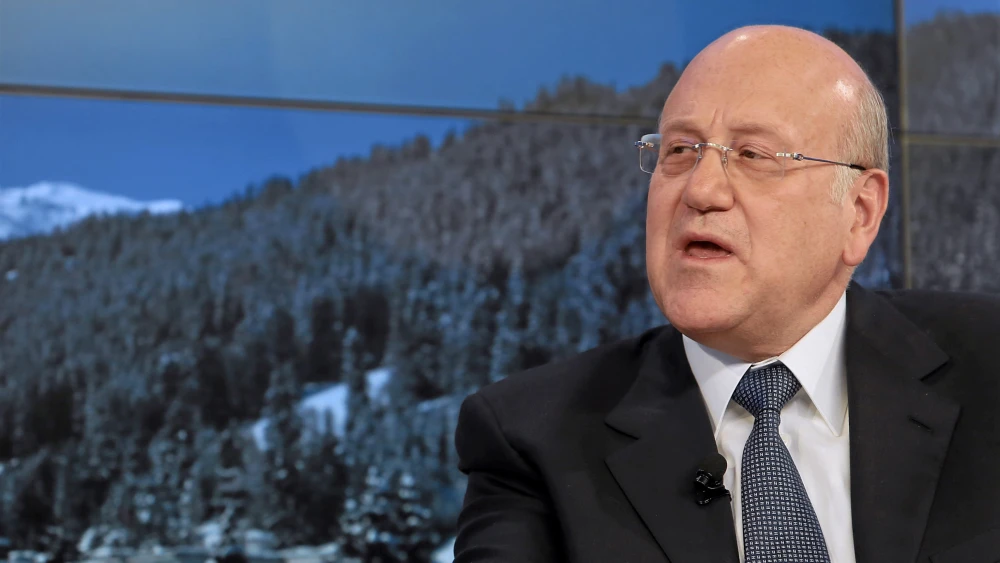
Lebanese Prime Minister Najib Mikati at the World Economic Forum in Davos, Switzerland, Jan. 25, 2013. Photo by Monika Flueckiger/Swiss-Image.ch via Wikimedia Commons.

Hezbollah appointed Lebanese businessman Najib Mikati as prime minister-designate after gaining the approval of parliament on Monday.

“I don’t have a magic wand, and I can’t work miracles,” said Mikati after his nomination, reported Reuters. He said he at least had “the necessary international guarantees” to move forward.

Mikati now must try to form a government amid the country’s rapidly descending economic and political crisis.

The 65-year-old has been prime minister twice: from April 2005 to July 2005, he served in a caretaker government, and he was again prime minister from 2011 to 2014. He is the third person to be nominated since the government resigned following the massive Beirut explosions last August that killed more than 200 people and left the city in ruins.

Prices in the country have been skyrocketing and salaries dropping, forcing more than half the population into poverty. Hezbollah is trying to appear to be solving the crisis even though it is part of the problem.

The U.S. Army has “flattened” Iran’s air defenses and defense industrial base, including the factories and production lines supporting missile and drone programs, the American defense secretary said.
“Terrorist propaganda online can incite real-world violence,” stated Pamela Bondi, the U.S. attorney general.
“The Iranian regime executed a 19-year-old for demanding democracy,” stated Sen. John Fetterman. “I stand with his memory and the thousands of other young Iranians.”
More than 70,000 Americans have returned to the United States from the Middle East since the Iran conflict began on Feb. 28.
“If this thing is growing, this inauthentic account is going to deceive more people,” Rep. Chris Smith told JNS. “Especially overseas, where there’s a language barrier or something.”
“We are now part of a process at the International Court of Justice initiated by Nicaragua,” Berlin said. “We have decided to focus on this process.”