Newsletter
Newsletter Support JNS

Houthis expel Yemen’s few remaining Jewish families

According to the Saudi press, the last Jewish refugees from Yemen are seeking a country that will take them in, as they don’t wish to move to Israel.

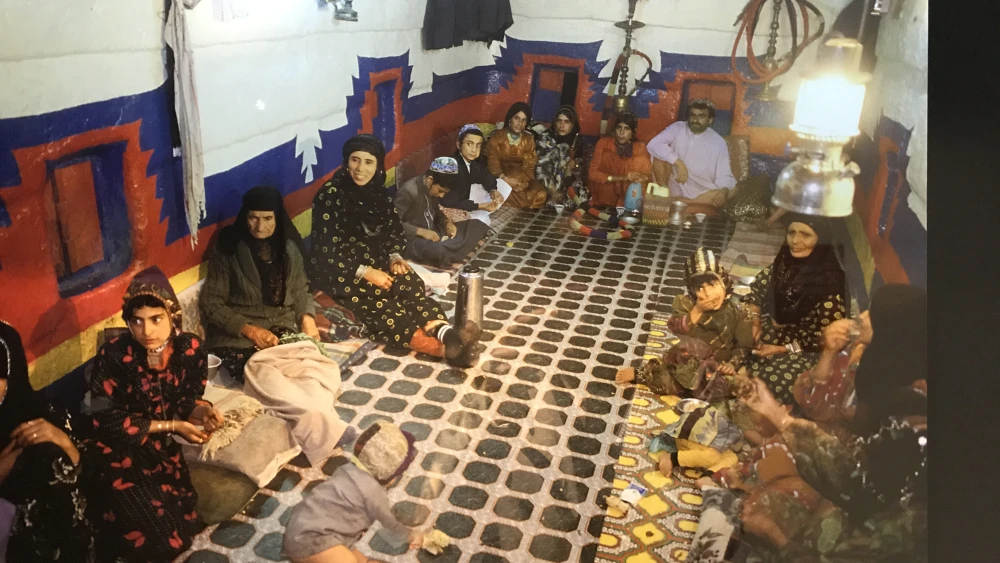
A Yemenite Jewish family in the multifunction room of their home, which would be used for sleeping, eating and entertaining. Photo from a 2018 exhibit in New York City. Credit: Shiryn Solny/JNS.

Yemen’s millennia-old Jewish population has come down to only four elderly men, after the last few remaining Jewish families were expelled this week by the Iran-backed Houthi rebels, the Saudi newspaper Asharq Al-Awsat reports.

According to the report, one expelled family includes 13 men and women who agreed to leave Yemen if the Houthis freed a Jew who had been in prison for some six years.

The Saudi newspaper reported that the Houthis have made it a goal to wipe out the Yemenite Jewish community entirely. Until recently, the Jewish families resisted pressure to leave. However, when the relatives of the Jewish prisoner, Levy Salam, visited him in prison, the Houthi intelligence services offered to free him if the family would leave the country.

Salam was arrested for publishing an old version of the Torah.

One of the Jews who recently left told Asharq Al-Awsat, “Our choice was between remaining a target for harassment and them not letting Levy out of prison, or leaving, and him being set free.”

“Therefore, we were forced to leave. History will document us as the last Yemenite Jews who clung to their home until the last moment. We refused much temptation in other times, but now we must leave,” the man said.

Recently, another group of Jewish families left Yemen and found a home in the United Arab Emirates. The latest refugees are looking for a country to take them in, as they do not want to make aliyah.

This article first appeared in Israel Hayom.
In a draft report delivered to the U.S. president, the commission also called for improved religious accommodations for U.S. service members.
Salah Salem Sarsour, accused of concealing Israeli military court convictions on immigration forms, argued his detention was part of a Trump admin effort to target the pro-Palestinian movement.
CENTCOM stated that the strikes targeted missile, drone and radar facilities after the Islamic Republic attacked a cargo ship in the Strait of Hormuz, calling the assault a violation of the ceasefire.
Now that the primaries are over, “we hope that everyone will come together and be united,” Christine Quinn, chair of the executive committee of the New York State Democratic Party, told JNS.
An Iranian official warned on Friday that the safety of ships passing through the Strait of Hormuz without Iran’s permission “cannot be guaranteed.”
“We have put the train back on the tracks and going in the right direction,” said Yechiel Leiter, Israeli ambassador in Washington. “Final destination? Peace between our two countries.”
Benny Gantz, JNS editor-in-chief Jonathan S. Tobin, Gilad Erdan, Mosab Hassan Yousef, Nissim Black and leading voices in security, diplomacy, media, law and Jewish communal affairs headline the summit’s third day in Jerusalem.