Iran broke an agreement to allow International Atomic Energy Agency (IAEA) inspectors to maintain monitoring equipment at Iranian nuclear sites, the U.N. nuclear watchdog agency said on Sunday.
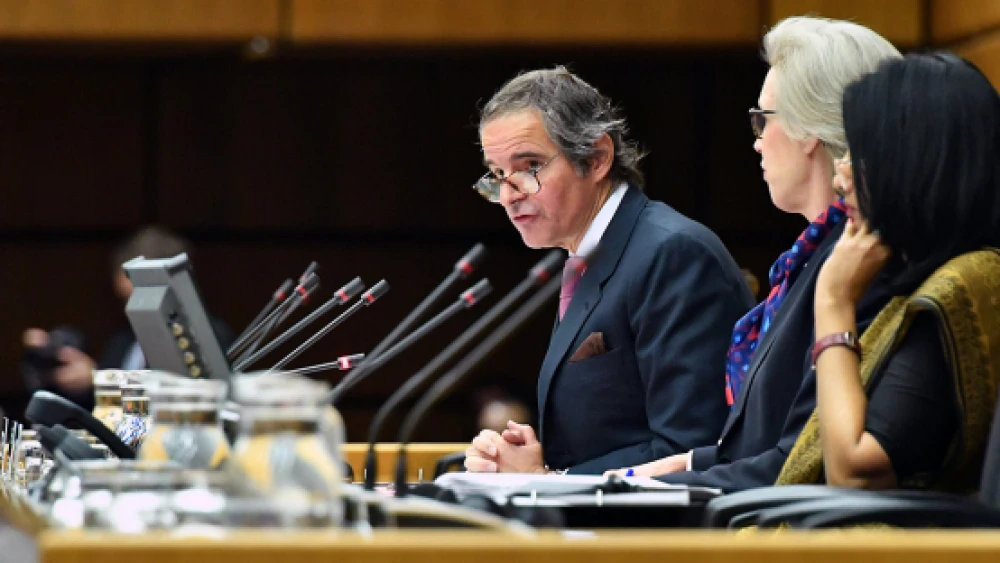
IAEA Director General Rafael Grossi “stresses that Iran’s decision not to allow agency access to the TESA Karaj centrifuge component manufacturing workshop is contrary to the agreed terms of the joint statement issued on 12 September,” the IAEA said in a statement, Reuters reported.
Grossi met with the head of the Atomic Energy Organization of Iran (AEOI) Mohammad Eslami in Tehran on Sept. 12 where it was agreed to allow the IAEA to reset monitoring equipment and replace memory cards in surveillance equipment at Iranian nuclear sites.
Iran allowed IAEA inspectors to do so “at all necessary locations in Iran with the exception of the centrifuge component manufacturing workshop at the TESA Karaj complex,” Sunday’s IAEA statement said.
Iran’s envoy to IAEA Kazem Gharibabadi tweeted on Monday that the TESA Karaj complex doesn’t fall under the agreement.
“During the discussions in Tehran & Vienna, Iran indicated that since Tessa Karaj Complex is still under security and judicial investigations, equipment related to this Complex are not included for servicing,” he said.
“Therefore, DG’s [director-general’s] report on Sep 26 isn’t accurate and goes beyond the agreed terms,” of the Sept. 12 agreement, he said.