


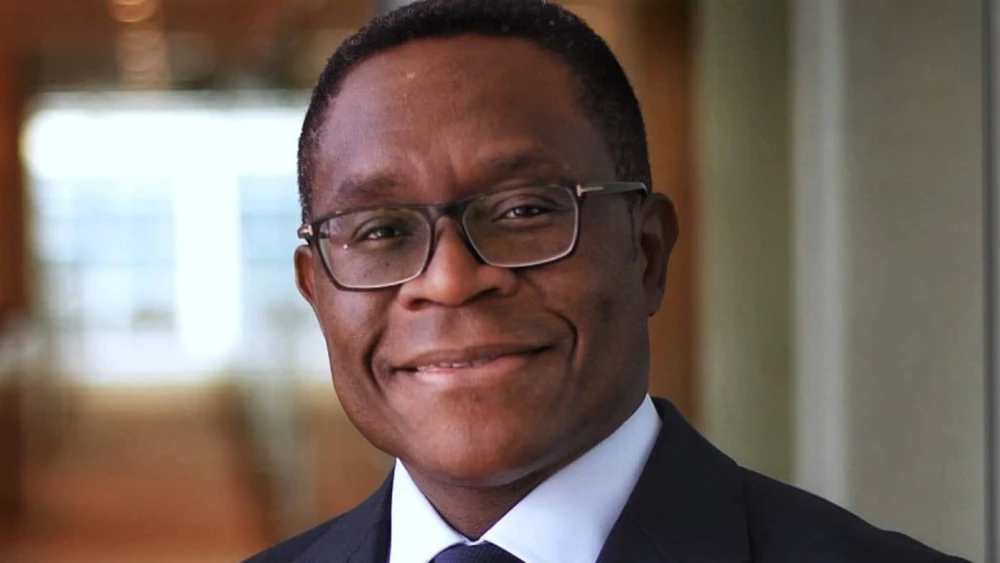
Bernard Mensah, president of international affairs at Bank of America, remains positive about Israel’s economic outlook despite recent warnings by credit-rating agencies concerning possible negative fallout from the government’s push for judicial reform.
Mensah, who is responsible for the development and execution of the bank’s strategy and business activities internationally, did not directly address the current crisis in an exclusive interview with Israel business daily Globes published on Wednesday. But he said his bank’s research team predicts economic growth in Israel of up to 2.5% this year.
“Despite Israel’s special social and political challenges, this is still faster growth than we are seeing in many other parts of the world,” he said.
Mensah said his researchers expect Israel to weather the global slowdown better than others. “Our economists see a softer landing in Israel, particularly in comparison with many other countries.”
The Bank of America executive stressed Israel’s strength in high-tech, underscoring its “strong human capital,” large government spending on R&D, top universities and entrepreneurial culture.
“The Israeli high-tech industry has great value, and when global growth recovers, we believe that it will become more attractive, and will generate opportunities in many areas, including in agriculture, artificial intelligence, quantum computing, fusion, cybersecurity and cleantech,” Mensah said.
He singled out AI as a big opportunity for investment, “which, of course, is good news for Israel.
“The whole world is preoccupied with this. I have just returned from hosting our annual conference on breakthrough technology, which discussed how it’s possible to continue developing the discourse on where we go from here,” he said.
“We brought together a group of world pioneers, thinkers, risk-takers, academics, commentators, moderators and investors. All of them are inspired by the latent possibilities in science, in technology, and in the way all of these elements are connected to money.”
Mensah’s optimistic comments come as the Bank of Israel issued its biannual financial stability report on Wednesday, which warned that uncertainty about the consequences of judicial reform “may challenge the financial system in the medium term.”
Last month, global credit-rating agency Moody’s maintained Israel’s “stable” A1 rating but warned of “negative consequences” for the country’s economy and security following the passing into law of key judicial reform legislation.
Meanwhile, Morgan Stanley moved to revise the Jewish state’s creditworthiness, downgrading its sovereign credit rating to a “dislike stance.”



