


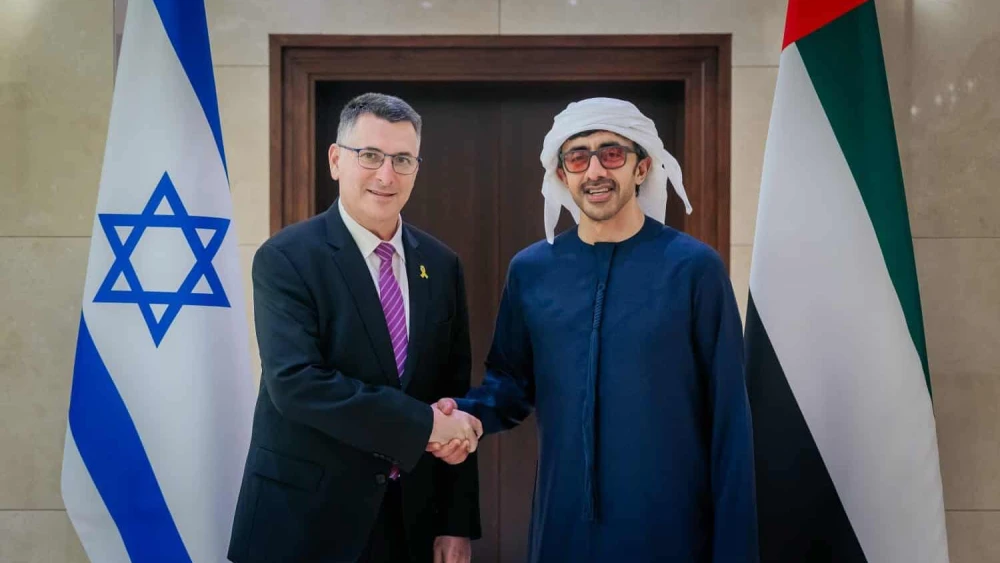
Israeli Foreign Minister Gideon Sa’ar met with United Arab Emirates Foreign Minister Sheikh Abdullah bin Zayed Al Nahyan in Abu Dhabi on Sunday, in their second encounter in three months.
The meeting reflects ongoing diplomatic efforts to reinforce ties between the nations amid continued unrest in the region.
The ministers last met publicly on Jan. 7, in what was the first senior-level Israeli visit to the UAE since the outbreak of the Gaza war in October 2023.
Following Sunday’s meeting, Sa’ar took to his official X account to share his perspective:
“Honored to meet in Abu Dhabi, for the second time, with UAE FM Sheikh Abdullah bin Zayed @ABZayed. We discussed the full range of regional issues, as well as furthering bilateral relations between our countries. There are major challenges ahead of us in the Middle East, but there are partners for a better future of cooperation and stability. Thank you to our hosts!”
Honored to meet in Abu Dhabi, for the second time, with UAE FM Sheikh Abdullah bin Zayed @ABZayed. We discussed the full range of regional issues, as well as furthering bilateral relations between our countries. There are major challenges ahead of us in the Middle East, but there… pic.twitter.com/cXqoBgXxJR
— Gideon Sa'ar | גדעון סער (@gidonsaar) April 6, 2025
The meeting highlights the continued diplomatic engagement between Jerusalem and Abu Dhabi as the two nations navigate the shifting geopolitical landscape of the Middle East.
In a related development, a delegation of Israeli municipal leaders from Judea and Samaria paid a historic visit to the UAE on March 22. Organized by the Yesha Council, the trip marked the first-ever official engagement by the council in a Muslim-majority country.
During the visit, the delegation met with Emirati officials, business executives and thought leaders to explore opportunities for economic cooperation and policy dialogue—part of a broader trend of regional normalization and collaboration.


