A senior Trump administration adviser told reporters on Wednesday that efforts are underway to demilitarize Gaza.
“We’re defining a path that makes everyone feel safe,” the adviser, who declined to be named, told reporters. “It’s not realistic to expect people to just drop arms.”
“The dynamic is complex, but the sentiment from Arab mediators and from Hamas is to keep working together toward a solution,” the adviser said.
The adviser and another senior U.S. adviser, who also spoke to reporters anonymously, told reporters that phase one of the Israel-Hamas war, which focused on deconfliction, entry of aid and returning bodies of hostages to Israel, has been a success.
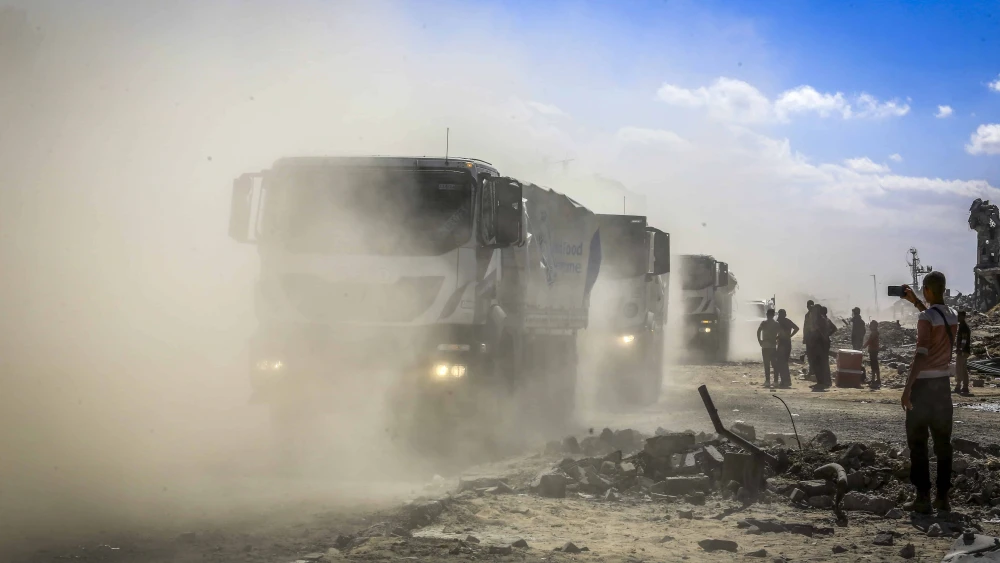
One of the advisers refuted media reports that Israel had cut the amount of aid due to enter the Strip.
“We’ve had positive conversations with the United Nations to ensure aid effectively reaches people in Gaza,” the adviser said. “There have been no cuts so far and no intention to cut as long as the deal holds.”
An international stabilization force, which U.S. President Donald Trump outlined in his 20-point peace plan, “is starting to be constructed,” one of the advisers said.
Indonesia, the United Arab Emirates, Egypt, Qatar and Azerbaijan have expressed interest in taking part in the multinational force to assume security control in Gaza during a transitional period.
A technocratic Palestinian-led transitional government, for which Trump’s plan also called, is starting to take shape.
“Many people are reaching out. We’re moving deliberately,” one of the U.S. advisers told reporters. “Hamas is weaker than ever. People see a different future and have the courage to reach out.”
One of the advisers also said that Hamas, which Trump’s plan gave explicit leeway to police Gaza for a limited time, should stop extrajudicial killings in the streets.
“We’re working with mediators to send the message that should stop,” the adviser said. “We’re also working with Israel to create space in a safe zone behind the yellow line where threatened people can go.”
“Israel is committed to creating safety for Gazans, who want to live in peace and renounce Hamas,” one of the advisers said. “Israel met this idea with enthusiasm after two years of war. They want to protect civilians seeking a different path.”
‘We’re using every lever’
According to the advisers, local developers and contractors are already being engaged to be part of rebuilding Gaza.
“The goal is to move quickly to create jobs, housing and services,” one of the advisers said. “There is also a major line of effort on demolition and unexploded ordnance clearance, which also affects body recovery.”
The other adviser said Gaza has been “pulverized.”
“We have various intelligence on the locations of deaths and injuries. With greater control of areas, we can do more, but we need more resources,” the adviser said. (According to the adviser, multiple countries, including Turkey, have offered to send experienced body-recovery teams.)
One of the advisers said conversations with mediators “indicate” Hamas’s “continued intent to honor the deal.”
“There was disappointment when only four bodies were returned” on the first night of the release of hostages, one of the advisers said. “But more followed in the next days, as we provided intelligence. They are maneuvering to do their best.”
One of the advisers said the administration is urging Israel to share its intelligence about the bodies of the remaining hostages.
“We’re using every lever to maximize results and continue making progress,” one of the advisers said.
“We will not stop until everyone comes home,” the other said.