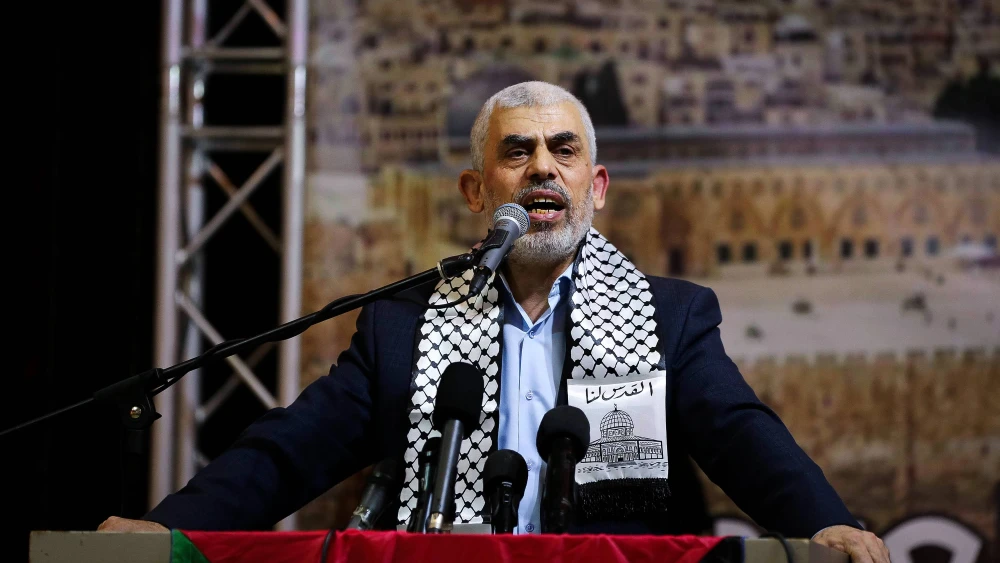
One of Hamas’s motivations for launching its Oct. 7, 2023 invasion of Israel was to frustrate U.S.‑brokered talks to normalize relations between Israel and Saudi Arabia, according to documents published Sunday by The Wall Street Journal.
According to the minutes of a meeting recovered by Israeli troops from a hidden Hamas command tunnel in Gaza, terrorist leader Yahya Sinwar had told senior commanders on Oct. 2 that only an “extraordinary act” could wreck the fast‑advancing deal. If Riyadh signed, he warned, “most Arab and Muslim governments would line up behind it,” sidelining Hamas.
The minutes say the assault, in which about 6,000 Hamas-led Gazan terrorists stormed the Israeli border, murdered some 1,200 people and abducted another 251, had been under preparation for two years as part of a broader campaign to “shift the strategic balance” and pull other members of the so‑called Axis of Resistance into the fight.
A companion memo—also found in the tunnel—advised accelerating attacks in Judea, Samaria and Jerusalem for the same purpose and dismissed any Saudi pledge to defend Palestinian interests as a bluff. Hamas even circulated a “help wanted” notice for a university‑educated operative to coordinate anti‑normalization work, the cache revealed.
The prospect of Saudi‑Israeli talks had advanced further in 2023 than in any previous effort: draft U.S. security guarantees for the kingdom, U.S. approval of civil nuclear technology and a roadmap for Palestinian self‑governance were all on the table, according to the Journal.
Hamas saw the moment as existential. An August 2022 internal briefing cited in the files states it was the movement’s “duty” to derail the “wave of normalization sweeping the Arab world,” which already included the United Arab Emirates, Bahrain, Morocco and Sudan—the cosignatories of the 2020 Abrahams Accords led by U.S. President Donald Trump during his first term in office.
The Oct. 7 attacks triggered a war in Gaza and throughout the region, leaving much of the Strip in ruins. It also froze the Saudi peace track: Riyadh has said it would not revisit the deal until fighting stops and a credible path to Palestinian statehood emerges. Israeli troops killed Sinwar in Gaza on Oct. 16, 2024.